QpiAI Launches India’s Most Powerful Quantum Computer: The 25-Qubit Indus Quantum Computer
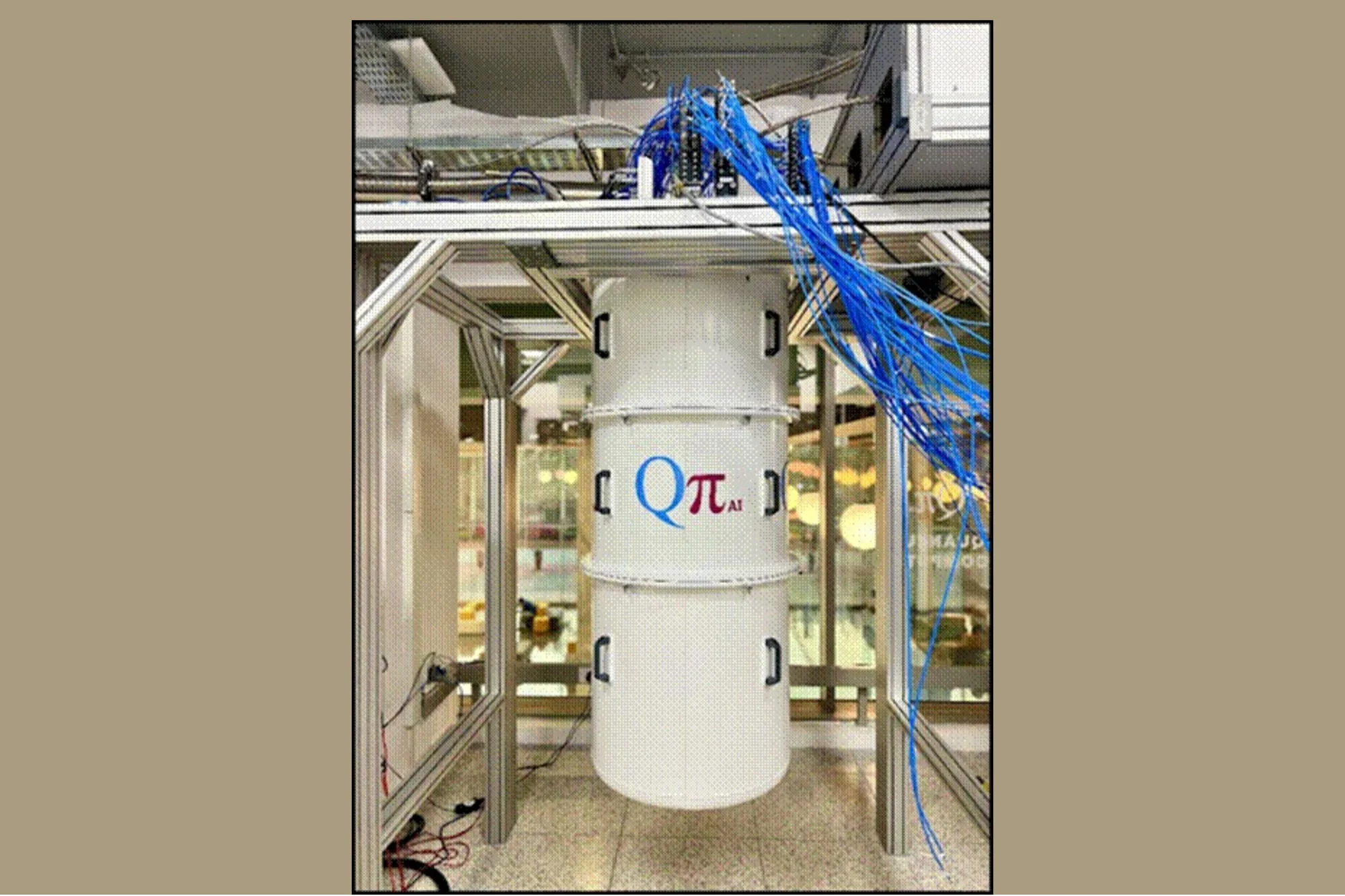
In a groundbreaking development for India’s technology landscape, QpiAI, a leader in quantum computing and generative AI, has unveiled the Indus Quantum Computer, the most powerful quantum computer ever developed in the country. With 25 qubits, this milestone marks the beginning of a new era in quantum computing, positioning India as a global contender in advanced computing technologies. The launch not only highlights QpiAI’s commitment to innovation but also sets the stage for a series of ambitious milestones aimed at transforming industries such as healthcare, pharmaceuticals, manufacturing, cybersecurity, and finance.
QpiAI’s vision extends far beyond the launch of the Indus Quantum Computer. The company has announced an aggressive roadmap to scale its quantum systems, targeting the development of 64-qubit (Kaveri), 128-qubit (Ganges), and 1,000-qubit (Everest) quantum computers by 2025, 2027, and 2028, respectively. These milestones are designed to address increasingly complex computational challenges across scientific research, advanced simulations, healthcare, and education.
Additionally, QpiAI is pioneering the development of fault-tolerant quantum computers with integrated error correction for commercial applications. The roadmap includes the launch of Yukti, the first superconducting logic qubit, by 2026, followed by Shakti, a 5-qubit logic system, in 2027, and finally Unnati, a 100-qubit logic system, by 2030. These advancements aim to overcome the limitations of current Noisy Intermediate-Scale Quantum (NISQ) systems and unlock the full potential of quantum computing for real-world applications.
The Indus Quantum Computer boasts impressive technical specifications, including T1 and T2 coherence times of 30 microseconds and 25 microseconds, respectively, measured using QpiAI’s in-house developed quantum control electronics cluster. These metrics are expected to improve significantly, with a target of achieving T1 coherence times of 1 millisecond by early 2026. Furthermore, the system delivers 99.7% gate fidelity for single qubits and 96% for dual qubits, supporting a full set of native gates. These capabilities make the Indus Quantum Computer a robust platform for application development and research.
Dr. Nagendra Nagaraja, CEO and Founder of QpiAI, emphasized the significance of this achievement: “We are thrilled to deliver on our roadmap for commercializing quantum computers, leveraging large-scale integration of physical and logical qubits. Our patented qubit architecture, combined with AI-driven refinement processes, ensures high fidelity, error correction, and noise reduction. This positions us to scale up to 64-qubit systems and beyond, while fostering partnerships with industry leaders in pharmaceuticals, chemicals, data centers, and hyperscalers.”
QpiAI’s approach to quantum computing is defined by its end-to-end vertical integration of artificial intelligence and quantum systems. The company has developed an integrated ecosystem that combines AI, quantum hardware, algorithms, software, and applications into a unified platform. This synergy is exemplified by the QpiAI Gen-1 system, which integrates quantum computing with high-performance computing (HPC) in co-located data centers, delivering high-throughput and low-latency processing.
To support widespread adoption, QpiAI offers its data center module, which integrates quantum computing and HPC arrays, network switches, and a comprehensive software stack. This solution is designed for data center operators seeking to incorporate quantum capabilities into their infrastructure. By providing access to its 25-qubit quantum computer through private data centers and public cloud platforms, QpiAI is making quantum computing more accessible to businesses and researchers.
QpiAI’s quantum software platforms and solutions are tailored to address the needs of various industries. Key offerings include:
These platforms leverage AI-driven quantum compilation and specialized use-case architectures to maximize hybrid quantum-classical performance, enabling businesses to tackle challenges that were previously unsolvable with classical computing alone.
Quantum computing currently faces significant hurdles, including scalability, reliability, and error rates caused by decoherence, noise, and inaccuracies in logic operations. To address these challenges, QpiAI is implementing surface codes and Q-LDPC error-correcting codes to enhance fault tolerance and reduce errors in NISQ systems. The company’s proprietary QpiAI qubits, based on transmon-like designs, are stabilized and error-corrected using innovative architectures that ensure high performance and low error rates.
QpiAI’s agentic AI system plays a pivotal role in refining qubit manufacturing and optimizing system performance. This closed-loop system operates within QpiAI’s data centers, continuously improving fidelity, error correction, and noise reduction through autonomous processes.
QpiAI is also advancing next-generation generative and agentic AI systems, capable of autonomously navigating complex scenarios and generating emergent intelligence through agent-based modeling. By combining AI, bits, qubits, and neurons, QpiAI is preparing for a seamless transition to quantum modeling, ensuring its systems remain at the forefront of technological innovation.
With the launch of the Indus Quantum Computer, QpiAI is cementing its position as a leader in next-generation advanced computing technologies. By integrating quantum computing with AI and HPC, the company is addressing fundamental challenges across industries while paving the way for scalable, fault-tolerant quantum systems. As QpiAI continues to expand its quantum ecosystem, it is poised to drive transformative changes in healthcare, pharmaceuticals, manufacturing, cybersecurity, and finance.
The launch of the 25-qubit Indus Quantum Computer represents a monumental step forward for India’s quantum computing ambitions. By combining cutting-edge hardware, AI-driven refinement processes, and a comprehensive software stack, QpiAI is setting new standards for innovation and accessibility in quantum computing. With a clear roadmap for scaling to 1,000 qubits and beyond, QpiAI is not only transforming industries but also positioning India as a global leader in advanced computing technologies.
As QpiAI continues to push the boundaries of what’s possible, its groundbreaking work underscores the limitless potential of quantum computing to solve humanity’s most pressing challenges. The future of quantum computing has arrived—and India is leading the charge.