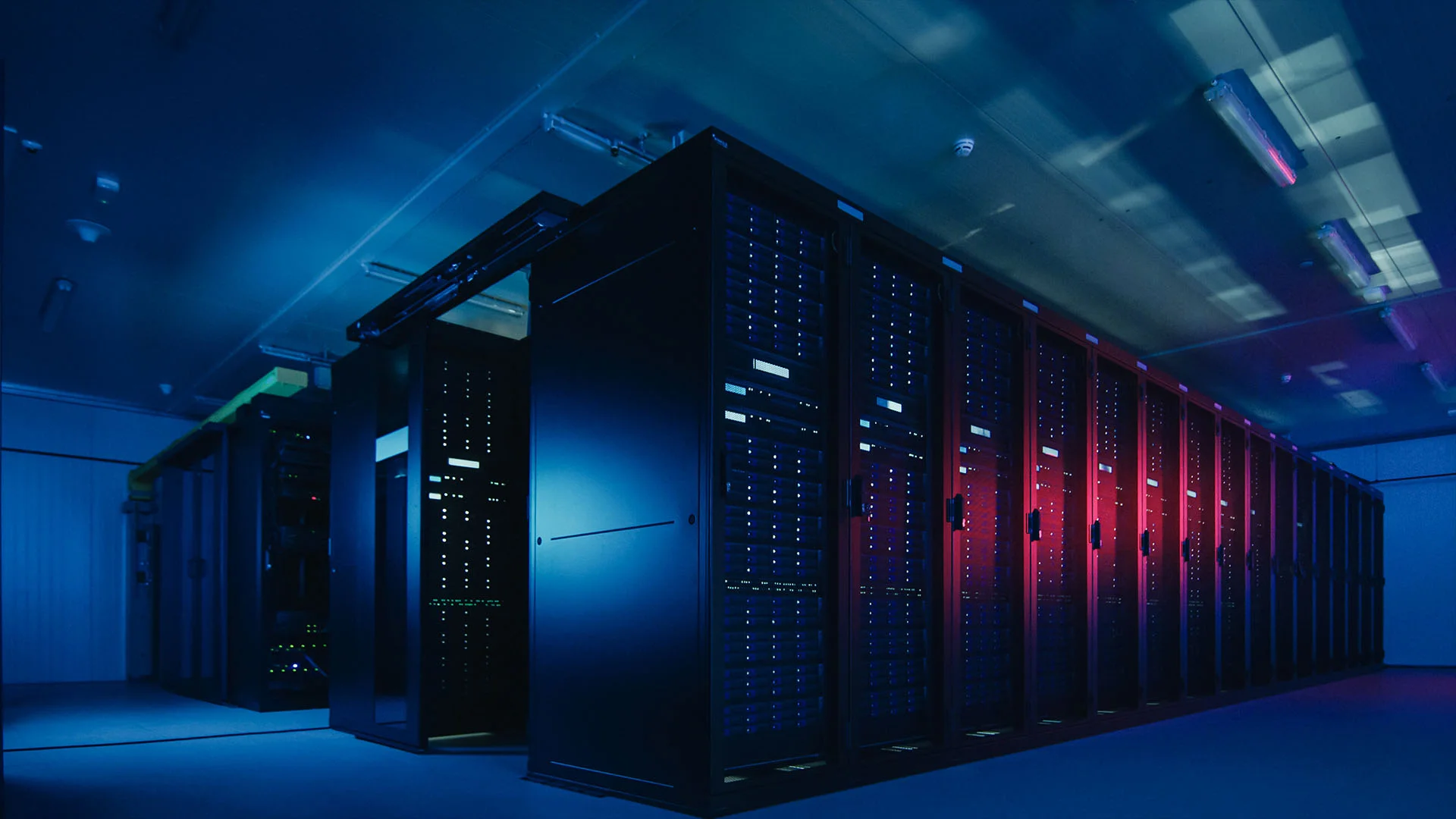
The quest for more efficient, environmentally friendly aircraft is getting a major boost from one of the world’s most powerful supercomputers. Housed at the Argonne Leadership Computing Facility (ALCF), a U.S. Department of Energy (DOE) Office of Science user facility, the Aurora supercomputer is enabling researchers to explore groundbreaking methods for designing next-generation airplanes. With its ability to perform over a quintillion calculations per second, Aurora is not only one of the first exascale supercomputers but also a leader in artificial intelligence (AI) performance. A research team led by the University of Colorado Boulder is leveraging this cutting-edge technology to study airflow dynamics around commercial aircraft, paving the way for smarter, more efficient airplane designs.
Traditional aircraft design often prioritizes worst-case scenarios, such as crosswind takeoffs with one engine out. To ensure safety in these rare situations, airplanes are equipped with oversized components, such as vertical tails. While this approach guarantees functionality in extreme conditions, it comes at a cost—literally. Larger-than-necessary vertical tails increase drag, which leads to higher fuel consumption and emissions during routine flights.
“The vertical tail on any standard plane is as large as it is precisely because it needs to be effective in worst-case scenarios,” explained Riccardo Balin, an assistant computational scientist at the ALCF. “However, the rest of the time, that oversized tail becomes a liability, adding unnecessary drag and fuel burn.”
To address this inefficiency, the research team is using Aurora’s immense computational power to delve deeper into the physics of airflow. By gaining a better understanding of how air interacts with aircraft surfaces, they aim to design smaller, more aerodynamically efficient vertical tails that can still perform effectively in critical situations. This shift could lead to significant reductions in fuel consumption, operational costs, and environmental impact.
At the heart of the team’s work is the challenge of modeling turbulence—a highly complex and chaotic phenomenon that has long been a stumbling block in fluid dynamics research. To tackle this, the researchers are running large-scale simulations using HONEE, an open-source solver specifically designed to capture the intricate behavior of turbulent airflow. These high-fidelity simulations generate vast amounts of data, which are then used to train machine-learning-driven subgrid stress models.
Subgrid stress models play a crucial role in turbulence modeling, especially in lower-resolution simulations where fine details cannot be directly captured. By improving these models through machine learning, the team hopes to achieve two key objectives: maintaining high simulation accuracy while drastically reducing computational costs. This breakthrough could eliminate the need for extensive wind tunnel tests and costly flight trials, accelerating the development process for new aircraft designs.
Traditional turbulence modeling relies heavily on pre-stored datasets and offline analysis, which can be both time-consuming and resource-intensive. The research team, however, is adopting a novel approach: integrating machine learning directly into the simulation process. Known as “online” machine learning, this technique allows the system to analyze and adapt in real-time, bypassing the need to store massive volumes of data.
This innovation is particularly valuable when simulating challenging conditions where conventional models often fall short. For example, predicting how turbulent airflow behaves during an emergency maneuver or in adverse weather requires advanced tools capable of handling complexity and uncertainty. By training smarter models with Aurora’s exascale capabilities, the team is developing systems that can accurately forecast turbulent air behavior under even the most demanding circumstances.
One of the most exciting aspects of this research is its potential to revolutionize how aircraft are designed and tested. Historically, the development of new planes has relied heavily on physical prototypes, wind tunnels, and flight tests—all of which are expensive and time-consuming. Aurora’s unparalleled computing power, combined with the team’s innovative use of AI, makes it possible to conduct much of this testing virtually.
Virtual simulations allow engineers to explore countless design iterations quickly and efficiently, identifying optimal configurations without the need for costly physical experiments. This capability not only speeds up the development process but also opens the door to more creative and daring designs that might have been deemed too risky or impractical in the past.
The implications of this research extend far beyond the realm of academic curiosity. As global concerns about climate change and sustainability continue to grow, the aviation industry faces mounting pressure to reduce its carbon footprint. By enabling the design of lighter, more aerodynamic aircraft, Aurora and the research team’s efforts could play a pivotal role in creating a greener future for aviation.
For instance, smaller vertical tails and other optimized components could translate into substantial fuel savings across the industry. Over time, these improvements could help airlines cut emissions, lower operating costs, and meet increasingly stringent environmental regulations.
The collaboration between Argonne National Laboratory, the University of Colorado Boulder, and other partners exemplifies the transformative potential of combining exascale computing with AI. Aurora’s unparalleled processing speed and the team’s pioneering methodologies are setting a new standard for computational science, demonstrating how advanced technologies can drive innovation in fields as diverse as aerospace engineering, energy, and beyond.
As the project progresses, the insights gained from these simulations will likely influence not only aircraft design but also other industries grappling with similar challenges related to fluid dynamics and turbulence. From wind turbines to automobiles, the ripple effects of this research could reshape the way we think about efficiency, safety, and sustainability.