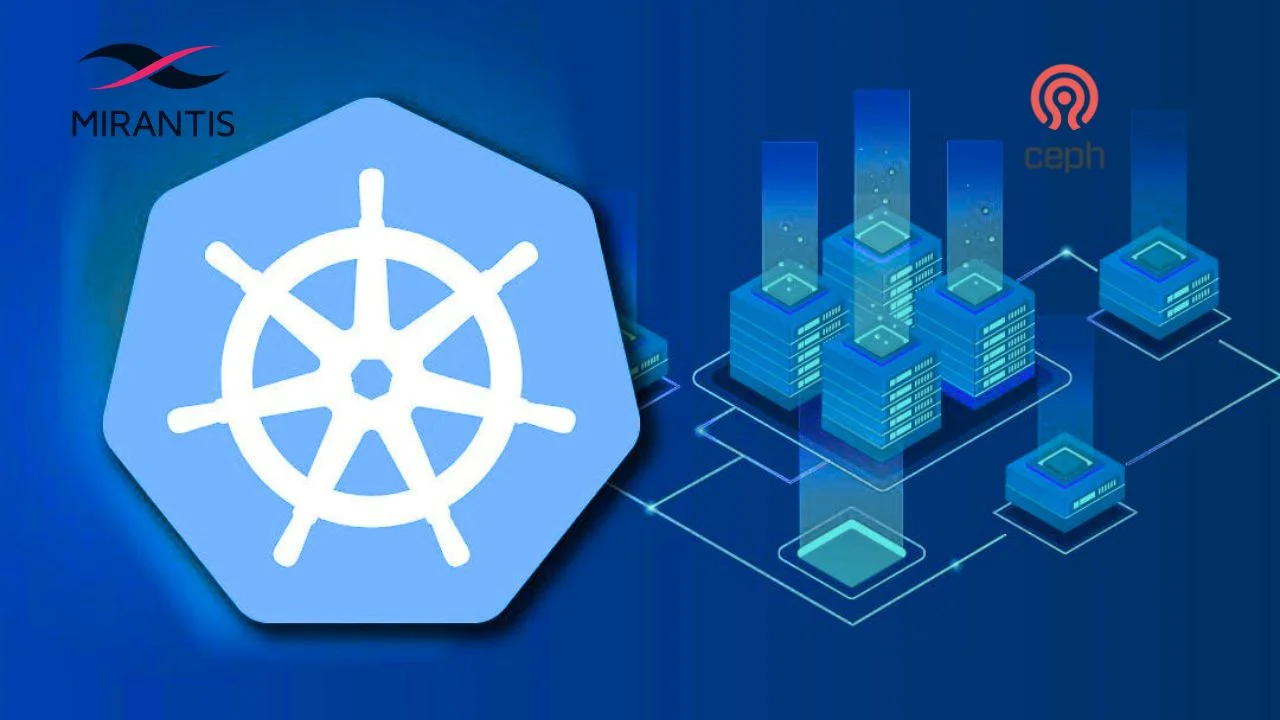
In a move aimed at streamlining the management of large-scale storage clusters, Mirantis, a leader in Kubernetes-native AI infrastructure, has unveiled Pelagia, an open-source Kubernetes controller designed for the lifecycle management of Ceph software-defined storage. This new tool builds on the capabilities of Rook, a CNCF-hosted open-source project, by adding advanced lifecycle automation features that simplify operations for high-traffic and large-scale deployments.
Pelagia is the result of years of experience managing Ceph in demanding production environments, where scalability, reliability, and operational efficiency are paramount. According to Shaun O’Meara, CTO of Mirantis, “Pelagia reflects the lessons learned from managing Ceph at scale in real-world scenarios. It complements Rook by introducing lifecycle automation and a simplified control plane, making it easier to operate large-scale environments, whether they are built on bare metal or virtual machines.”
Managing Ceph clusters at scale can be a daunting task, especially in dynamic environments like Kubernetes. Pelagia addresses this challenge by standardizing how Ceph is operated across Kubernetes clusters, reducing complexity, and improving operational transparency. Its integration into GitOps workflows ensures that organizations can adopt modern DevOps practices, enabling consistent and predictable management of storage resources.
The tool originated from Mirantis OpenStack for Kubernetes (MOSK), a product that has been used for over five years to deploy and manage mission-critical Ceph clusters in production environments. Recognizing the broader need for such a solution, Mirantis has released Pelagia as open-source software, making it accessible to a wider audience. This release underscores Mirantis’ commitment to fostering innovation through open collaboration and sharing its operational best practices with the community.
Pelagia plays a pivotal role in Mirantis’ broader infrastructure strategy, which includes tools like Rockoon, an open-source controller for OpenStack, and k0rdent, a modular platform for Kubernetes-native clouds. Specifically, Pelagia enhances k0rdent’s virtualization support by enabling consistent lifecycle management of Ceph-backed persistent volumes and data volumes for KubeVirt-based virtual machines. This ensures predictable performance and reliability, critical for enterprises leveraging Kubernetes for virtualized workloads.
“Most OpenStack deployments today rely on the integration of OpenStack, Kubernetes, and Ceph,” said Thierry Carrez, General Manager of the OpenInfra Foundation. “With tens of millions of cores globally implementing this blueprint, Mirantis’ decision to open-source Pelagia aligns with its longstanding commitment to open infrastructure projects. By sharing its operational expertise, Mirantis is empowering the broader OpenStack and Kubernetes communities to build more robust and scalable infrastructure.”
As a long-time advocate of open source, Mirantis actively contributes to over 50 open-source projects, guided by its Open Source Program Office led by Randy Bias. Pelagia exemplifies this commitment, encapsulating Mirantis’ operational best practices into a tool that can benefit all Kubernetes and OpenStack users. By releasing Pelagia under an open-source license, Mirantis invites the community to collaborate, contribute, and enhance the tool further.
The company plans to integrate Pelagia into the k0rdent catalog, offering opinionated defaults and tested integrations to simplify adoption for users. This approach ensures that organizations can deploy Pelagia with confidence, knowing that it has been rigorously tested and optimized for real-world use cases.
For enterprises operating at scale, managing storage clusters efficiently is crucial to maintaining performance, reliability, and cost-effectiveness. Pelagia addresses these needs by:
These features make Pelagia a valuable addition to any organization leveraging Kubernetes for AI, machine learning, or other data-intensive workloads. By automating routine tasks and providing a streamlined control plane, Pelagia frees up IT teams to focus on innovation rather than operational overhead.
Pelagia is now available under an open-source license, and developers can quickly get started with the tool using the quick-start instructions provided at https://mirantis.github.io/pelagia/quick-start/installation. The documentation includes detailed guidance on installation, configuration, and integration with existing Kubernetes environments.
For those interested in contributing to or learning more about Pelagia, Mirantis encourages participation in the user community discussion group on GitHub. This collaborative approach ensures that Pelagia continues to evolve, meeting the needs of its growing user base while fostering a vibrant ecosystem of contributors.
About Mirantis
Mirantis delivers the fastest path to enterprise AI at scale, with full-stack AI infrastructure technology that removes GPU infrastructure complexity and streamlines operations across the AI lifecycle, from Metal-to-Model. Today, all infrastructure is AI infrastructure, and Mirantis provides the end-to-end automation, enterprise security and governance, and deep expertise in Kubernetes orchestration that organizations need to reduce time to market and efficiently scale cloud native, virtualized, and GPU-powered applications across any environment – on-premises, public cloud, hybrid, or edge.
Mirantis serves many of the world’s leading enterprises, including Adobe, Ericsson, Inmarsat, MetLife, PayPal, and Societe Generale. Learn more at www.mirantis.com.