
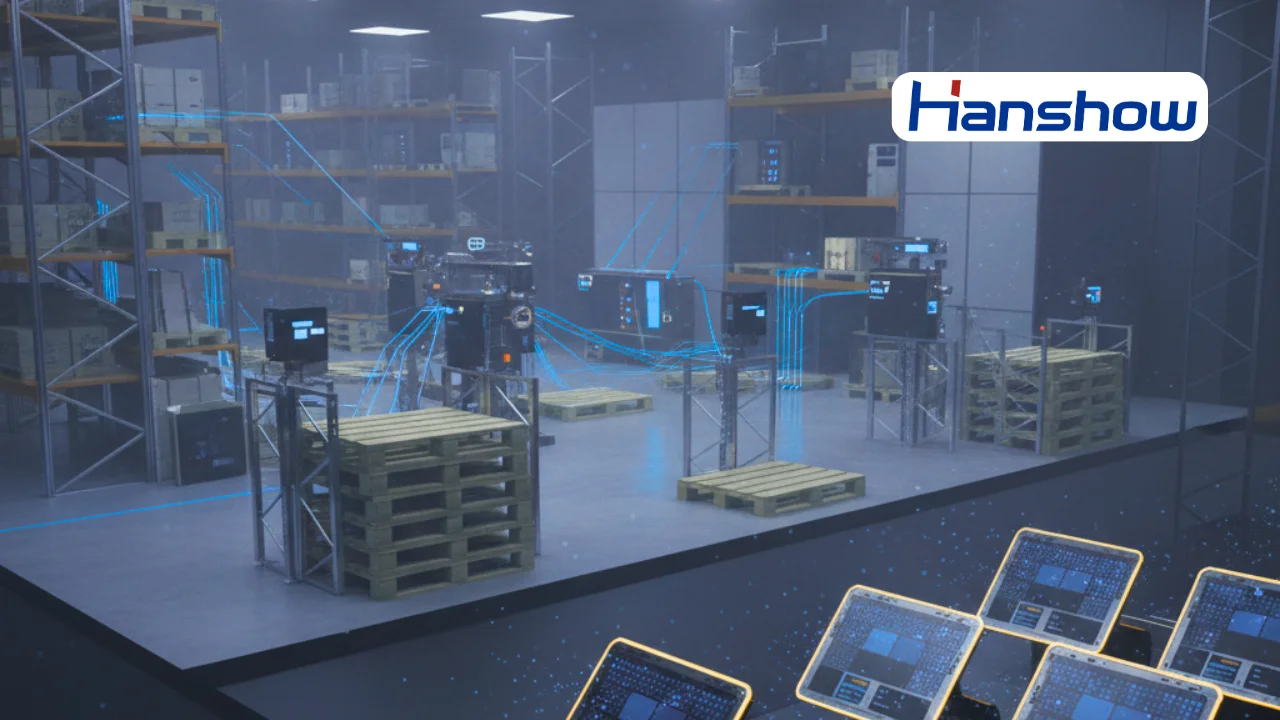
Hanshow, a provider of electronic shelf labels and digital retail solutions, has launched a multi-year research initiative with the University of Cambridge. The effort targets advancements in intelligent hybrid wireless technologies, blending academic research with practical industry applications. This move underscores Hanshow’s push into next-generation connectivity for retail and beyond.
The partnership draws on Cambridge’s strengths in wireless fundamentals and Hanshow’s deployment expertise in dense environments. Researchers plan to explore multi-protocol systems that support scalable operations across varied settings. Such work could refine how devices communicate in real-time retail operations, from inventory tracking to customer engagement.
The University of Cambridge maintains a storied tradition in scientific inquiry, dating back over eight centuries. It has hosted figures like Isaac Newton, who laid groundwork in optics and mechanics, Charles Darwin, whose evolutionary theories reshaped biology, Alan Turing, a pioneer in computing and cryptography, and Stephen Hawking, whose cosmology advanced understandings of black holes and the universe.
Today, Cambridge bridges theory and application through its engineering and computer science departments. Faculty specialize in areas like intelligent sensing, high-precision positioning, and smart environments—fields directly relevant to modern IoT challenges. The institution frequently partners with industry to translate lab discoveries into deployable technologies, fostering innovations in wireless communications and distributed systems.
Hanshow has invested in low-power wireless protocols for more than ten years, focusing on electronic shelf labels that update pricing and product data in stores. Its proprietary HiLPC protocol enables reliable performance in high-density setups, such as supermarkets with thousands of labels, while minimizing energy use. Devices powered by this technology last years on small batteries, reducing maintenance costs.
The company also shapes standards through leadership roles. Min Liang, Hanshow’s chief technology officer, chairs the ESL working group in the Bluetooth Special Interest Group. This position influences how low-power Bluetooth evolves for shelf-edge devices, ensuring compatibility and efficiency.
Hanshow extends its work into Ambient IoT, which incorporates energy harvesting from ambient sources like light or radio waves. This approach shifts IoT from battery-dependent networks to self-sustaining ones, ideal for large-scale retail deployments where replacing millions of devices proves impractical.
The collaboration emphasizes hybrid wireless technologies that integrate multiple protocols seamlessly. Traditional IoT relies on single standards like Bluetooth Low Energy or Zigbee, but retail demands versatility—handling interference from Wi-Fi, managing power in crowded spaces, and supporting real-time data flows.
Joint efforts will model these integrations theoretically, simulate performance under stress, and validate through prototypes. Goals include boosting communication speeds for dynamic pricing updates and enhancing positioning accuracy for asset tracking. In retail, this could mean labels that not only display prices but also detect shopper proximity or integrate with augmented reality overlays.
While rooted in store operations, findings will extend to other sectors. Food and beverage chains could use hybrid networks for cold-chain monitoring, ensuring perishables stay within temperature thresholds. Beauty and apparel retailers might deploy them for personalized recommendations via nearby sensors. Consumer electronics outlets could track stock in real time amid high foot traffic.
The technology also targets smart offices, where low-power networks manage lighting, HVAC, and occupancy detection without draining resources. In logistics, hybrid systems could enable precise pallet tracking in warehouses, reducing errors and speeding fulfillment. This cross-industry applicability positions the research as a catalyst for digital infrastructure upgrades.
The partnership adopts a phased approach: theoretical development followed by simulations and physical testing. Cambridge provides modeling tools to predict signal behavior in complex environments, while Hanshow supplies real-world data from deployed networks. Iterative feedback loops will refine protocols, aiming for commercialization within years.
Outcomes promise enhanced efficiency. Multi-protocol fusion could cut latency by integrating Bluetooth for short-range tasks with longer-range options like LoRa for backhaul. Energy harvesting integration might extend device life indefinitely, slashing operational expenses in large networks.
For Hanshow, this bolsters its edge in competitive retail tech, where reliability defines market leaders. The closed-loop—from research to deployment—creates a repeatable framework for future innovations. Industry-wide, it sets a precedent for academia-industry ties in IoT, potentially accelerating standards adoption.
Min Liang, Hanshow’s CTO, highlighted the synergy: “This collaboration with the University of Cambridge represents a significant step forward in the development of our technology ecosystem. By combining academic excellence with industrial innovation, we aim to push the boundaries of IoT technologies and transform advanced research into intelligent, scalable system solutions that help redefine operational excellence in global retail.”
Dr. Michael Crisp, associate professor in Cambridge’s Department of Engineering, added: “This partnership brings our research in intelligent hybrid wireless technologies together with Hanshow’s strong capabilities in industrial innovation. It gives us the opportunity to create tangible industry impact by developing low-power, high-efficiency solutions that will help usher retail store operations into the next generation of intelligent systems.”
This initiative aligns with broader shifts in enterprise technology. Retailers face pressure to digitize amid e-commerce growth, with physical stores needing smarter tools to compete. Hybrid wireless tech addresses key pain points: scalability in expansive chains, sustainability amid ESG mandates, and interoperability across vendor ecosystems.
Challenges remain. Dense deployments risk interference, demanding sophisticated channel management. Security looms large, as connected labels become entry points for breaches. The collaboration could yield protocols with built-in encryption and anomaly detection, drawing from Cambridge’s cybersecurity expertise.
Hanshow’s global footprint—spanning Europe, Asia, and North America—positions it to deploy results swiftly. Past successes, like ESL networks in major chains, demonstrate readiness. Looking ahead, the firm plans to expand its innovation ecosystem, inviting more partners to co-develop standards-compliant solutions.
Ultimately, this partnership exemplifies how targeted R&D drives transformation. By merging Cambridge’s rigor with Hanshow’s pragmatism, it paves the way for resilient, efficient networks that underpin intelligent operations across industries.
About Hanshow
Hanshow is a global leader in developing and manufacturing electronic shelf labels and digital store solutions. The company offers customers a series of customized IoT touchpoints and digital store solutions that deliver customer-centric insights. Hanshow’s solutions have provided services to a vast number of stores in over 70 countries and regions, helping them streamline operations, optimize pricing strategies, and offer customers a more personalized experience. In addition, Hanshow delivers advanced digital energy solutions, supporting clients with intelligent in-store energy optimization and integrated PV storage charging systems to reduce energy consumption, lower carbon emissions, and accelerate their transition toward sustainable operations. Learn more: www.hanshow.com