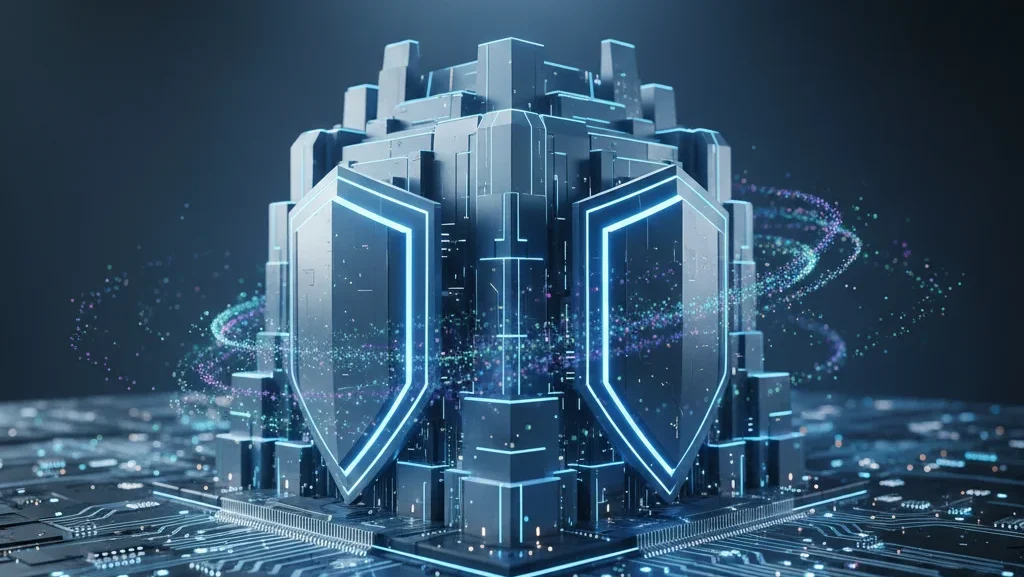
Samsung Electronics’ System LSI Business has launched the S3SSE2A, the first embedded Secure Element (eSe) integrating post-quantum cryptography (PQC), earning the CES 2026 ‘Best Cybersecurity Innovation’ award. This chip, powered by Thales’ secure operating system and quantum-resistant libraries, addresses vulnerabilities from emerging quantum computing capabilities. For C-suite leaders in IoT, consumer electronics, and enterprise security, this development signals a shift toward hardware-enforced protections that withstand both current and future threats.
The collaboration between Samsung and Thales demonstrates how integrated hardware-software solutions can deliver high-performance cryptography without compromising efficiency. As quantum computers gain traction, traditional encryption methods face obsolescence, prompting industries to adopt PQC standards now.
Quantum computing promises exponential processing power, capable of solving complex problems in seconds that would take classical supercomputers millennia. Algorithms like Shor’s could factor large numbers efficiently, breaking RSA and ECC-based encryption widely used in secure communications, device authentication, and data storage.
This vulnerability extends beyond theoretical risks. Nation-state actors and cybercriminals already employ “harvest now, decrypt later” strategies, capturing encrypted data today for future decryption once quantum resources mature. Experts estimate cryptographically relevant quantum computers could emerge within a decade, exposing sensitive credentials, personal identities, and IoT device keys.
For business leaders, the implications are stark: unaddressed risks could undermine supply chain integrity, customer trust, and compliance with regulations like GDPR or NIST’s PQC migration guidelines. NIST Post-Quantum Cryptography Standardization provides a roadmap, urging proactive transitions.
At the core of Samsung’s award-winning chip lies Thales’ hardened operating system, optimized for embedded environments. This OS integrates PQC libraries, enabling quantum-resistant encryption and authentication directly in hardware from device boot-up. Unlike software-only patches, this approach ensures tamper-resistant protection with minimal overhead.
Key performance attributes include:
The S3SSE2A processes next-generation algorithms like lattice-based cryptography at rates suitable for real-time applications, such as secure mobile payments or automotive key exchanges. This efficiency stems from joint hardware-software co-design, where Thales’ libraries align seamlessly with Samsung’s silicon architecture.
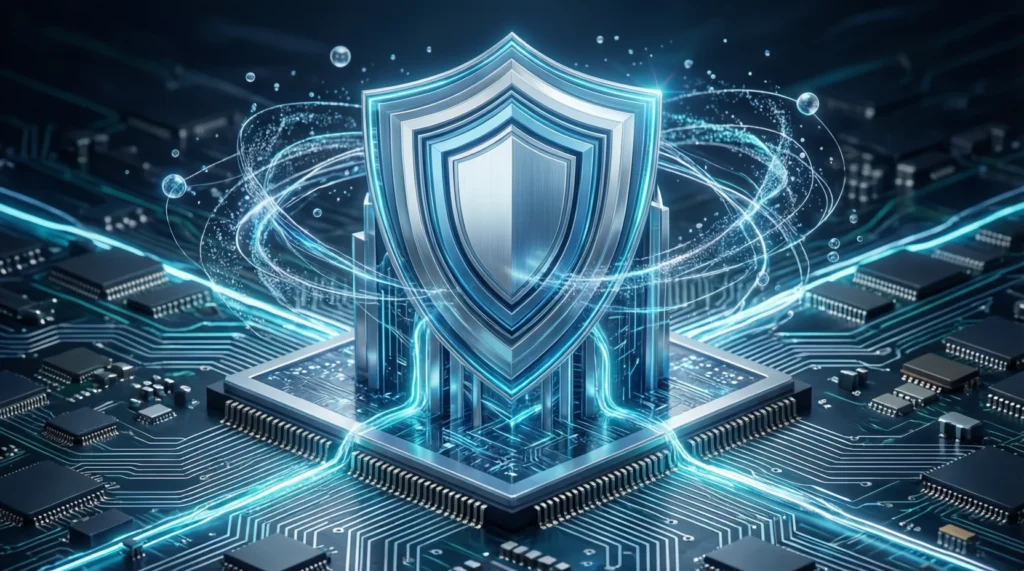
Held January 6-9 in Las Vegas, CES 2026 highlighted the S3SSE2A as a pivotal advancement in cybersecurity. The ‘Best Cybersecurity Innovation’ honor underscores its role in democratizing PQC beyond data centers to everyday connected devices. Samsung’s System LSI team, led by Vice President Hwa Yeal Yu, emphasized the chip’s status as the industry’s first complete PQC solution.
“Developed jointly from the outset to integrate hardware and software, this solution delivers an exceptional level of security,” Yu stated. “We look forward to continuing our collaboration with Thales to advance security solutions for the next generation of connected devices.”
Thales’ Eva Rudin, Vice President of Mobile Connectivity Solutions, added perspective: “The S3SSE2A offers robust, future-proof security in an energy-efficient design. This confirms that post-quantum security is essential for all connected devices, from consumer electronics to vast IoT ecosystems.” Their partnership sets a new standard, influencing competitors like Qualcomm and NXP to accelerate PQC adoption.
Businesses managing fleets of connected devices must evaluate PQC readiness amid accelerating quantum progress. Market forecasts predict the quantum computing sector reaching $65 billion by 2030, per McKinsey, amplifying cyber risks across sectors. McKinsey Quantum Technology Monitor.
Adopting chips like the S3SSE2A yields tangible benefits:
Consider automotive manufacturers: quantum-vulnerable ECUs could expose vehicle-to-cloud communications. Integrating PQC eSE chips ensures resilient over-the-air updates and telematics.
The S3SSE2A activates Thales’ OS at power-on, establishing a root of trust. PQC libraries handle key generation, signing, and encryption using quantum-safe primitives, outperforming legacy methods in constrained environments.
For instance, traditional AES-256 remains quantum-resistant for symmetric ops, but the chip layers PQC for asymmetric tasks. Benchmarks show 2x faster key exchanges versus software emulations, with 40% less energy draw—critical for wearables and remote sensors.
Transitioning sections, this hardware foundation addresses a broader challenge: standardizing PQC across supply chains. Enterprises should audit vendors for PQC roadmaps, prioritizing those with proven integrations like Samsung-Thales.
Migrating to post-quantum cryptography chip solutions involves hurdles, including algorithm maturity and interoperability. Early PQC implementations faced performance penalties, but optimizations in Thales’ libraries mitigate this, achieving near-native speeds.
Organizations can follow these steps for integration:
Case in point: Financial services firms, post-2024 quantum scares, have embedded similar chips in payment terminals, slashing breach risks.
About Thales
Thales (Euronext Paris: HO) is a global leader in advanced technologies in advanced for the Defence, Aerospace and Cyber & Digital sectors. Its portfolio of innovative products and services addresses several major challenges: sovereignty, security, sustainability and inclusion.
The Group invests more than €4 billion per year in Research & Development in key areas, particularly for critical environments, such as Artificial Intelligence, cybersecurity, quantum and cloud technologies.
Thales has more than 83,000 employees in 68 countries. In 2024, the Group generated sales of €20.6 billion.