Neutral-atom quantum computing is rapidly emerging as one of the most scalable and commercially viable approaches within the global quantum computing market. According to The Global Neutral-Atom Quantum Computing Market 2026–2036 report, recently added to ResearchAndMarkets.com, this technology is moving decisively from laboratory-scale experiments toward large-scale, fault-tolerant quantum systems capable of real-world industrial deployment.
Covering market sizing and forecasts from 2026 through 2036, the report delivers a comprehensive analysis of technology readiness, competitive dynamics, investment trends, and long-term growth opportunities across regions and industries.
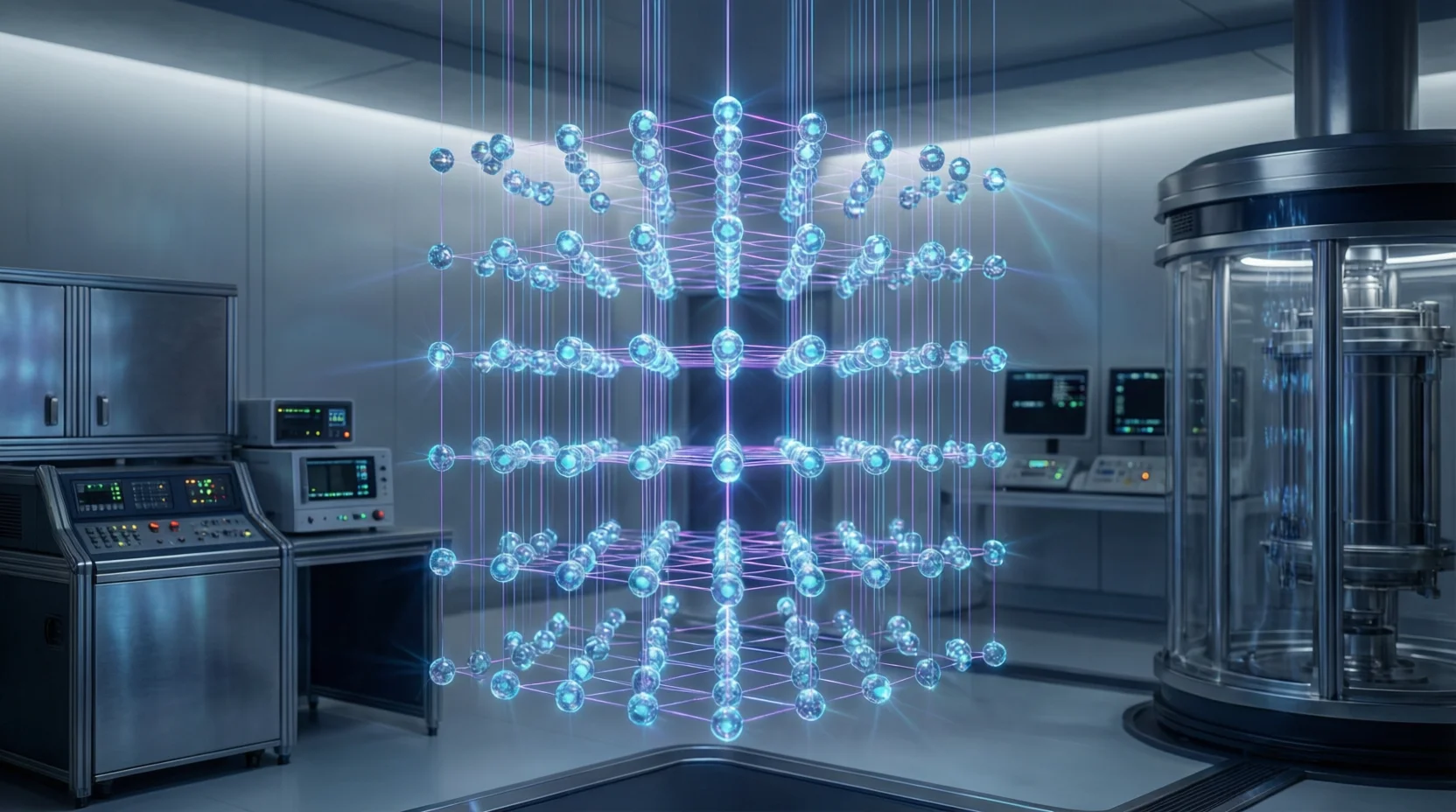
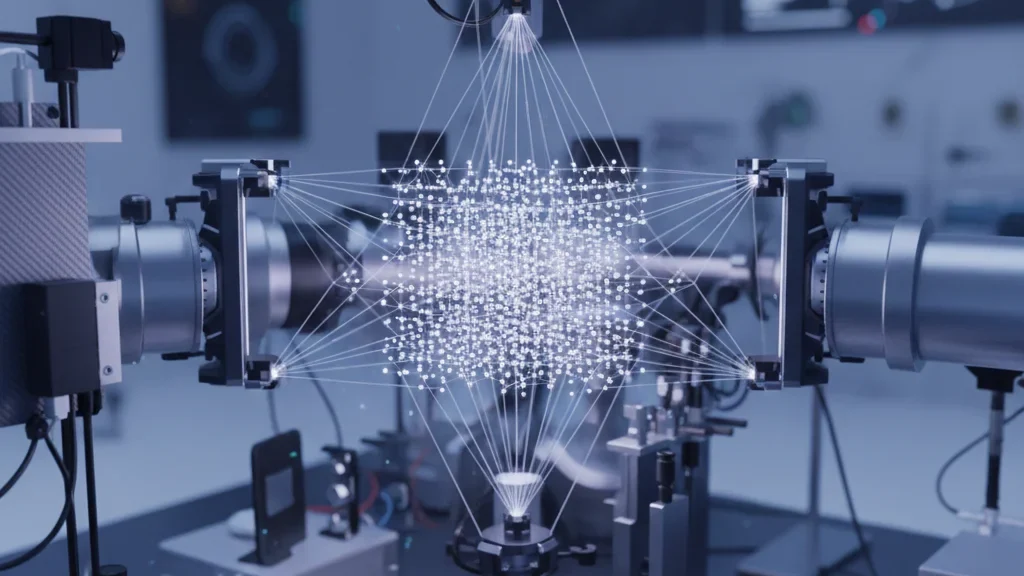
Neutral-atom quantum computing uses individual neutral atoms—commonly rubidium, cesium, or strontium—as qubits. These atoms are trapped and precisely controlled using laser-based optical tweezers, allowing them to be arranged in flexible two-dimensional and three-dimensional arrays.
Unlike trapped-ion or superconducting qubit systems, neutral atoms carry no electric charge. This significantly reduces unwanted interactions between qubits, minimizes crosstalk, and enables dense, highly configurable architectures. The result is a quantum computing platform known for natural scalability, long coherence times, and room-temperature operation—key advantages as the industry pursues fault-tolerant quantum computing.
One of the primary appeals of neutral-atom quantum systems is their ability to scale without the extreme cryogenic cooling required by superconducting quantum computers. This reduces both energy consumption and infrastructure complexity, improving total cost of ownership and accelerating commercial adoption.
Current operational systems typically feature 100 to 300 atom arrays, but leading companies are already deploying platforms with 1,000 qubits and beyond. These systems demonstrate single-qubit fidelities approaching 99.9%, positioning neutral-atom technology as a serious contender in the race toward error-corrected, fault-tolerant quantum computing.
The neutral-atom quantum computing ecosystem includes several well-funded and strategically aligned companies. In the United States, QuEra Computing has attracted major investment from Google, combining advanced hardware capabilities with Google’s quantum software expertise and cloud infrastructure.
Atom Computing has established a parallel partnership with Microsoft, integrating its Phoenix system—based on nuclear-spin qubits—into the Azure Quantum cloud platform. In Europe, Pasqal has emerged as a leader, reaching a 1,000-qubit system in 2024 and targeting 10,000 qubits by 2026. Other notable players include Planqc (Germany), QUANTier (Hong Kong), and Atom Quantum Labs (Slovenia), each contributing distinct architectural innovations.
The report outlines an ambitious scaling roadmap through 2035. Between 2025 and 2026, systems are expected to operate in the 1,000–10,000 qubit range. By 2027–2028, platforms targeting 10,000–100,000 atoms aim to introduce early error correction capabilities with higher gate fidelities.
Looking further ahead, the 2029–2030 timeframe anticipates 100,000-qubit systems capable of fault-tolerant logical operations. Full-scale, million-qubit neutral-atom quantum computers with industrial-grade fault tolerance are projected for deployment between 2032 and 2035.
Neutral-atom quantum computing is particularly well-suited for quantum simulation, optimization problems, quantum chemistry, and machine learning workloads. Its ability to model complex physical systems makes it highly attractive for pharmaceutical research, chemical engineering, materials science, and financial services.
The report also highlights growing interest from cloud service providers, government and defense organizations, and academic research institutions, underscoring broad-based market demand.
Despite rapid progress, challenges remain. These include improving gate speeds, extending coherence times, mitigating atom loss during computation, and developing quantum non-demolition measurement techniques essential for error correction. Even so, neutral-atom systems are increasingly viewed as a credible alternative to superconducting platforms.
With inherent scalability, room-temperature operation, and strong industry backing, neutral-atom quantum computing is positioned for significant commercial growth throughout the 2026–2036 forecast period.