The quantum computing sector is entering a critical inflection point where theoretical promise must translate into commercial viability. As enterprises grapple with the limitations of classical computing for AI workloads and complex simulations, the quantum hardware providers who can execute at scale—not just innovate in laboratories—will define the industry’s trajectory. Leadership clarity becomes paramount in this transition phase.
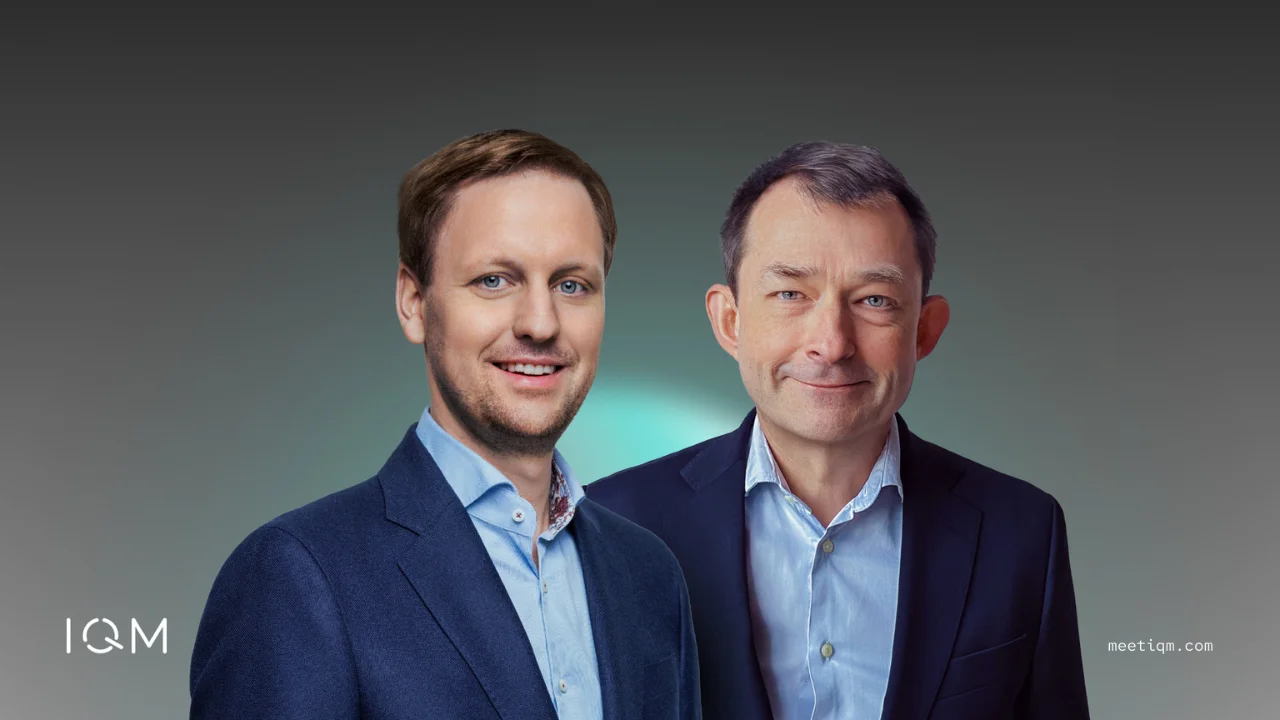
IQM Quantum Computers has responded to this imperative by restructuring its executive team. Effective January 1st, 2026, the company dissolved its co-CEO framework, appointing Dr. Jan Goetz as sole Chief Executive Officer. This marks a deliberate shift from the dual-leadership model that characterized IQM’s growth phase over the past two years.
The reorganization extends beyond the CEO role. Dr. Søren Hein assumes the newly created position of Chief Operating Officer and Deputy CEO, signaling the company’s focus on operational excellence as it scales. Meanwhile, Mikko Välimäki, who served as co-CEO alongside Goetz, transitions out of his commercial responsibilities while remaining as an advisor through March 31st, 2026, to facilitate knowledge transfer.
According to Dr. Sierk Poetting, Chairman of IQM’s Board of Directors, the governance evolution reflects organizational maturity rather than performance concerns. The co-CEO arrangement provided valuable stability during a formative period, but the company’s current trajectory demands streamlined decision-making architecture.
IQM’s recent commercial achievements provide context for this structural confidence. The company reports shipping more on-premises quantum computers than competitors over the past year—a tangible metric in an industry often criticized for overpromising. Additionally, IQM secured the largest Series B funding round in the quantum sector outside the United States, demonstrating investor conviction in its technology and business model.
The appointment of Hein as COO underscores a prioritization of execution capabilities. As quantum systems grow in qubit count and coherence time, operational challenges multiply exponentially. Supply chain management, quality control for cryogenic components, and customer deployment protocols require dedicated executive bandwidth.
Goetz articulated the company’s forward-looking positioning, emphasizing alignment with AI-driven organizations and high-performance computing centers. This customer segmentation reflects pragmatic market analysis: quantum advantage will likely emerge first in domains where classical computational costs are prohibitive, such as molecular simulation, optimization problems in logistics, and certain machine learning tasks.
The explicit mention of fault-tolerant quantum computing—the holy grail of the industry—indicates IQM’s technical roadmap extends beyond current noisy intermediate-scale quantum (NISQ) systems. Achieving fault tolerance requires error correction protocols that demand substantial qubit overhead, making scalable manufacturing and system integration critical competitive differentiators.
IQM’s governance transition mirrors patterns observed in previous technology sectors as they moved from innovation to industrialization. Single-CEO structures typically emerge when companies prioritize execution velocity over exploratory optionality—a signal that management believes the core technology de-risking phase is substantially complete.
For enterprises evaluating quantum partnerships, this leadership clarity may reduce perceived execution risk. The quantum computing market has suffered from credibility challenges due to ambitious timelines that failed to materialize. Companies demonstrating disciplined governance and operational focus may accelerate enterprise adoption curves by building institutional trust.
Founded in 2018, IQM has positioned itself within the competitive landscape of superconducting quantum systems, the same architectural approach pursued by IBM and Google. The company’s full-stack strategy—controlling hardware, control systems, and software layers—aims to optimize system performance through vertical integration while maintaining compatibility with open-source quantum development frameworks.
As the quantum industry navigates the challenging transition from laboratory demonstrations to commercial deployments, organizational structures that facilitate rapid decision-making and operational discipline will likely separate leaders from laggards. IQM’s leadership realignment represents a calculated bet that focused executive authority will accelerate its journey toward scalable, commercially viable quantum computing systems.
About Jan Goetz:
In 2018, Goetz spun out IQM from Aalto University and VTT Technical Research Center of Finland together with his co-Founders and raised over $600M of capital for the company since then.
He was on the Board of the European Innovation Council EIC where he now serves as an EIC ambassador, and he holds a Board seat in the European Quantum Industry Consortium QuIC. He is also and member of the German Federal Economic Senate, an EIC Scaling Club Council member, member of the Hall of Future, as well as a Digital Leader and Global Innovator at the World Economic Forum (WEF).
In 2024, WirtschaftsWoche Magazin selected him as one of 30 executives to shape Germany, in 2023, he was selected as Founder of the Year by Handelsblatt. In 2020, Capital magazine selected him as one of 40 under 40 in Germany and he received an entrepreneurship award from the KAUTE Foundation.
Goetz did his doctorate on superconducting quantum circuits at TU Munich and worked as a Marie-Curie Fellow in Helsinki at Aalto University, where he holds the title of docent.
About Søren Hein:
Søren brings over 30 years of experience as a technology executive and investor across Europe and North America. He previously led Deeptech investments at MIG Capital, which also led IQM’s seed round in 2019. In addition, Hein has co-founded and run a startup in electric motors and served as Chief Technology Officer of the Wireless Systems business unit at Infineon. He holds a Ph.D. in Electrical Engineering and Computer Science from UC Berkeley and an MBA from INSEAD.
About IQM Quantum Computers:
IQM is a global leader in superconducting quantum computers. IQM provides both on-premises full-stack quantum computers and a cloud platform to access its computers. IQM customers include the leading high-performance computing centers, research labs, universities, and enterprises that have full access to IQM’s software and hardware. IQM has over 300 employees with headquarters in Finland and a global presence in France, Germany, Italy, Japan, Poland, Spain, Singapore, South Korea, and the United States.