Professionals are leaning heavily on AI assistants to compress hours of work into minutes, yet a persistent friction point undermines that efficiency—generic visual outputs. Pitch decks, social graphics, and client presentations emerging from ChatGPT or Claude typically arrive in default fonts and off-brand colors, forcing teams into tedious manual cleanup that erases the time saved by AI in the first place.
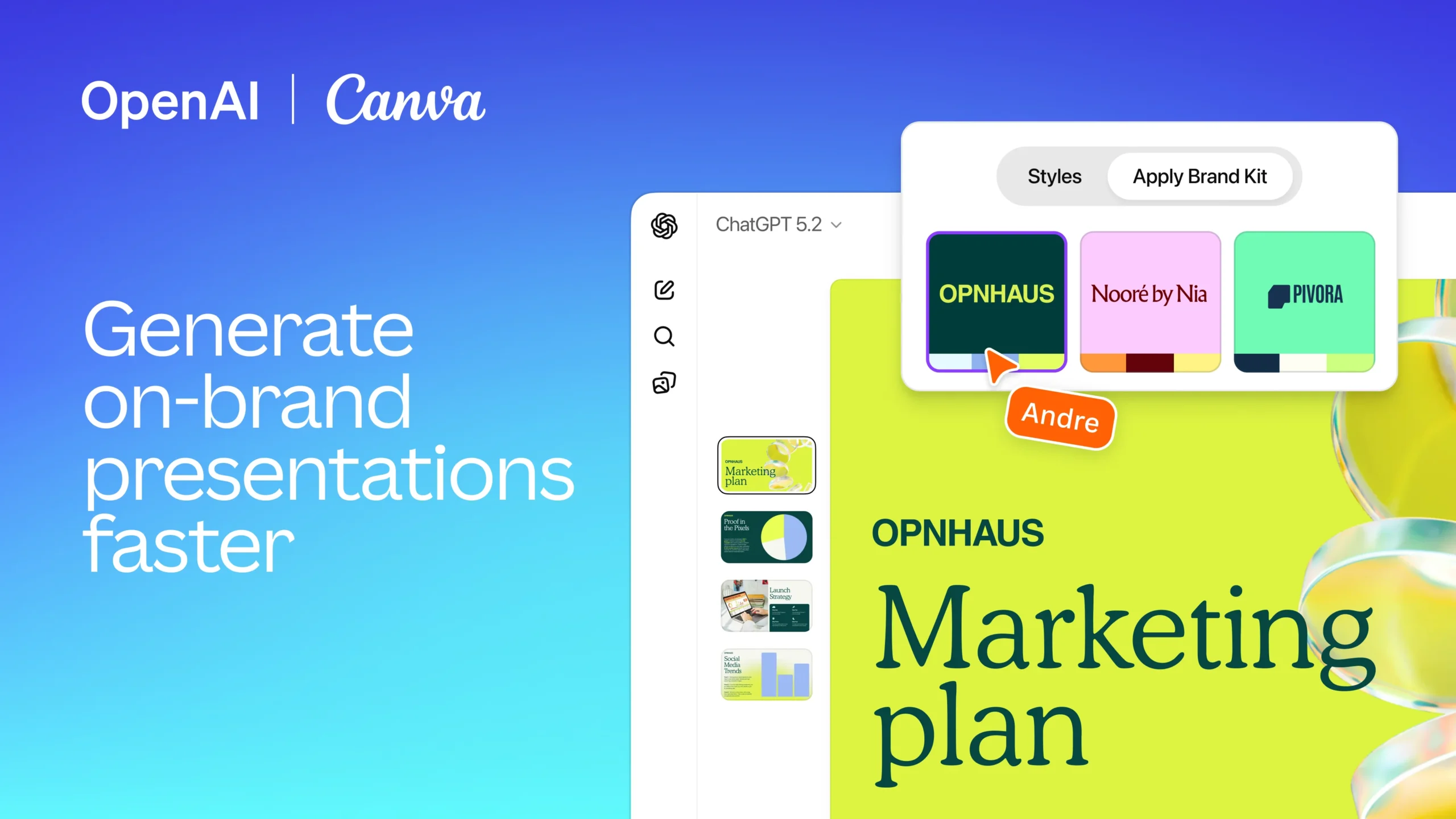
Canva’s latest integration with ChatGPT addresses this bottleneck by embedding brand intelligence directly into conversational AI workflows. Users can now generate designs—from presentations to posters—that automatically inherit their organization’s Brand Kit: approved fonts, color palettes, logos, and layout templates. The result is a seamless handoff from text prompt to polished, on-brand visual, no reformatting required.
For enterprises and agencies, brand integrity isn’t cosmetic—it’s a trust signal. Consider real estate professionals at eXp Realty: agents rely on personal branding to build credibility before a first meeting. Wendy Forsythe, eXp’s Chief Marketing Officer, describes brand as an agent’s “X-Factor,” the differentiator that scales trust across digital touchpoints. When AI-generated materials default to generic templates, that advantage evaporates.
Canva’s approach transforms static brand guidelines—often buried in forgotten PDFs—into a living resource that travels with teams across platforms. According to Similarweb, Canva already ranks in the top ten sites receiving referrals from AI assistants, underscoring its role as the visual layer of the AI productivity stack. The new ChatGPT integration (following a recent Claude debut) reinforces this positioning, enabling Canva’s design model to function as the “design brain” for leading large language models.
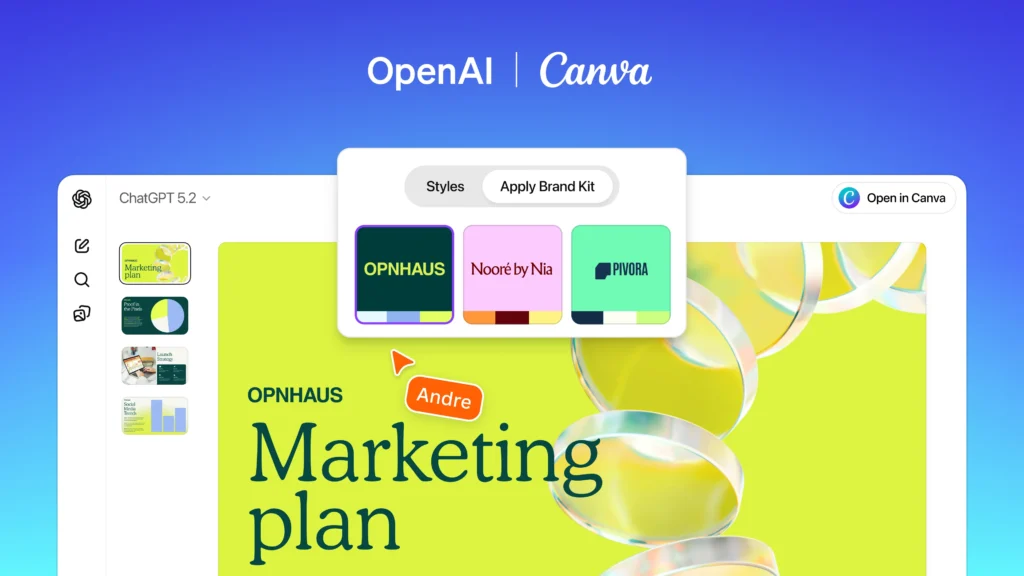
Once a Brand Kit is configured in Canva, three core capabilities activate inside ChatGPT:
Canva reports its Model Context Protocol (MCP) Server has already produced over 12 million designs across ChatGPT, Claude, and Microsoft Copilot in the past year. This volume signals a broader shift: enterprises moving from isolated AI chats to end-to-end workflows where context, consistency, and final deliverables converge in a single environment.
The integration arrives as AI workflows mature beyond question-and-answer exchanges into platforms that understand organizational context. Anwar Haneef, Canva’s GM of Ecosystem, frames the shift bluntly: “The soul of a brand is visual identity, yet it has been the missing puzzle piece in how AI creates.” By embedding design expertise into daily tools, Canva positions itself as the connective tissue between conversational AI and finished creative work.
For B2B teams, the implications extend beyond design speed. Consistent branding across AI-generated materials strengthens campaign cohesion, accelerates approval cycles, and reduces reliance on specialized design resources. As generative AI becomes standard operating procedure, the platforms that preserve brand fidelity—without friction—will define competitive advantage.
How might this reshape your content operations? Consider whether your current AI toolkit delivers truly finished work, or simply faster drafts that still require hours of polish. Tools like Canva’s MCP integrations suggest the answer is shifting—and the productivity gap between early adopters and laggards may widen quickly.
About Canva
Launched in 2013, Canva is the world’s leading all-in-one platform for visual communication and collaboration. Built to empower everyone to design, Canva serves the creative and design needs of enterprises, small businesses, consumers, and students in more than 190 countries worldwide. Whether you’re a novice taking your first steps in design, or a creative professional seeking powerful tools, Canva ensures users have what they need to transform an idea into something beautiful. Underpinned by the world’s most comprehensive library of designer-made content, Canva is powered by a suite of products and proprietary AI tools that elevate how individuals and teams create, collaborate, and communicate with ease.