Space infrastructure is transitioning from bespoke, high-value assets to fleet-scale deployments where individual satellite failures create systemic vulnerabilities. At SmallSat Symposium 2026, VORAGO Technologies, a radiation-hardened chip provider for space applications, announced a software partnership with wolfSSL, a company specializing in embedded cryptography for secure systems. The collaboration integrates wolfSSL’s cryptographic stack—including wolfBoot secure bootloader and wolfCrypt encryption engine—with VORAGO’s VA4 family of radiation-hardened microcontrollers, delivering silicon-level security designed for orbital missions operating across 10-15 year lifespans in harsh radiation environments.
The partnership addresses a challenge that emerges as satellite constellations scale from dozens to hundreds or thousands of nodes: a single weakness, whether caused by radiation-induced faults or insecure communications, can propagate across entire fleets. Traditional space mission architectures treated security and radiation protection as separate engineering domains. As space becomes a scaled, investable economy with growing commercial and national security investment, these concerns converge—long-lived systems require both radiation resilience and cryptographic protection that remains trustworthy as threat models evolve over decade-plus operational periods.
Early space missions deployed small numbers of high-value satellites designed with custom electronics, extensive testing, and limited connectivity. Security focused primarily on command authentication and ground station access control. Radiation protection emphasized component selection and error correction for critical systems. This approach worked when losing a single satellite represented catastrophic mission failure and replacement costs measured in hundreds of millions of dollars.
Modern space economics invert these assumptions. Satellite constellations from Starlink, OneWeb, and emerging competitors deploy hundreds to thousands of satellites with planned lifespans of 5-10+ years. Individual satellite costs have dropped dramatically through standardization, commercial off-the-shelf components, and manufacturing scale. However, fleet interdependencies create new failure modes: a compromised satellite can disrupt network operations, a radiation-induced fault can cascade through communication protocols, and insecure firmware updates can introduce vulnerabilities across entire constellations simultaneously.
“Space systems are no longer isolated assets designed one at a time,” said Bernd Lienhard, CEO of VORAGO Technologies. “When you’re deploying fleets that may operate for a decade or more, reliability and security stop being separate conversations. Our partnership with wolfSSL reflects the reality that resilient hardware and trusted cryptography must be engineered together to fortify microcontrollers in extreme environments and ensure space infrastructure is going to scale responsibly.”
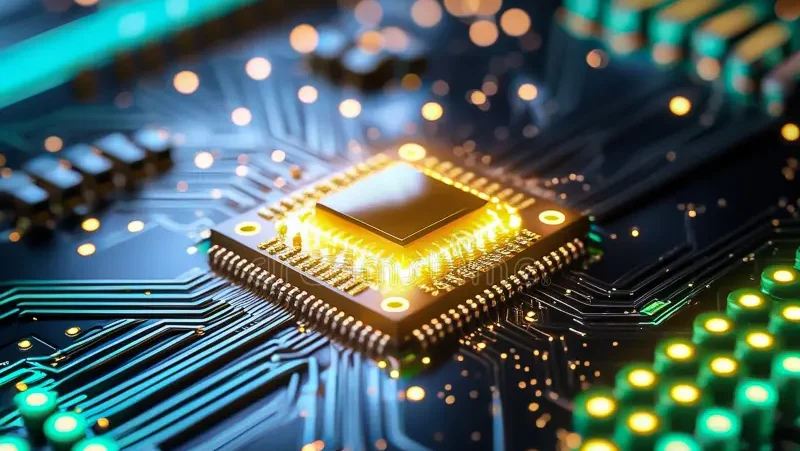
Radiation in space environments—cosmic rays, solar particle events, trapped radiation in Van Allen belts—causes single-event upsets (SEUs), latch-ups, and cumulative degradation that can corrupt memory, flip bits in registers, or permanently damage semiconductor devices. VORAGO’s HARDSIL technology provides inherent radiation protection at the silicon level, enabling microcontrollers to operate reliably in low-Earth orbit (LEO), medium-Earth orbit (MEO), and geostationary orbit (GEO) without extensive shielding or redundant systems.
However, radiation protection alone doesn’t address cybersecurity threats that intensify as satellites become network nodes rather than isolated platforms. Secure boot ensures firmware hasn’t been tampered with during deployment or updates. Encryption protects command and telemetry data from interception or manipulation. Root of trust validates that cryptographic operations occur in trusted execution environments. Over-the-Air (OTA) firmware updates—essential for patching vulnerabilities and adapting to evolving threats over multi-year missions—require authentication mechanisms that prevent adversaries from injecting malicious code.
The VORAGO-wolfSSL partnership integrates these protections by embedding wolfSSL’s cryptographic stack directly into radiation-hardened microcontrollers. This silicon-software co-design ensures that cryptographic operations don’t introduce vulnerabilities through radiation-sensitive implementations and that radiation protection doesn’t create cryptographic weaknesses through error correction mechanisms that could be exploited.
“When cryptography is replicated across an entire constellation, practices that were acceptable for a single spacecraft become systemic risks,” said Todd Ouska, Chief Technology Officer at wolfSSL. “This environment calls for cryptography that’s purpose-built for radiation-proof processors and designed with longevity in mind.”
Satellites deployed today may operate through 2035-2040, spanning periods during which cryptographic standards, threat models, and attack techniques will evolve substantially. Encryption algorithms considered secure at launch may face quantum computing threats, new side-channel attacks, or regulatory changes requiring different key lengths or cipher suites. Traditional aerospace design philosophy—locking down specifications at launch—conflicts with cybersecurity requirements for cryptographic agility and adaptability.
wolfSSL’s approach emphasizes validated, adaptable cryptography that can support evolving standards without requiring hardware replacement. FIPS-certified implementations provide government and defense customers with compliance assurance, while the ability to update cryptographic libraries via secure OTA mechanisms enables missions to respond to emerging threats without decommissioning satellites prematurely.
This design philosophy acknowledges a reality: space systems are becoming critical infrastructure—communications networks, Earth observation platforms, positioning and navigation services—that must remain trustworthy and operational as they accumulate strategic and economic importance. Unlike experimental missions where failure teaches lessons for next-generation designs, operational constellations must maintain security and reliability continuously across their entire service lives.
VORAGO and wolfSSL frame their collaboration as contributing to responsible space infrastructure scaling, including reducing preventable satellite failures that contribute to space debris. While not the primary focus, this positions radiation hardening and cybersecurity as environmental considerations: satellites that fail prematurely from radiation damage or are disabled by cyberattacks become uncontrolled debris, exacerbating orbital congestion and collision risks that threaten all space operations.
As commercial space investment accelerates and national security dependencies on satellite infrastructure deepen, the industry faces pressure to demonstrate that constellation-scale deployments won’t create cascading risks—whether through debris generation, security vulnerabilities, or reliability failures that undermine trust in space-based services. Silicon-level integration of radiation protection and cryptographic security addresses these concerns by treating resilience as a system property rather than a component feature.
The SmallSat Symposium demonstration of wolfBoot running on the U.S. government-qualified VA41630 microcontroller provides validation that the integrated approach works in practice, not just theory. Whether this partnership model—where chip providers and security software companies co-engineer solutions from the silicon level up—becomes standard practice across the space industry depends on how constellation operators balance upfront integration costs against long-term operational risks. For missions where security failures or radiation-induced faults create fleet-wide vulnerabilities, the economics increasingly favor integrated resilience over separate point solutions.
About VORAGO
VORAGO Technologies is a US-based private semiconductor company pioneering radiation-hardened and radiation-tolerant microprocessors and microcontrollers for space, satellite, military, industrial, and autonomous mobility applications. Utilizing its patented HARDSIL® technology, VORAGO enables electronics to operate reliably in extreme environments ranging from Earth’s core through all flight altitudes and orbital planes to deep space. Having supported the success of more than 60 space and satellite missions, VORAGO provides the resilient backbone for the world’s mission-critical systems and the innovation necessary to push the boundaries of human pursuit. For more information, visit www.voragotech.com.
About wolfSSL
wolfSSL, the best-tested cryptography, provides embedded security solutions emphasizing speed, size, portability, features, and standards compliance. Our performance-optimized TLS library secures over 2 billion connections globally and is designed for standard, embedded, and RTOS environments. wolfSSL supports industry standards up to the current TLS 1.3 and DTLS 1.3, is up to 20 times smaller than OpenSSL, offers a simple API, an OpenSSL compatibility layer, OSCP and CRL support, dual licensing, FIPS 140-3 compliance and post-quantum cryptography (PQC algos including Dilithium, FALCON, KYBER, and more). wolfSSL users benefit from robust security measures while maintaining efficiency and flexibility in their integration options.