
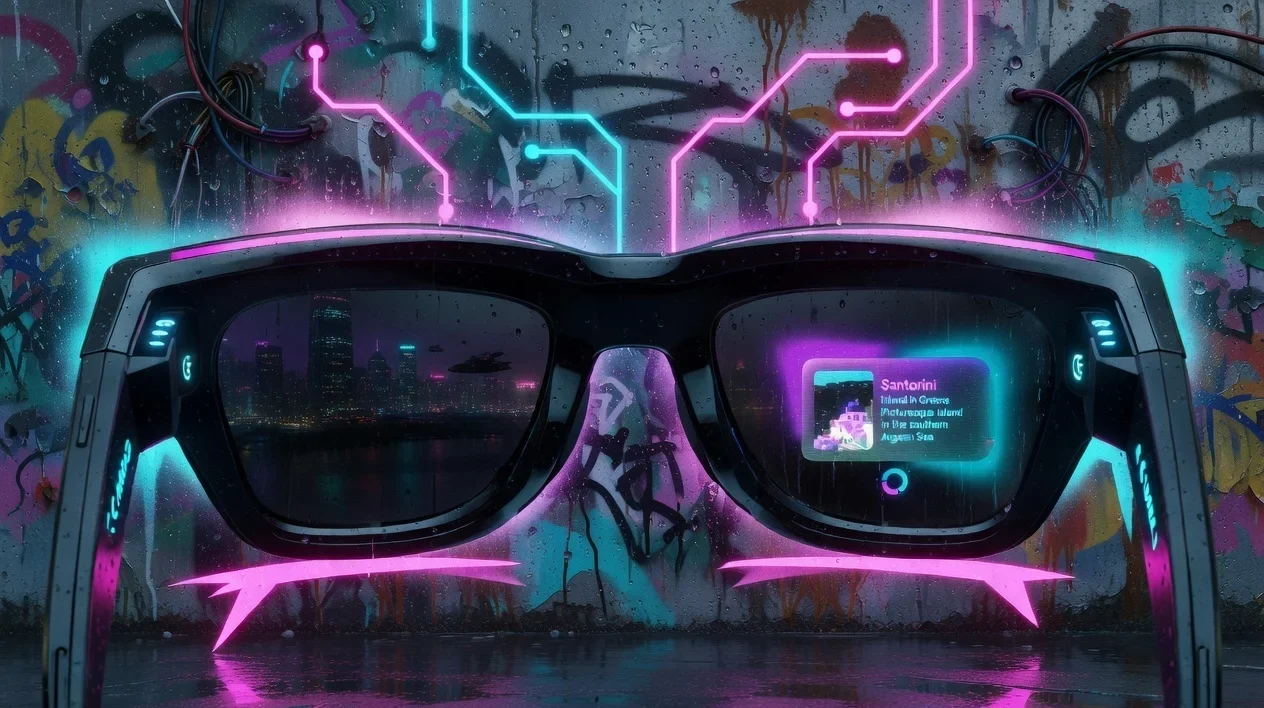
VeriSilicon (688521.SH) today announced that Hefei Hexagon Semiconductor has adopted VeriSilicon’s proven IP portfolio in its high-performance HX77 series image processing SoC, achieving first-pass silicon success. The adopted IPs include the GCNanoUltraV 2.5D Graphics Processing Unit IP, DW100 DeWarp Processing IP, and DC9200Nano Display Processing IP. The HX77 series is a highly integrated, low-power image processing SoC based on RISC-V architecture, integrating comprehensive video input/output interfaces, image processing, and system control capabilities.
By leveraging an innovative heterogeneous computing architecture and sophisticated power management technology, HX77 has achieved a technological breakthrough that enables 2K@60fps output with mere milliwatt-level power consumption. The SoC also realized the 3DoF hover feature on end devices through spatial computing, supporting multiple display interfaces including MIPI, LVDS, and DP/eDP for flexible adaptation to various display topologies across AR/VR glasses and display devices.
The GPU, display processing, and DeWarp IPs provided by VeriSilicon work in close coordination, enabling the HX77 series SoC to perform image buffering and processing without external DDR memory. This architectural innovation significantly reduces system latency and energy consumption, meeting the stringent requirements of AR glasses for highly integrated display solutions. VeriSilicon’s GCNanoUltraV GPU IP delivers high-performance graphics rendering and multi-layer composition, enabling low-latency and high-quality visual output. The DC9200Nano Display Processing IP supports multiple mainstream display interfaces and flexible display topologies, enabling dual-screen independent output at dual 1080p resolution. The DW100 DeWarp Processing IP provides high-precision image distortion correction and geometric transformation processing, supporting improved visual consistency and stable visual output for AR glasses.
The first-pass silicon success of the HX77 series validates its design goals and positions Hexagon Semi to address the growing market for AI/AR glasses requiring power-efficient, compact display solutions. “The first-pass silicon success of the HX77 series SoC validates its design goals in low power consumption, high integration, and display system flexibility, fulfilling the stringent demands of AI/AR glasses for power efficiency, performance, and compact size,” said Suker Shu, Founder and CEO of Hexagon Semi. “VeriSilicon’s mature and proven IP solutions have provided crucial support in system architecture design, display quality, and development cycle management, accelerating our product rollout for AI/AR glasses applications.” The 3DoF hover feature realized through spatial computing adds another dimension to the device capabilities, enhancing user experience in AR applications.
The collaboration between Hexagon Semi and VeriSilicon demonstrates the importance of deep optimization at the pixel processing level for wearable display applications. “Our team has worked closely with Hexagon to enable full-color display in lightweight glasses with ultra-low energy consumption. Through deep optimization at the pixel processing level and collaborative pixel data transmission across multiple IPs, we have significantly reduced energy usage and eliminated the need for external DDR access,” said Weijin Dai, Chief Strategy Officer, Executive Vice President and General Manager of IP Division at VeriSilicon. “For smart glasses with integrated displays, comprehensive pixel-level optimization is essential to deliver both performance and efficiency within strict energy budgets.” VeriSilicon’s Nano IP portfolio for wearables achieves an optimal balance of power efficiency, performance, and time-to-market through subsystem-level integration and optimization.
Hexagon Semi’s HX77 series represents a significant advancement in display processing for AR glasses, addressing the fundamental challenge of delivering high-quality visuals within the strict power and form factor constraints of wearable devices. The elimination of external DDR memory through collaborative IP architecture reduces both power consumption and system complexity, enabling thinner, lighter, and longer-lasting AR glasses. As the market for smart glasses expands across consumer, enterprise, and industrial applications, the availability of highly integrated, low-power display processors becomes increasingly critical. The first-pass silicon success positions Hexagon Semi to capture early market opportunities while VeriSilicon’s IP portfolio provides a foundation for continued innovation. The companies’ collaboration on pixel-level optimization establishes a reference architecture that could be adopted by other wearable device manufacturers seeking to balance performance and efficiency.
Hexagon Semi’s HX77 series image processing SoC, built on VeriSilicon’s GPU, DeWarp, and display processing IPs, achieves ultra-low power consumption with 2K@60fps output at milliwatt levels for AR glasses applications. By eliminating external DDR memory through collaborative IP architecture, the solution reduces latency and energy consumption while enabling dual-screen independent display. For manufacturers of next-generation smart glasses, this technology provides a path to high-quality visuals within strict power and form factor constraints.
Join the conversation in the comments below.
About Hexagon Semiconductor
Hexagon Semiconductor is committed to becoming a leading AIoT SoC company, specializing in highly integrated, low-power image processing solutions that empower customers’ innovation and propel the evolution of intelligent terminals. For partnership inquiries, please contact: [email protected].
About VeriSilicon
VeriSilicon is committed to providing customers with platform-based, all-around, one-stop custom silicon services and semiconductor IP licensing services leveraging its in-house semiconductor IP. For more information, please visit: www.verisilicon.com
Source link: https://www.businesswire.com/