
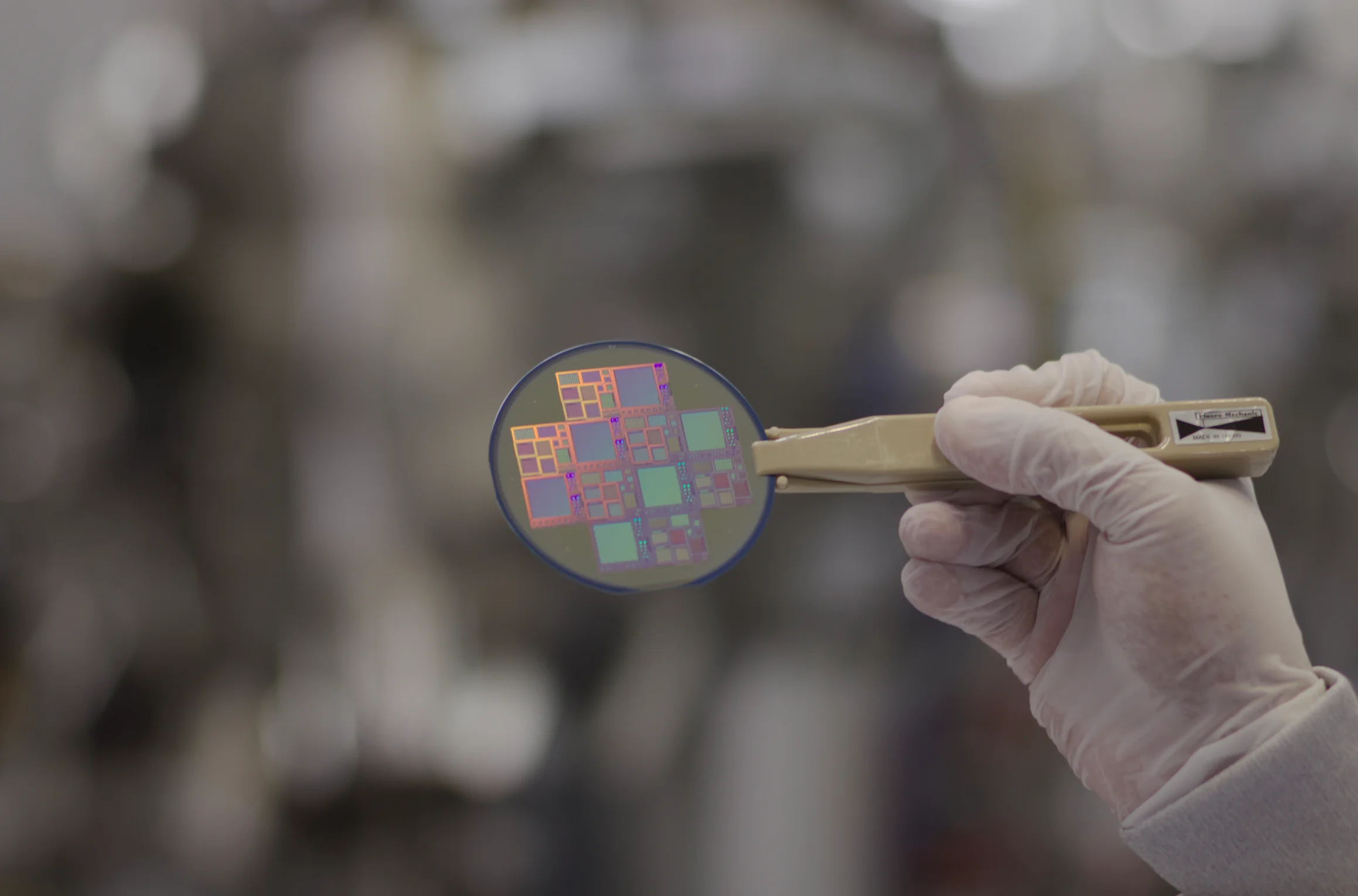
Why is the current AI stack struggling to meet the demands of scalable, efficient computing? Great Sky, a company pioneering a fundamentally new computing architecture, is set to change the game. Founded by a team of renowned researchers from the National Institute of Standards and Technology (NIST), Great Sky has announced the public debut of its technology, a $14 million seed round, and several major commercial milestones. The company’s superconducting optoelectronic technology promises orders-of-magnitude improvements in efficiency and performance, addressing the limitations of current GPU and transformer-based systems.
Current AI systems, built on transformers running on GPUs, have brought significant advancements but are hitting performance plateaus. Issues like diminishing returns on model size, unsustainable energy demands, and latency ceilings are impeding the progress of agentic and multimodal workloads. Morgan Stanley analysts predict that AI demand could leave the US with a power deficit of up to 13 gigawatts by 2028. Great Sky’s technology is designed to overcome these challenges by integrating superconducting compute, high-bandwidth optical connectivity, and semiconductor circuitry.
Just as a symphony conductor ensures that each instrument plays in harmony, Great Sky’s architecture ensures that each component of the AI system operates in perfect sync. By co-locating memory and processing, Great Sky enables high-speed programmability and on-device learning, making it easier to adapt to new data streams without constant retraining. This tighter coupling of memory and learning improves stability and alignment, making it easier to shape behavior through reinforcement signals and constraints as models update over time.
Great Sky’s technology is built on 12 years of research at NIST, resulting in 23 peer-reviewed publications and eight patents. The company’s superconducting optoelectronic architecture is designed to mimic the brain’s efficiency and performance. By constructing hardware that operates near the physical limits of speed and energy efficiency, Great Sky can transition to a completely different roadmap for scaling AI. “By constructing new hardware that enables more sophisticated architectures and algorithms while performing operations near the physical limits of speed and energy efficiency, we can transition to a completely different roadmap for scaling that doesn’t require hundreds of billions in capex and gigawatt data centers,” said Jeff Shainline, co-founder and CEO of Great Sky.
Great Sky’s first-generation chips have already shown significant performance gains, processing over 60 million video frames per second with orders of magnitude less energy per video analyzed compared to conventional models. The company is manufacturing its technology in a robust, scalable process, with plans to develop multi-modular cognitive systems that can operate a million times faster than biologics. These advancements will unlock new classes of AI applications in commercial, defense, and energy sectors.
Great Sky’s revolutionary technology marks a pivotal shift in the AI landscape, addressing the critical limitations of current hardware. For businesses, this means the potential for more efficient, scalable, and powerful AI solutions. How is your organization preparing for this paradigm shift? Join the conversation in the comments below.
About Great Sky
Great Sky is building hardware to enable intelligence at the boundaries of physics. It was founded by a renowned team of PhDs and researchers from the U.S. National Institute of Standards and Technology with decades of experience in photonics, physics, semiconductors, and superconductors. It’s backed by marquee investors like Bison Ventures, Matchstick Ventures, Range Ventures, Bluebirds SVM Limited, Access Venture Partners, Olive Tree Capital, Buff Gold Ventures, Mythos Ventures, Wireframe Ventures, Service Provider Capital, and angel investors, including Mark Leslie, Adam Pritzker, Harry Gandhi, Jonathan Cortes, Murray McCaig, Kai Hudek, Owen Lozman, and Ken Li.
Learn more at www.greatsky.ai.
Source link: https://www.businesswire.com/