
Intel Recognized by Fortune as a Leader in Innovation Driving the Future of AI and Computing
Intel has been named one of Fortune’s Most Innovative Companies, reinforcing its enduring role as a foundational force in the global technology ecosystem. The recognition highlights not only Intel’s historical contributions to computing but also its ongoing transformation as it positions itself at the center of artificial intelligence (AI), advanced semiconductor manufacturing, and next-generation computing platforms.
Innovation as Intel’s Core Operating Principle
Since its founding in 1968, Intel has consistently defined and redefined the trajectory of modern computing. Innovation is not simply a function within the company—it is the organizing principle behind its strategy, product development, and long-term vision.
Being included in Fortune’s list underscores Intel’s ability to evolve across multiple technological eras. From early breakthroughs in silicon design to today’s complex AI-driven systems, the company has maintained a steady focus on building technologies that underpin the global digital economy.
Today, that mission is more critical than ever. As industries undergo rapid digitization and AI adoption accelerates, Intel’s role has expanded from chipmaker to full-stack computing enabler—supporting everything from cloud infrastructure and enterprise systems to edge devices and personal computing.
A Legacy That Shaped the Modern Computing Era
Intel’s innovation story is deeply intertwined with the evolution of computing itself. The company’s breakthroughs have not only advanced technology but also enabled entirely new industries.
Over nearly six decades, Intel has accumulated:
- 58 years of continuous innovation leadership
- More than 64,000 active patent assets worldwide
- Technologies powering approximately 70% of desktop and laptop microprocessors globally
These figures reflect both scale and influence. Intel’s architectures and platforms have become the backbone of computing infrastructure, supporting billions of devices and critical workloads across the globe.
Five Defining Innovations That Continue to Shape the Industry
1. The First Microprocessor: A New Computing Paradigm
The introduction of the Intel 4004 in 1971 marked a turning point in technological history. By placing a computer’s processing capabilities onto a single chip, Intel effectively launched the modern computing era.
This breakthrough enabled the digitization of industries ranging from manufacturing to finance, laying the groundwork for the interconnected digital systems that define today’s economy. The same principle—scaling compute into compact, efficient form factors—continues to drive innovation in AI and edge computing.
2. x86 Architecture: The Backbone of Global Computing
The evolution of the x86 architecture established a universal standard for computing platforms. From personal computers to enterprise servers, x86 has remained the dominant architecture powering global workloads.
Its longevity is rooted in adaptability. As computing demands have evolved—from basic applications to cloud-scale AI workloads—x86 has continuously advanced to support higher performance, improved efficiency, and broader compatibility.
Today, it remains central to Intel’s strategy as the company adapts the architecture for the AI era, where heterogeneous computing and distributed systems are becoming the norm.
3. Intel® Core™ Processors: Redefining Client Computing
The launch of Intel Core processors in 2006 redefined performance and energy efficiency in personal computing. Over time, this product family has evolved to meet increasingly sophisticated user demands, from high-performance gaming to professional workloads.
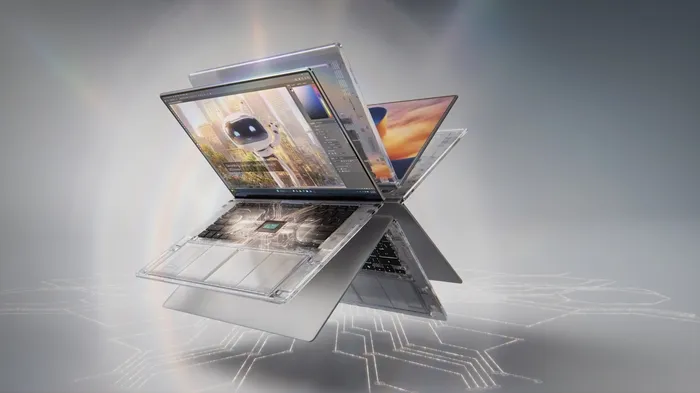
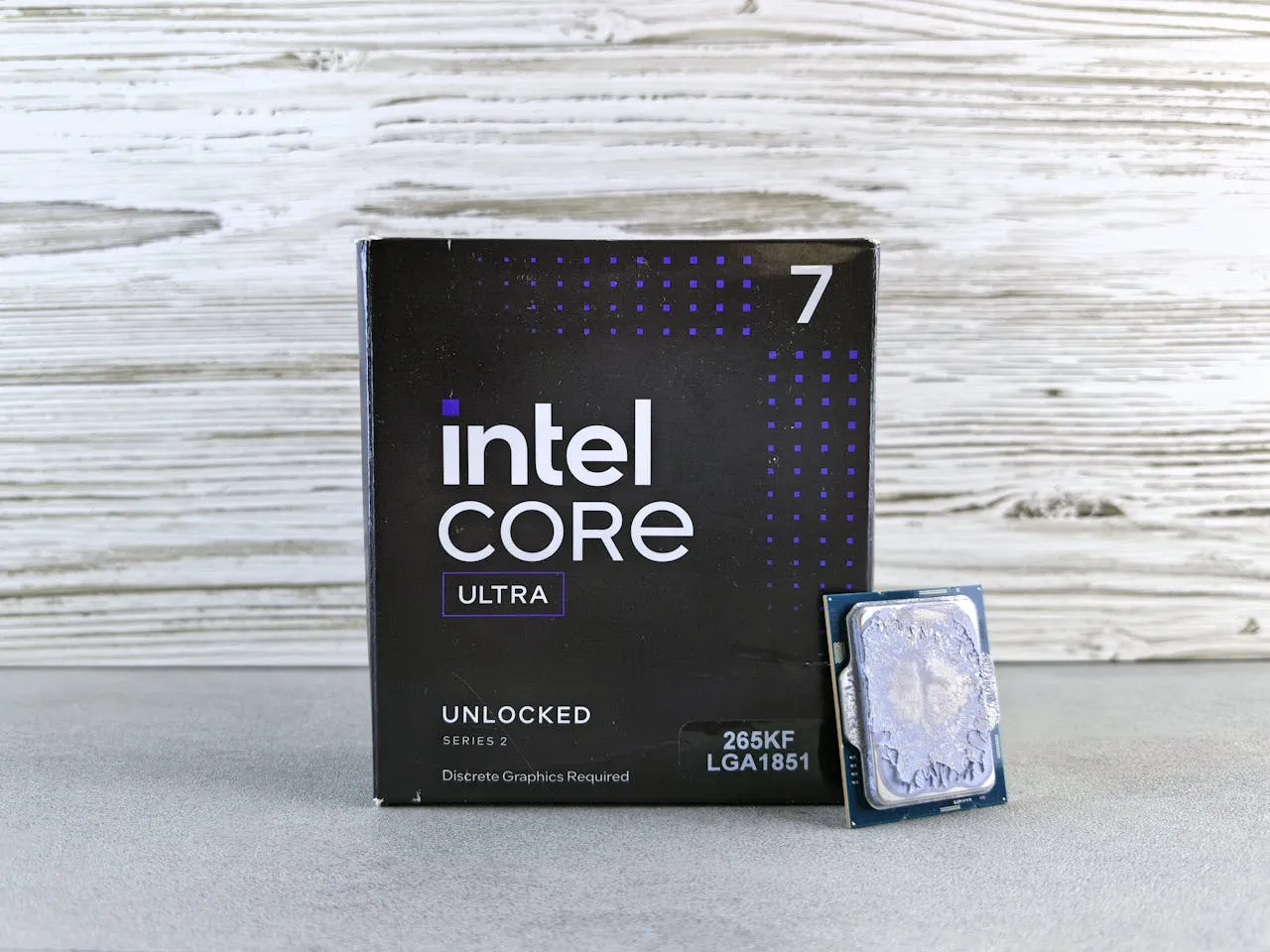
The latest generation, including Core Ultra processors, represents a shift toward AI-native PCs. These systems integrate dedicated accelerators, enabling on-device AI processing for applications such as content creation, productivity, and real-time analytics.
This transition reflects a broader industry trend: AI is moving closer to the user, requiring compute capabilities at the edge rather than relying solely on centralized data centers.
4. Advanced Packaging: Unlocking New Chip Architectures
As traditional scaling approaches encounter physical limitations, Intel has pioneered advanced packaging technologies such as EMIB and Foveros. These innovations enable the integration of multiple chiplets into a single package, creating more flexible and powerful architectures.
Advanced packaging is now a critical enabler of modern computing, particularly for AI and high-performance workloads. By allowing different components—such as CPUs, GPUs, and memory—to be optimized independently and then combined, these technologies deliver improved performance, efficiency, and scalability.
5. Intel 18A: A New Frontier in Semiconductor Manufacturing
Intel’s Intel 18A process technology represents a major step forward in semiconductor innovation. Featuring breakthroughs such as RibbonFET gate-all-around transistors and PowerVia backside power delivery, 18A is designed to deliver significant gains in performance and energy efficiency.
This advancement is central to Intel’s efforts to regain process leadership and support the next generation of AI and high-performance computing workloads. It also plays a key role in the company’s foundry strategy, enabling it to serve both internal and external customers with cutting-edge manufacturing capabilities.
Building the Foundations of the Intelligence EraScaling AI Through Open, Heterogeneous Systems
Rather than relying on a single type of processor, Intel is advancing a heterogeneous computing model that combines CPUs, GPUs, NPUs, and specialized accelerators. This approach allows AI workloads to run efficiently across different environments, including data centers, cloud platforms, edge systems, and client devices.
Open software ecosystems and interoperable platforms are central to this strategy, giving developers the flexibility to deploy AI solutions tailored to their specific needs.
Evolving x86 for AI-Driven Workloads
As AI becomes a fundamental component of computing, Intel is enhancing x86 architecture to meet new demands. This includes optimizing performance for machine learning tasks, improving power efficiency, and enabling seamless integration with other compute elements.
From AI PCs to hyperscale infrastructure, x86 continues to function as the control plane for increasingly complex and distributed workloads.
Establishing a Leading-Edge Foundry Ecosystem
Intel is also investing heavily in its foundry capabilities, aiming to become a global leader in semiconductor manufacturing. This includes advancing process nodes such as 18A and beyond, scaling advanced packaging technologies, and expanding production capacity in the United States.
By combining design, manufacturing, and packaging under one umbrella, Intel is creating a vertically integrated ecosystem capable of delivering end-to-end innovation.
A Unique Position in the Global Technology Landscape
What sets Intel apart is its ability to operate across the entire computing stack—from silicon and system architecture to software and deployment. This integrated approach enables tighter optimization, faster innovation cycles, and greater control over performance and reliability.
Additionally, Intel’s emphasis on U.S.-based research and manufacturing provides strategic advantages in terms of supply chain resilience, security, and sustainability.
Intel’s recognition as one of Fortune’s Most Innovative Companies reflects more than past achievements—it signals confidence in the company’s future direction.
As the world enters a new phase of AI-driven transformation, Intel is positioning itself as a central enabler of this shift. By combining decades of expertise with forward-looking investments in AI, semiconductor technology, and manufacturing, the company is helping define the next chapter of computing.
In an industry characterized by rapid change and intense competition, Intel’s enduring commitment to innovation remains its most powerful differentiator—ensuring it continues to play a leading role in shaping the technologies that drive the global economy.
Source link: https://newsroom.intel.com