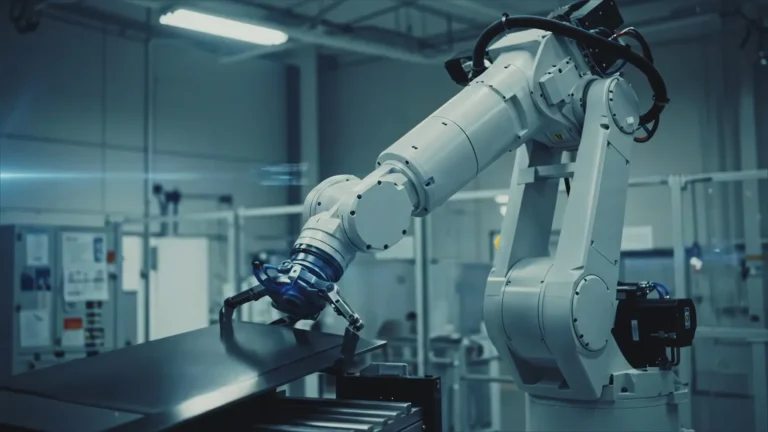

Faraday Future Intelligent Electric Inc. (“FF”), a California-based global leader in the emerging field of Embodied AI (EAI), has released its latest weekly business update through a detailed Q&A session featuring its Founder and Global Co-CEO, YT Jia. The update provides insight into the company’s financial turnaround, early success in its robotics segment, and its ambitious plans to build a scalable AI-powered education ecosystem in the United States.
One of the most notable highlights discussed in the update is FF’s transition from negative to positive net equity—a milestone that reflects a significant financial recovery for the company. According to Jia, this achievement was not straightforward and came after a challenging period marked by substantial financial setbacks.
He explained that just prior to the release of the company’s third-quarter financial report last year, FF experienced a major disruption. The company’s audit firm applied highly conservative accounting standards, resulting in a one-time impairment charge of approximately $130 million. This impairment was linked to equipment and tooling associated with the FF 91 vehicle, primarily due to lower-than-expected short-term utilization.
This charge represented nearly two-thirds of the company’s total loss during that period and directly caused net equity to fall into negative territory. It also contributed to a delay in the release of the financial report. While the company disagreed with the severity of the accounting treatment, it ultimately had no option but to accept it in order to proceed with regulatory filings. Jia acknowledged the frustration this caused both internally and among investors.
In response, FF initiated a comprehensive internal review and quickly implemented corrective measures. A key component of this recovery strategy was debt optimization. Through active engagement with creditors, including suppliers, the company successfully negotiated and executed approximately $100 million in debt reduction and restructuring. This effort played a crucial role in restoring the company’s balance sheet and bringing net equity back into positive territory.
Jia emphasized that this recovery would not have been possible without the cooperation and support of FF’s partners and stakeholders, underscoring the importance of alignment and trust during periods of financial stress.
Another major development highlighted in the update is the early success of FF’s EAI robotics business. In its very first quarter of product deliveries, the segment achieved a positive gross margin—marking a historic first for the company.
Jia described this milestone as a critical validation point for FF’s business model. He explained that moving “from zero to one” demonstrates the viability of the company’s integrated approach, where product launches are directly tied to sales, and sales are closely aligned with delivery efficiency and profitability.
This achievement carries several strategic implications:

Beyond financial metrics, the robotics business is also enabling FF to build a multi-layered revenue model based on “Device + Skills + Data.” This framework integrates hardware sales with software capabilities and data monetization, forming a continuous feedback loop—referred to by Jia as the “Device–Data–Brain” flywheel.
This approach draws parallels to strategies employed by companies like Tesla, which has successfully leveraged the integration of electric vehicles, data collection, and autonomous driving technologies to create a self-reinforcing ecosystem.
FF aims to replicate and expand upon this model within the EAI domain, particularly as it positions itself as one of the first companies in the United States to deliver both humanoid and biomimetic robotic systems.
Looking ahead, FF has set an ambitious target of shipping more than 1,000 EAI robotics units by the end of 2026. To achieve this, the company plans to implement its “6-3-3” strategy in a phased and structured manner.
The initial phase will focus on two primary market segments: B2B and B2C.
While FF has previously outlined its B2B applications—such as enterprise automation and industrial use cases—the current update places particular emphasis on the B2C segment, specifically in the area of family education.
Education has been identified as the first core use case in FF’s consumer strategy. The Faraday company envisions its robotics products playing a central role in supporting learning, creativity, and personal development in the AI era.
Jia highlighted that the goal is not merely to introduce new devices into classrooms or homes, but to fundamentally reshape how students interact with technology and acquire knowledge. By integrating AI-powered robotics into educational environments, FF aims to foster critical thinking, hands-on experimentation, and early exposure to advanced technologies.
To support this vision, FF has already begun discussions with relevant government departments in California. The company plans to collaborate with school districts to establish AI robotics laboratories across K–12 institutions, as well as within the University of California system, including campuses such as UCLA and UC Berkeley.
The broader objective is to create the first scaled EAI education system in the United States—an integrated framework that combines hardware, software, curriculum, and real-world application.
During the discussion, Jia also addressed broader industry trends, particularly the evolving competitive landscape among technology companies. He emphasized that future competition will be defined not just by hardware innovation, but by the ability to integrate AI, data, and ecosystem capabilities into cohesive platforms.
In this context, Faraday referenced projections suggesting that AI-driven services—such as autonomous driving and robotics—could account for a majority of revenue for leading tech companies in the coming years. He reiterated that companies capable of transitioning from traditional hardware sales to comprehensive ecosystem offerings will be best positioned to lead the next wave of technological evolution.
Jia also made a bold prediction regarding the long-term potential of the EAI industry. He suggested that its total market value could eventually surpass that of the automotive sector, driven by widespread adoption of intelligent agents. In a future scenario, he envisioned a world where billions of individuals each have access to personalized EAI systems, triggering exponential industry growth.
The update concluded on a more personal note, as Jia addressed questions about his son’s recent admission to Stanford University’s computer science program—a topic that had gained significant attention online.
Rather than attributing this success to a specific formula, Jia emphasized the importance of early interest and self-driven exploration. He noted that his son developed a passion for computers and AI at a young age and consistently pursued opportunities to gain practical experience, including internships at AI-focused companies like FF.
These hands-on experiences, combined with academic dedication, helped shape a clear sense of purpose and direction—factors that likely contributed to his acceptance into top-tier institutions.
Inspired by this experience, Jia revealed plans to integrate FF’s robotics products into his children’s learning environments, enabling experimentation, development, and exploration both at home and in academic settings.
As FF continues to refine its strategy, the company is positioning itself at the intersection of mobility, robotics, and artificial intelligence. With a recovering financial foundation, early validation of its robotics business model, and a forward-looking vision for education, FF is aiming to establish itself as a key player in the rapidly evolving EAI ecosystem.
Jia concluded by noting Faraday that future updates will address additional topics, including the company’s “Super One” initiative, capital market strategies, and further enhancements to its operational framework—signaling that FF’s transformation is still in progress, with more developments on the horizon.
Source link: https://www.businesswire.com