ClickUp has released version 4.0 of its platform, introducing enhancements aimed at unifying disparate work tools into a single environment. The update addresses longstanding challenges in enterprise productivity software, where teams often juggle multiple applications for tasks, documentation, communication, and automation. By integrating these elements, ClickUp 4.0 seeks to reduce the inefficiencies caused by tool silos and frequent context switches.
The platform’s evolution reflects broader industry trends toward consolidated workspaces. As organizations scale, the proliferation of specialized software creates administrative burdens and hampers collaboration. ClickUp positions 4.0 as a response, combining core functionalities with artificial intelligence to streamline operations without requiring users to adapt to fragmented interfaces.
Zeb Evans, founder and CEO of ClickUp, emphasized the strategic shift. “Software convergence was inevitable,” he stated. “Work sprawl undermines productivity by forcing teams to manage disconnected systems.” Evans highlighted how 4.0 consolidates software and AI capabilities, enabling organizations to centralize their tech stack.
Developers at ClickUp focused on precision in user interface and functionality. Every aspect of the interface underwent refinement based on user feedback, resulting in what the company describes as its most refined iteration. This attention to detail extends to performance optimizations and intuitive layouts, minimizing cognitive load for enterprise users.
The release aligns with demands for platforms that support hybrid work models. With remote and in-office teams relying on shared digital spaces, seamless integration becomes critical. ClickUp 4.0 prioritizes this by embedding AI-driven features that anticipate user needs, fostering efficiency across distributed workforces.
The update introduces several interconnected capabilities designed for B2B environments. These features target common pain points in project management, such as information silos and manual processes.
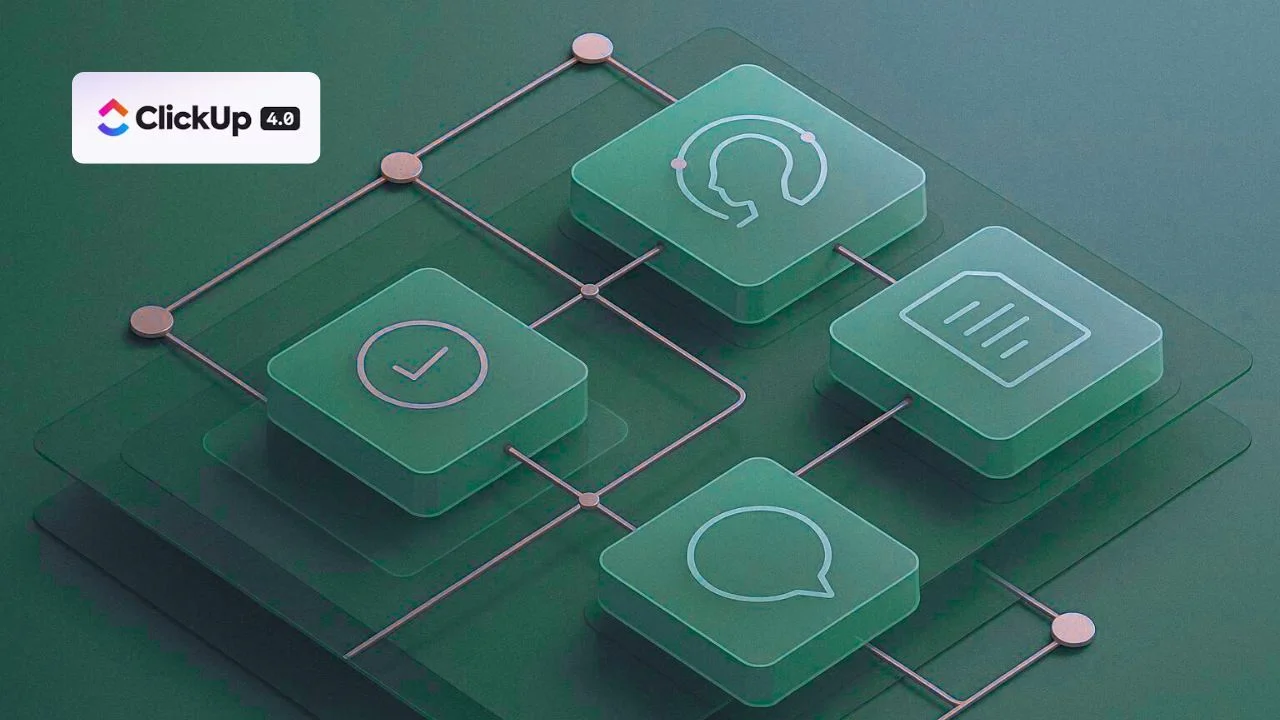
A redesigned sidebar serves as the central hub for accessing tasks, documents, communications, and other resources. Users can navigate between modules without leaving the workspace, eliminating the need for external apps. This unified view supports quick transitions, which is particularly valuable for teams handling complex projects with multiple deliverables.
In practice, managers can oversee task assignments alongside related docs and chat threads in one glance. This reduces search times and ensures context remains intact, a common issue in legacy systems where data resides in isolated repositories.
ClickUp Brain automates routine tasks, analyzes data for insights, and recommends actions. It processes workflows to identify bottlenecks, such as overdue tasks or resource gaps, and suggests remedies. This allows knowledge workers to allocate time to strategic activities rather than administrative duties.
For IT departments and operations teams, this means programmable automations that scale with organizational growth. Brain’s capabilities extend to predictive analytics, drawing from historical data to forecast project timelines and risks.
New AI agents operate in the background, monitoring workflows and intervening as needed. They answer queries, deliver real-time insights, and advance tasks without explicit user prompts. For instance, an agent might flag a dependency delay and notify stakeholders proactively.
This ambient approach differs from reactive AI tools, which require manual activation. In enterprise settings, it supports continuous operations, especially in sectors like software development or consulting where momentum is key.
Chat and direct messaging now incorporate full work context. Users access task details, docs, and goals directly within conversations, ensuring discussions stay grounded in relevant data. This integration prevents the loss of information that often occurs when switching between chat apps and management tools.
Teams benefit from threaded discussions linked to actionable items, enhancing accountability. Compliance-focused industries, such as finance or healthcare, gain from auditable chat histories tied to project records.
ClickUp 4.0 adds native apps for calendar management, video conferencing, AI-assisted note-taking, and team scheduling. These tools operate within the platform, reducing reliance on third-party integrations that can introduce latency or security risks.
Video calls include real-time transcription and summarization via AI, streamlining post-meeting follow-ups. Scheduling features optimize availability across time zones, a boon for global enterprises. Collectively, these apps create a self-contained ecosystem for daily operations.
ClickUp 4.0 arrives amid intensifying competition in the productivity software market. Vendors like Asana, Monday.com, and Atlassian continue to expand their offerings, but fragmentation persists. ClickUp’s convergence model challenges this status quo by prioritizing an all-in-one architecture.
Evans described work sprawl as a “silent killer” of productivity. Studies from Gartner and McKinsey underscore this, noting that employees spend up to 20% of their time navigating tools. ClickUp 4.0 counters this with a modular yet unified design, allowing customization without complexity.
Organizations evaluating platforms should consider total cost of ownership. While initial setup requires migration effort, long-term savings stem from reduced licensing fees and training needs.
The infusion of AI marks a maturation point for productivity platforms. Beyond automation, features like ambient agents represent proactive intelligence, akin to enterprise resource planning systems evolving with machine learning. ClickUp’s implementation emphasizes ethical AI, focusing on augmentation rather than replacement of human roles.
Industry analysts predict that by 2027, 70% of enterprises will adopt AI-integrated workspaces. ClickUp 4.0 positions the company to capture this shift, particularly among mid-market firms seeking scalable solutions.
Evans noted the team’s dedication: “We’ve incorporated user input at every stage.” Beta testing and iterative refinements ensured the release meets real-world demands. Availability is immediate for all users, with documentation at ClickUp.com.
For B2B buyers, this underscores ClickUp’s commitment to iterative improvement. Procurement teams can assess 4.0 through free trials, evaluating fit against specific use cases like agile development or marketing campaigns.
The launch coincides with macroeconomic pressures favoring efficiency tools. As budgets tighten, CIOs prioritize platforms that deliver measurable ROI through consolidation. ClickUp 4.0’s features align with this, offering quantifiable benefits like time savings and improved collaboration metrics.
Competitive differentiators include the depth of AI integration and native app suite. While rivals offer similar elements, ClickUp’s sidebar convergence provides a smoother experience, per early user reports.
About ClickUp
ClickUp is the world’s first Converged AI Workspace, bringing together all work apps, data, and workflows. ClickUp eliminates all forms of work sprawl to provide 100% context and a single place for humans and AI agents to work together. Trusted by more than 20 million users worldwide, ClickUp is on a mission to maximize human productivity.