
Revolutionizing Wildfire Prevention: How Dryad Networks’ AI-Powered Drones Are Tackling the Growing Crisis
In the wake of devastating wildfires, such as the catastrophic Los Angeles fires estimated to cost over $250 billion, the urgent need for innovative wildfire prevention and suppression technologies has never been clearer. Enter Dryad Networks, a trailblazer in ultra-early wildfire detection, which recently achieved a groundbreaking milestone by demonstrating the world’s first fully functional drone prototype capable of autonomously detecting, locating, monitoring, and eventually extinguishing wildfires.
On March 27, in Eberswalde, Germany, Dryad showcased its revolutionary Silvaguard drone system during a live demonstration. The event, moderated by Lindon Pronto, senior wildfire management expert at the European Forest Institute, featured presentations from Dryad’s CEO Carsten Brinkschulte and CTO Pedro Silva. The highlight? A real-time wildfire scenario where Dryad’s Silvanet sensors detected a controlled fire almost instantly, triggering the release of a Silvaguard drone.
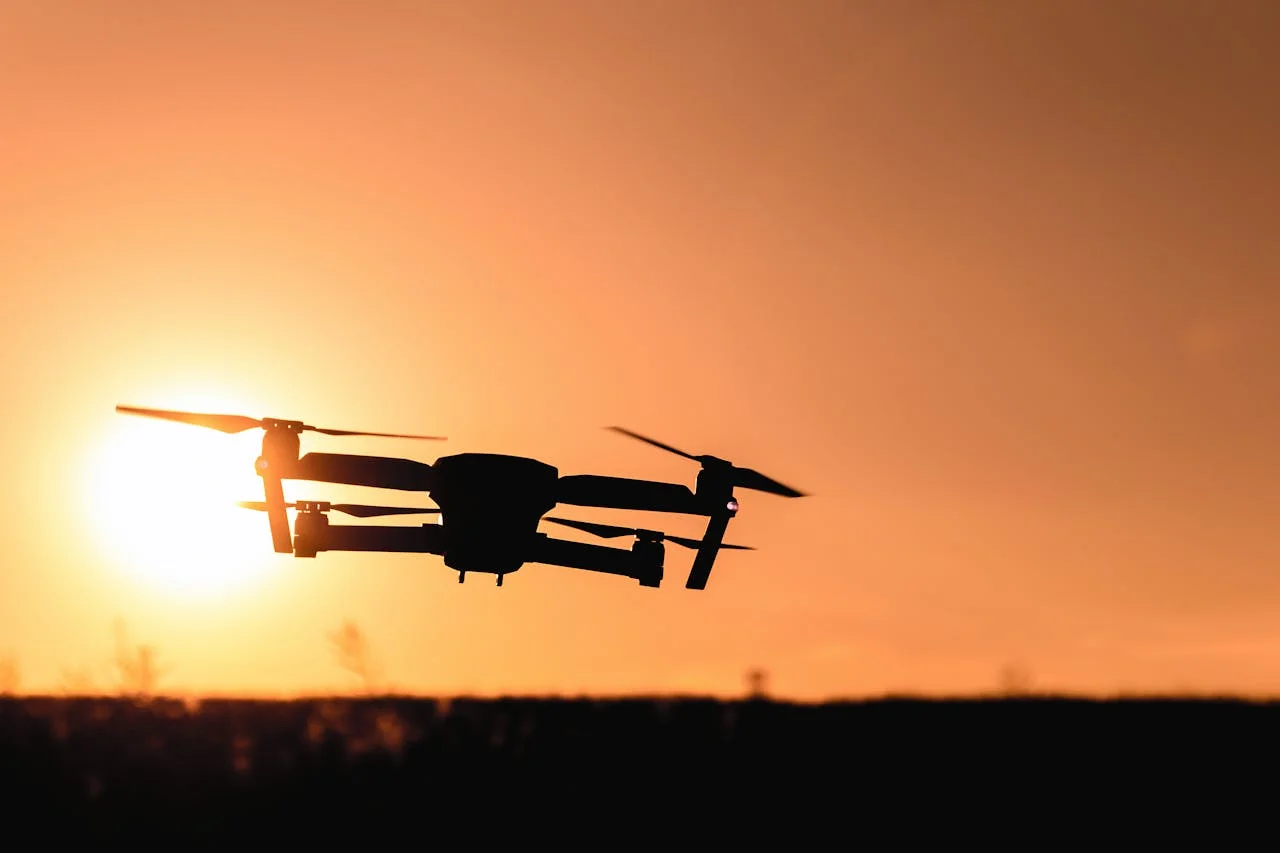
The drone autonomously navigated to the fire’s location, providing real-time aerial observation through optical and infrared imagery to pinpoint the fire’s size and exact position. This capability is critical for saving precious time and resources, enabling rapid intervention before wildfires spiral out of control.
“With wildfires growing more destructive each year, ultra-early detection alone may no longer be enough,” said Brinkschulte. “Traditional fire suppression methods often take too long to respond. We need rapid and autonomous suppression systems. Silvaguard represents a critical leap forward toward the vision of AI-powered drones extinguishing fires before they spread.”
Dryad’s Silvanet system is already operational in over 50 installations worldwide, including regions like Lebanon, Italy, Germany, Thailand, Canada, and the United States. Silvanet uses solar-powered gas sensors connected via a wireless IoT mesh network to detect wildfires at their smoldering stage—long before flames erupt. Once a fire is detected, Silvanet sends real-time alerts to authorities, enabling swift action.
The newly introduced Silvaguard drone system builds on this foundation, offering an autonomous response mechanism that will eventually suppress fires in their earliest stages. In the future, Silvanet and Silvaguard will work seamlessly together: Silvanet detects the fire, triggers the drone, and Silvaguard responds by deploying suppression technologies, such as acoustic waves, to extinguish the blaze before it spreads.
Wildfires are becoming increasingly catastrophic, with global tree cover loss from fires reaching 138 million hectares (341 million acres) between 2001 and 2023, according to Global Forest Watch. In the U.S. alone, fast-moving wildfires accounted for 78% of structures destroyed and 61% of suppression costs ($18.9 billion) from 2001 to 2020. With climate change exacerbating conditions for wildfires, early detection and rapid response are crucial for mitigating destruction.
Dryad’s integrated solution not only addresses these challenges but also lays the groundwork for a scalable, automated wildfire suppression network. By combining AI-driven decision-making with multi-drone coordination, Silvaguard aims to provide rapid, autonomous wildfire response across large, fire-prone areas.
The successful demonstration marks the completion of Phase 1 of Silvaguard’s development, where the drone autonomously responds to fire alerts and provides real-time situational awareness. In Phase 2, Dryad will focus on refining fire suppression capabilities, exploring advanced technologies like acoustic wave suppression. Rigorous testing and optimization will follow, ensuring the system’s effectiveness and scalability.
Long-term, Dryad envisions fleets of Silvaguard drones stationed in strategic locations worldwide, ready to deploy at a moment’s notice. These drones will form part of a fully autonomous wildfire suppression network, significantly reducing response times and minimizing damage.
The Silvaguard project is co-funded by the European Union, with €3.8 million in grants and loans from the European Regional Development Fund (ERDF). Dryad Networks is actively seeking collaboration with investors, policymakers, and wildfire management professionals to accelerate real-world deployments.
Potential customers include:
Dryad Networks’ innovations represent a paradigm shift in how we combat wildfires. By integrating ultra-early detection with autonomous suppression, Dryad is setting a new standard for wildfire management. As the company expands into markets like Australia and New Zealand, its technology promises to save lives, protect ecosystems, and mitigate economic losses caused by wildfires.
The Silvaguard drone system isn’t just a technological advancement—it’s a beacon of hope in the fight against one of humanity’s most pressing environmental challenges. With continued investment and collaboration, Dryad Networks is poised to transform wildfire prevention and suppression on a global scale.
For more information about Dryad Networks and its groundbreaking solutions, visit their website here.