
The digitization of major sports infrastructure is shifting from simple connectivity provision to the deployment of fully intelligent, self-driving network environments. In a strategic move to modernize the Riyadh Air Metropolitano Stadium, Atlético de Madrid has initiated a comprehensive technological overhaul using HPE Networking solutions. This two-phase project, spanning the 2025/26 and 2026/27 seasons, will replace legacy systems with an AI-native infrastructure designed to handle the massive data density of modern spectator events while preparing the venue for future digital demands.
At the core of this transformation is the implementation of HPE Aruba Central, a cloud-native AIOps platform that facilitates the management of over 1,500 next-generation Wi-Fi 7 access points. By moving beyond traditional network management, the stadium is adopting a proactive stance where artificial intelligence monitors performance in real-time. This shift allows for the predictive detection and resolution of anomalies, ensuring that the fan experience remains seamless even during peak congestion periods.
For large-scale venues, the primary technical hurdle is maintaining throughput stability when tens of thousands of devices attempt to connect simultaneously. Traditional static network configurations often fail under these conditions, leading to bottlenecks, packet loss, and a degraded user experience. As digital engagement becomes central to the stadium experience—from mobile ticketing to in-seat ordering and social sharing—network failure is no longer just an IT issue; it is an operational risk.
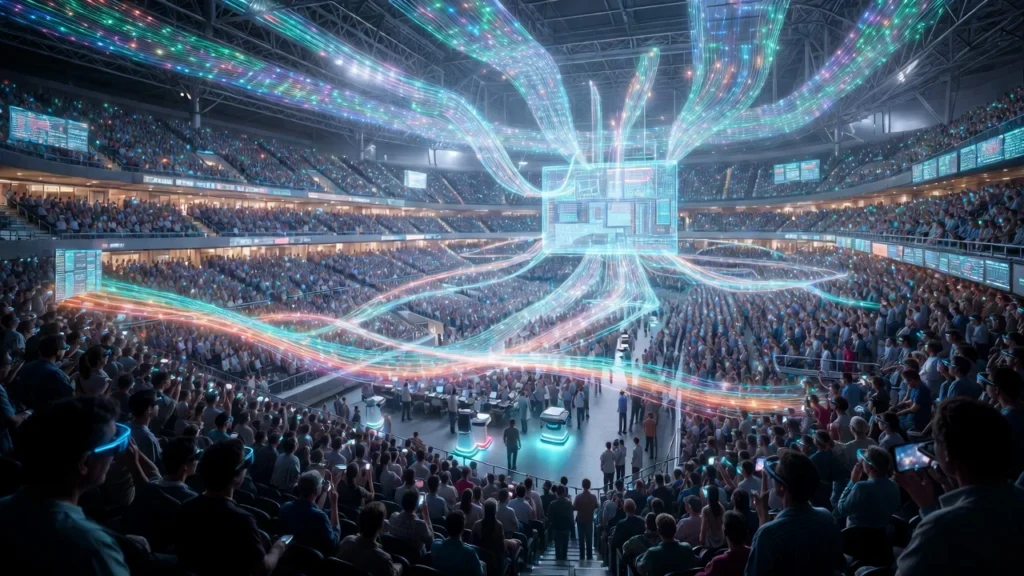
To combat saturation, the Riyadh Air Metropolitano is leveraging machine learning to automate radio frequency (RF) management. Functioning much like an autonomic nervous system, the infrastructure dynamically adjusts RF parameters—such as channel width and transmission power—without human intervention. This capability, powered by HPE Aruba Networking AirMatch technology, allows the network to “breathe” with the crowd, expanding capacity in high-density zones and mitigating interference instantly.
Beyond pure connectivity, the network acts as a sensor for operational efficiency. The infrastructure integrates presence analytics and location services, enabling venue operators to visualize mobility flows and heatmaps across different sectors. These insights allow management to adjust logistical resources, security staffing, and access control based on actual fan behavior rather than static estimates.
How can venues maintain high-performance connectivity without succumbing to excessive energy consumption during downtime? The answer lies in intelligent power management. The new infrastructure addresses this through AI-powered dynamic power save modes. When the stadium is not operating at full capacity, access points can automatically enter deep sleep modes or reduce functionality, significantly minimizing electricity usage. This feature is critical for a venue of this scale, aligning technological advancement with the club’s commitment to energy efficiency.
Simultaneously, the modernization extends to critical broadcasting operations. A dedicated, strictly segmented network for audiovisual production over IP is being deployed to protect high-bitrate traffic. Designed with rigorous Quality of Service (QoS) policies, this independent layer ensures low-latency video transmission, essential for modern broadcasting standards. This architectural overhaul will eventually extend to the wider “Sport City” and High-Performance Center, creating a unified digital campus by 2027.
The collaboration between Atlético de Madrid and HPE signals a broader industry transition toward “smart stadiums” where the network is a proactive business asset rather than a passive utility. By integrating AI-driven automation, predictive maintenance, and energy-conscious protocols, sports venues can unlock new service models while reducing operational overhead. As these intelligent infrastructures mature, they will set the baseline for how major entertainment facilities manage the convergence of physical crowds and digital demand.
About Atlético de Madrid
In recent years, coinciding with the opening of its new stadium, Atlético de Madrid has become one of the European clubs most committed to technology and innovation. The concept of the connected stadium is one of the pillars of the service the club offers to anyone visiting the Riyadh Air Metropolitano — whether to enjoy an Atlético de Madrid match, a large-scale concert, or a corporate event — environments in which having a connected experience is increasingly valued by fans and customers.
About HPE
HPE is a leader in essential enterprise technology, bringing together the power of AI, cloud and networking to help organizations achieve more. As pioneers of possibility, our innovation and expertise advance the way people live and work. We empower our customers across industries to optimize operational performance, transform data into foresight, and maximize their impact. Unlock your boldest ambitions with HPE. Discover more at www.hpe.com.