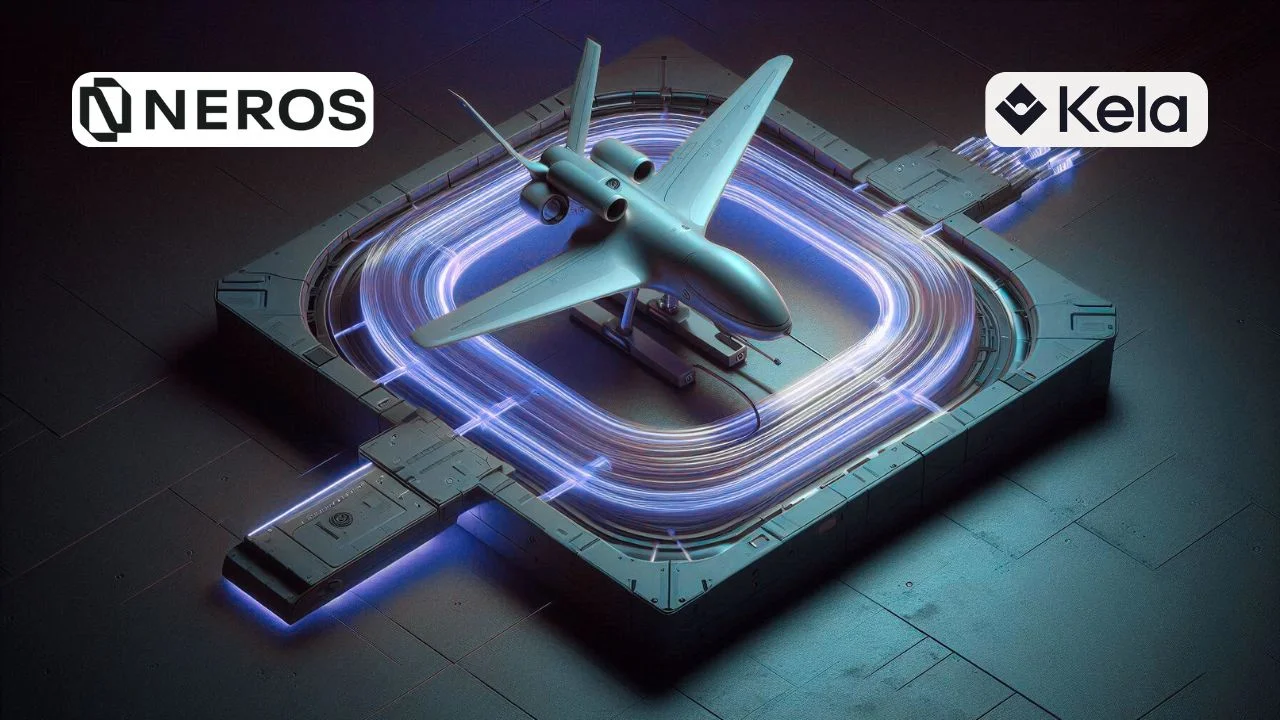
A collaborative venture between Neros Technologies and Israel’s Kela Technologies has yielded a new unmanned aerial system (UAS) designed for operations in spectrally contested environments. The platform, named Archer Fiber, is described by the companies as the first fiber-optic controlled First-Person View (FPV) drone to achieve full compliance with the U.S. National Defense Authorization Act (NDAA).
The system has already received Blue UAS clearance from the U.S. Department of Defense. This designation follows a component-level supply chain audit that verified the absence of critical parts originating from China—a point the companies emphasize as a foundational aspect of their design philosophy, rather than a post-production modification.
At the heart of Archer Fiber is a departure from traditional radio frequency (RF) command-and-control links. Instead, the drone remains physically tethered to its ground station via a thin, ruggedized fiber-optic cable.
How Fiber-Optic Control Alters the Mission Calculus
This tethered approach directly addresses several limitations of wireless systems. In high-intensity electronic warfare (EW) scenarios, where jamming and signal interference are prevalent, RF links can be severed or corrupted. A physical fiber connection is inherently immune to these forms of interference, theoretically offering a secure, low-latency, and high-bandwidth data channel that cannot be passively detected or intercepted through the air.
Unlocking New Operational Profiles
The primary trade-off for this resilience is a constraint on operational range, which is limited by the length of the tether. However, the technology enables persistent beyond-visual-line-of-sight (BVLOS) control without regulatory and technical hurdles associated with long-range RF or satellite links. This makes the platform suitable for missions requiring extended stationary loiter or precise navigation in complex, signal-denied environments such as urban canyons or near adversarial electronic assets.
The defense technology sector, particularly for unmanned systems, has faced heightened scrutiny regarding component origins and supply chain security. NDAA compliance has evolved from a preference to a mandatory requirement for many U.S. defense procurement programs.
Moving Beyond “Checkbox” Compliance
Neros and Kela position their platform as engineered for compliance from the ground up. “The system architecture was predicated on verifiable provenance and scalable, domestic manufacturing,” stated Søren Monroe-Anderson, CEO of Neros Technologies. “This is a response to a clear demand signal for trusted, resilient systems that can be produced at volume without supply chain ambiguities.”
A Partnership Model for Capability Development
The collaboration highlights a growing trend in transatlantic defense technology development. Kela Technologies contributes battlefield-tested Israeli expertise in tactical drone systems and EW resilience. Neros provides the U.S.-based manufacturing footprint and focus on institutional procurement pathways. Hamutal Meridor, President of Kela Technologies, noted the partnership “leverages distinct industrial strengths to accelerate the delivery of mature capabilities to end-users.”
The platform is not merely a prototype. According to the release, Archer Fiber is already in the hands of early partners for field evaluation and validation under simulated contested conditions. This suggests a development cycle focused on rapid transition from lab to end-user feedback.
Scaling U.S.-Based Manufacturing
A significant portion of the announcement is dedicated to the production roadmap. Neros Technologies is scaling its vertically integrated manufacturing capacity within the United States to support orders. The company has opened pre-orders for delivery commitments starting in 2026, indicating a focus on multi-year planning and production certainty for defense customers. This aligns with broader U.S. government initiatives to reshore critical elements of the defense industrial base, particularly for attritable and expendable unmanned systems.
Defining the “Attritable” Segment
Archer Fiber enters a market increasingly focused on “attritable” drones—systems that balance advanced capability with cost-consciousness, accepting the risk of loss in high-threat missions. A fiber-optic tether, while offering signal security, also introduces a potential physical vulnerability. The system’s design and intended use cases will need to demonstrate that the tactical advantages in EW environments outweigh this physical tether risk for specific mission sets, such as perimeter defense, critical infrastructure protection, or focused signals intelligence.
The introduction of a tethered, NDAA-compliant FPV system reflects two converging priorities within modern defense procurement: electronic warfare resilience and supply chain transparency. While tethered systems occupy a specific niche, their utility as a persistent, jam-proof sensor or effector node is clear.
The success of this platform will likely be measured by its integration into broader military systems and concepts of operation, rather than as a standalone product. Its development signals a continued diversification of drone technologies tailored for specific gaps in the electromagnetic spectrum, moving beyond a one-size-fits-all approach to unmanned systems.
About Neros Technologies
Neros Technologies is the fastest-growing American manufacturer of small unmanned aerial systems. Founded in 2023, Neros designs, builds, and scales drone technologies to deliver asymmetric advantage to U.S. and allied forces. All Neros systems are compliant with Department of War security standards and manufactured with a secure and vetted allied supply chain.
For more information, visit www.neros.tech.
About Kela Technologies
Kela Technologies is rapidly scaling Israeli defense ingenuity to the US and its Allies. Founded in 2024, Kela’s open and secure operating system reorchestrates the modern military stack. We integrate any commercial or military technologies on hand to deliver greater precision, lethality, and affordability, without vendor lock.