

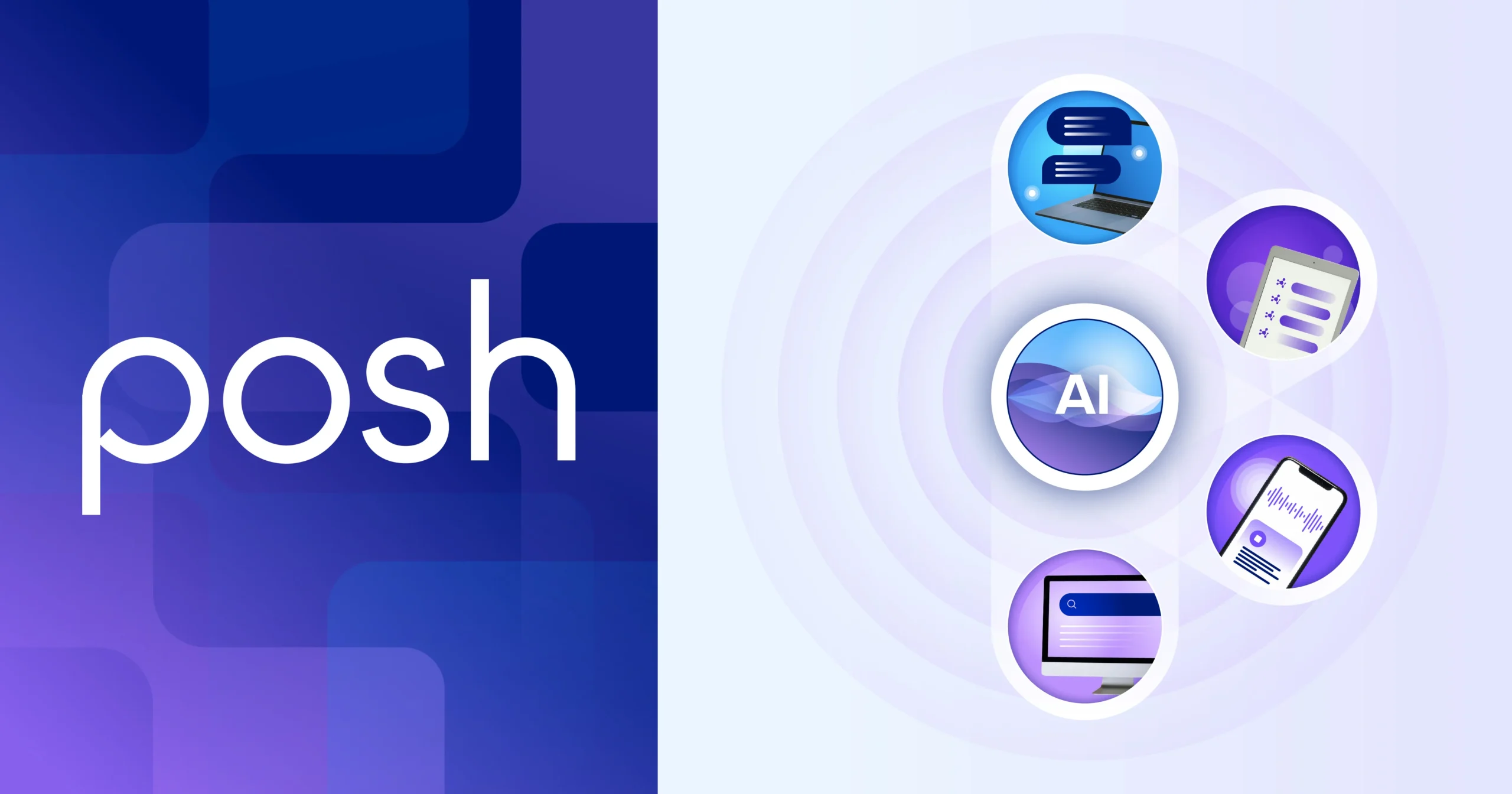
Posh Launches AI Training Simulator: Revolutionizing Employee Development with Immersive Role-Playing
For decades, employee training in financial institutions has relied on outdated methods—shadowing experienced colleagues, flipping through static manuals, and completing lackluster LMS quizzes that feel more like a chore than an opportunity for growth. Add to that the awkwardness of scripted role-plays, often inconsistent and sugarcoated, and it’s clear the traditional model is due for an overhaul. Posh is stepping in to transform this paradigm. Today, the company unveils its AI Training Simulator, a groundbreaking solution built on a simple yet powerful idea: employees don’t thrive by taking boring tests—they thrive through AI-powered role-playing.
Financial institutions like Simplicity Credit Union and Chartway Federal Credit Union are already reaping the benefits. Employees are gaining confidence, professionalism, and a deeper connection to the customers they serve—all by engaging in realistic, immersive conversations that feel authentic rather than rehearsed.
A Smarter Approach to Training: Designed for Real Conversations, Not Compliance Checklists
Posh’s AI Training Simulator represents a smarter, more scalable way to train employees. Unlike traditional methods, which often prioritize compliance over competence, the Simulator provides a modern training companion designed to supplement and elevate existing learning and development (L&D) efforts. Through immersive, AI-driven simulations, employees and managers can practice real-world scenarios before ever interacting with customers or team members.
Whether it’s onboarding new hires, upskilling loan officers, coaching frontline teams on sales techniques, or preparing managers for high-stakes discussions, the Simulator offers a safe and repeatable environment for growth. It empowers learners to build confidence and competence without the fear of judgment or failure.
Bridging the Gap Between Theory and Practice
One of the biggest challenges in employee training is preparing workers for high-pressure moments—handling upset customers, navigating policy ambiguities, or explaining complex financial products. These scenarios are notoriously difficult to teach and even harder to scale across large teams.
The AI Training Simulator addresses this gap with customizable voice and text-based role-plays that mirror real-life conversations and institutional nuances. It’s not limited to customer service; clients are using the platform for compliance refreshers, manager coaching, and sales enablement. For example, call center representatives are becoming more persuasive and confident in revenue-generating conversations, thanks to targeted practice and constructive feedback.
Employees benefit from a safe, judgment-free zone where feedback is objective and actionable. Without a manager watching or peers evaluating, they can focus on improvement without fear of embarrassment. The Simulator fosters a culture of continuous learning by providing clear, constructive input that helps employees refine their skills.
To make training even more engaging, the platform incorporates gamification elements, such as earning badges and tracking high scores. These features motivate learners and encourage them to strive for mastery, turning training into a rewarding experience rather than a dreaded obligation.
“Imagine giving new leaders a safe space to practice tough conversations with their team members,” said Rob Keatts, EVP and Chief Strategy Officer at Chartway Federal Credit Union. “Posh’s training simulator gives our people more opportunities to build confidence and skills, which ultimately leads to better service for our members.”
Tailored for the Complexity of Banking
Unlike generic training platforms, the AI Training Simulator is purpose-built for the unique workflows, regulatory demands, and customer sensitivities of financial institutions. It supports the entire employee lifecycle—from hiring assessments to ongoing performance coaching—with tools customized to each institution’s tone, products, and policies.
Customizable scenarios and scoring systems allow organizations to align training with internal KPIs, while a robust analytics dashboard tracks individual and team progress. Both voice and chat simulation modes cater to diverse learning preferences across branches, call centers, lending desks, and back-office teams.
The results speak for themselves. Studies show that employees trained through simulation retain knowledge 2.5x more effectively than those using static LMS modules (Deloitte, PwC). Additionally, 80% of employees say they’d stay longer at a company that invests in their learning and development (elearningindustry.com). Organizations leveraging AI for training report an average 20% reduction in training time per employee (Gitnux, April 2025).
As part of the broader Posh platform, the Training Simulator integrates seamlessly with Posh’s Knowledge Management System. Clients will soon be able to generate simulations directly from their internal knowledge bases, transforming policies, procedures, and documentation into interactive, scenario-based training with minimal manual effort.
Real Results from the Field
“The Training Simulator has made a real difference for us,” said Sarah Arnoldy, Chief Experience Officer at Simplicity Credit Union. “It saves trainers a lot of time and makes it simple to build scenarios that actually feel like the conversations our team has with members. For employees, it’s easy to use and surprisingly effective. The feedback on tone and pacing has helped us come across more clearly and confidently. It’s a more modern way to train, but more than that, it’s helping us have better interactions with our members.”
About Posh:
Posh empowers financial institutions to elevate member and employee experiences through intelligent AI solutions that combine conversational, generative, and agentic capabilities for deeper engagement, smarter service, and greater autonomy. With over 100 financial institution clients and over 200 products deployed, Posh’s purpose-built platform spans voice, digital, training and knowledge channels, delivering transformative self-service, employee enablement, and operational efficiency.