
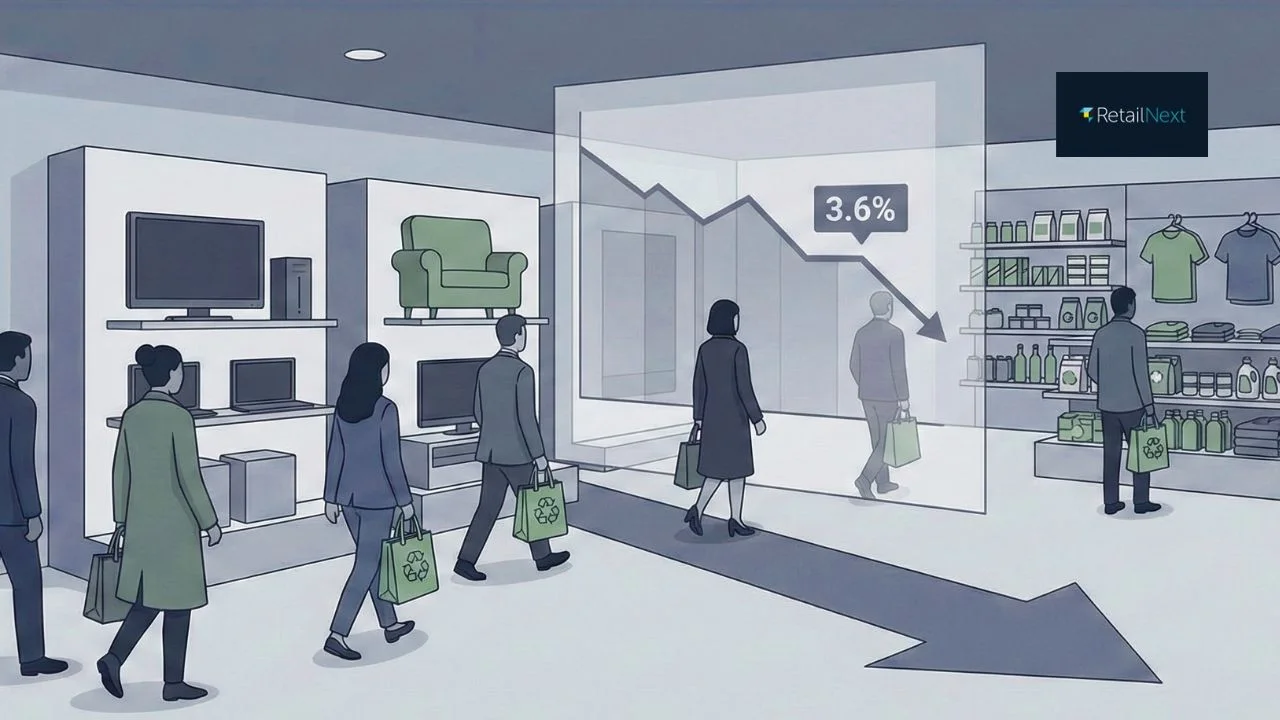
RetailNext, a global leader in in-store traffic analytics serving over 560 of the world’s top brands, has released early insights from Black Friday Weekend 2025. The data paints a clear picture of a shifting retail landscape, where shoppers are exercising precision and prioritizing value over impulse-driven spending. Initial findings reveal an average year-over-year decline of 5.3% in in-store foot traffic across Black Friday and Saturday, with regional and category-specific trends underscoring a disciplined approach to holiday shopping.
These figures highlight a noticeable shift in consumer behavior. While Black Friday still delivered the highest in-store traffic of the year, reaffirming its status as the anchor of the holiday shopping season, the weekend’s performance was shaped less by waning interest and more by real-world factors like inflation, tariffs, and weather volatility.
Weather played a significant role, particularly in the Midwest, where extreme conditions dramatically impacted Saturday’s numbers. This underscores how climate events increasingly influence brick-and-mortar performance.
The data also reveals a disciplined mindset among shoppers, who prioritized essentials while delaying big-ticket or discretionary purchases:
These trends indicate that consumers are focusing on practical purchases, such as apparel, while postponing discretionary spending on home goods and health/beauty products.
“Black Friday 2025 didn’t kill the holiday; it changed how shoppers approached it,” said Joe Shasteen, Global Head of Advanced Analytics at RetailNext. “Foot traffic was down, but that wasn’t disinterest—it was intention. Shoppers showed they’re done with the impulse-driven, one-day frenzy. Prices, tariffs, and tighter budgets pushed people to shop with discipline, not adrenaline, and they responded by turning Black Friday into a value calculation.”
This year’s performance reflects broader national trends. Rising costs for essential items—such as shelter, food, utilities, and transportation—are driving households to make sharper tradeoffs. Even modest tariff increases earlier in 2025 contributed to higher prices for discretionary categories like apparel, home goods, and footwear, which saw some of the steepest traffic declines.
Additionally, retailers’ efforts to extend promotions throughout November trained shoppers to expect month-long deals. Consumers moved earlier in the month, drawing clear lines on what they considered a “real deal” and walking away if the math didn’t add up. This shift highlights the emergence of the “value-driven consumer” as the default mindset.
Weather volatility also played a critical role in shaping retail outcomes. For example, the Midwest’s 42.1% drop in Saturday traffic can be directly attributed to a severe snowstorm that disrupted travel and shopping plans. Such events demonstrate how external factors now have immediate, measurable impacts on brick-and-mortar performance.
Despite the declines, Black Friday remains a cornerstone of the holiday shopping season. Retailers who treated November as a month-long build rather than a single-day spectacle saw stronger in-store performance. By offering compelling, sustained promotions and aligning with consumer priorities, these brands successfully attracted shoppers even in a cautious economic environment.
About RetailNext
The first retail vertical IoT platform to bring e-commerce style shopper analytics to brick-and-mortar stores, brands, and malls, RetailNext is a pioneer in focusing entirely on optimizing the shopper experience. Through its centralized SaaS platform, RetailNext automatically collects and analyzes shopper behavior data, providing retailers with insight to improve the shopper experience in real-time.
More than 560 retailers in over 100 countries have adopted RetailNext’s analytics software and retail expertise to better understand the shopper journey in order to increase same-store sales, reduce theft and eliminate unnecessary costs. RetailNext is headquartered in Campbell, California.