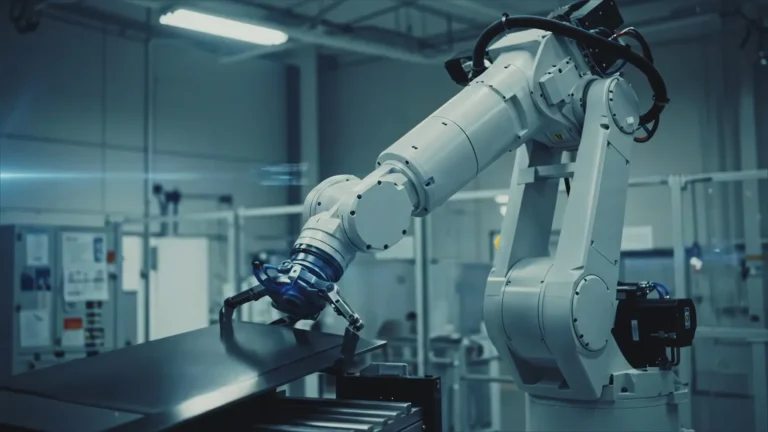

In some of the world’s most demanding environments—ranging from high-speed manufacturing floors and sprawling container ports to critical power utility infrastructures—technology is no longer just a support function; it is the backbone of operations. As industries push toward higher efficiency, safety, and automation, artificial intelligence, particularly physical AI, is emerging as a transformative force.
Physical AI refers to the application of intelligent systems in real-world, operational environments where machines interact directly with physical processes. Unlike purely digital AI systems, physical AI integrates sensors, robotics, networking, and edge computing to make real-time decisions in dynamic settings. While its potential is immense, the journey toward widespread adoption and scalability is proving more complex than anticipated.
According to the Cisco 2026 State of Industrial AI Report, a significant 61 percent of industrial organizations are already deploying physical AI solutions in some capacity. However, only 20 percent have successfully scaled these initiatives across their operations. This stark gap between experimentation and full-scale deployment highlights a critical challenge facing the industrial sector today.
The report, based on insights from 1,000 professionals across 19 countries and 21 industries, provides a comprehensive look at both the barriers to adoption and the strategies employed by leading organizations—referred to as “pacesetters”—that are successfully realizing the value of industrial AI.
Industrial environments differ fundamentally from traditional IT settings such as offices or campuses. These are rugged, high-stakes ecosystems where conditions can be unpredictable, and downtime can result in significant financial and operational losses.
Industrial networking encompasses a wide array of use cases: managing logistics in retail distribution centers, automating production lines in factories, operating substations in power grids, coordinating container movement in ports, and even controlling toll systems on highways. These environments demand networks that are not only high-performing but also resilient, secure, and capable of operating under harsh physical conditions.
Reliable connectivity in such settings is mission-critical. Any disruption can halt production, compromise safety, or lead to cascading failures across interconnected systems. As physical AI becomes more integrated into these operations, the importance of robust industrial networking infrastructure becomes even more pronounced.
For decades, industrial organizations have pursued automation to enhance productivity and improve worker safety. Physical AI represents the next evolution of this journey, enabling systems to go beyond automation into intelligent decision-making.
One of the most compelling examples lies in the automotive industry. In many modern factories, body shop operations are already highly automated. However, the final assembly stage—where precision, variability, and human involvement are highest—remains a frontier for innovation. Physical AI is now stepping in to optimize these processes, reducing inefficiencies and enhancing quality.
Machine vision systems illustrate this transformation vividly. Advanced cameras equipped with AI algorithms can inspect products with extraordinary precision, identifying even the smallest defects such as scratches or inconsistencies. This not only improves product quality but also reduces the need for manual inspection, lowering costs and minimizing human error.
Another powerful application is in material handling. Automated Mobile Robots (AMRs) are increasingly being deployed to transport components across factory floors. These robots use AI to navigate complex environments, avoid obstacles, and deliver materials exactly where they are needed. By ensuring that workers always have the necessary components at hand, AMRs help maintain continuous production flow and eliminate bottlenecks.
These examples represent just a fraction of what physical AI can achieve. From predictive maintenance and energy optimization to safety monitoring and autonomous operations, the possibilities are vast.
Despite its promise, scaling physical AI across industrial operations is far from straightforward. The challenges can be broadly categorized into three key areas: use-case identification, infrastructure readiness, and security.
1. Identifying the Right Use Cases
One of the first hurdles organizations face is determining where AI can deliver the most value. Not every process benefits equally from AI integration. Successful deployments require a clear understanding of operational pain points and a strong business case that demonstrates measurable return on investment (ROI).
Organizations that fail to align AI initiatives with strategic objectives often struggle to move beyond pilot projects. In contrast, pacesetters focus on high-impact use cases where AI can drive tangible improvements in efficiency, quality, or safety.
2. Infrastructure Limitations
Many industrial environments still rely on legacy network infrastructure that was not designed to handle the demands of AI workloads. For instance, traditional Ethernet networks operating at 100 Mbps are insufficient for modern applications like machine vision, where a single camera may require bandwidth ranging from 1 to 10 Gbps.
AI systems also demand significant edge computing capabilities to process data locally and deliver real-time insights. This requires upgrades in hardware, networking, and storage systems. Without these foundational improvements, organizations cannot support the scale and performance required for effective AI deployment.
3. Cybersecurity Concerns
Security is another major barrier. Industrial systems often handle sensitive operational data, and the introduction of AI increases the attack surface. Concerns about data leakage, unauthorized access, and vulnerabilities in cloud-based systems are prevalent.
The report highlights that 40 percent of respondents consider cybersecurity a top obstacle to AI adoption. Organizations must ensure that security is deeply integrated into their network architecture, rather than treated as an afterthought. A security-first approach is essential for building trust and enabling large-scale AI deployment.
A critical factor that distinguishes successful organizations from others is their ability to foster collaboration between IT (Information Technology) and OT (Operational Technology) teams.
Traditionally, these two domains have operated in silos. IT teams focus on data, applications, and enterprise systems, while OT teams manage physical processes and industrial equipment. However, physical AI sits at the intersection of these domains, requiring expertise from both sides.
Organizations that successfully bridge this gap unlock significant benefits. IT teams bring knowledge of networking, cybersecurity, and data management, while OT teams contribute deep understanding of operational processes and environments. Together, they can design and implement AI solutions that are both technically robust and operationally effective.
However, achieving this collaboration is not just a technical challenge—it is also a cultural one. The report indicates that 43 percent of organizations still have limited or no IT/OT collaboration. Overcoming this barrier requires strong leadership, clear communication, and a shared vision of digital transformation.
Scaling industrial AI also depends on the ability to manage complexity. As organizations deploy multiple AI applications across diverse environments, the need for unified platforms becomes critical.
Integrated platforms enable centralized management of networks, devices, and applications, simplifying operations and improving visibility. They also facilitate interoperability between different systems, allowing organizations to leverage a broader ecosystem of partners and technologies.
An open, ecosystem-driven approach is particularly valuable in industrial settings, where multiple vendors and technologies must work together seamlessly. By fostering collaboration between automation providers, device manufacturers, and software developers, organizations can accelerate innovation and reduce deployment risks.
Wireless technologies are playing an increasingly important role in industrial AI deployments. As operations become more dynamic and mobile, the limitations of wired connectivity become apparent.
Applications such as AMRs rely heavily on wireless networks to function effectively. These systems require not only high bandwidth but also low latency and high reliability. Advances in industrial-grade Wi-Fi and wireless backhaul technologies are enabling organizations to meet these requirements.
Wireless connectivity also offers greater flexibility, allowing organizations to adapt quickly to changing operational needs. This is particularly important in environments where layouts and workflows evolve frequently.
As industrial organizations continue their journey toward digital transformation, the focus is shifting from experimentation to scalability. The lessons from the Cisco report are clear: success requires a holistic approach that addresses technology, security, and organizational culture.
Organizations must invest in modern infrastructure, prioritize cybersecurity, and foster collaboration between IT and OT teams. They must also adopt a strategic approach to AI, focusing on high-impact use cases and building scalable solutions.
Physical AI has the potential to redefine industrial operations, driving unprecedented levels of efficiency, safety, and innovation. While challenges remain, the path forward is becoming clearer. By learning from pacesetters and embracing a comprehensive approach, organizations can unlock the full value of AI and position themselves for long-term success.
Source link: https://newsroom.cisco.com