


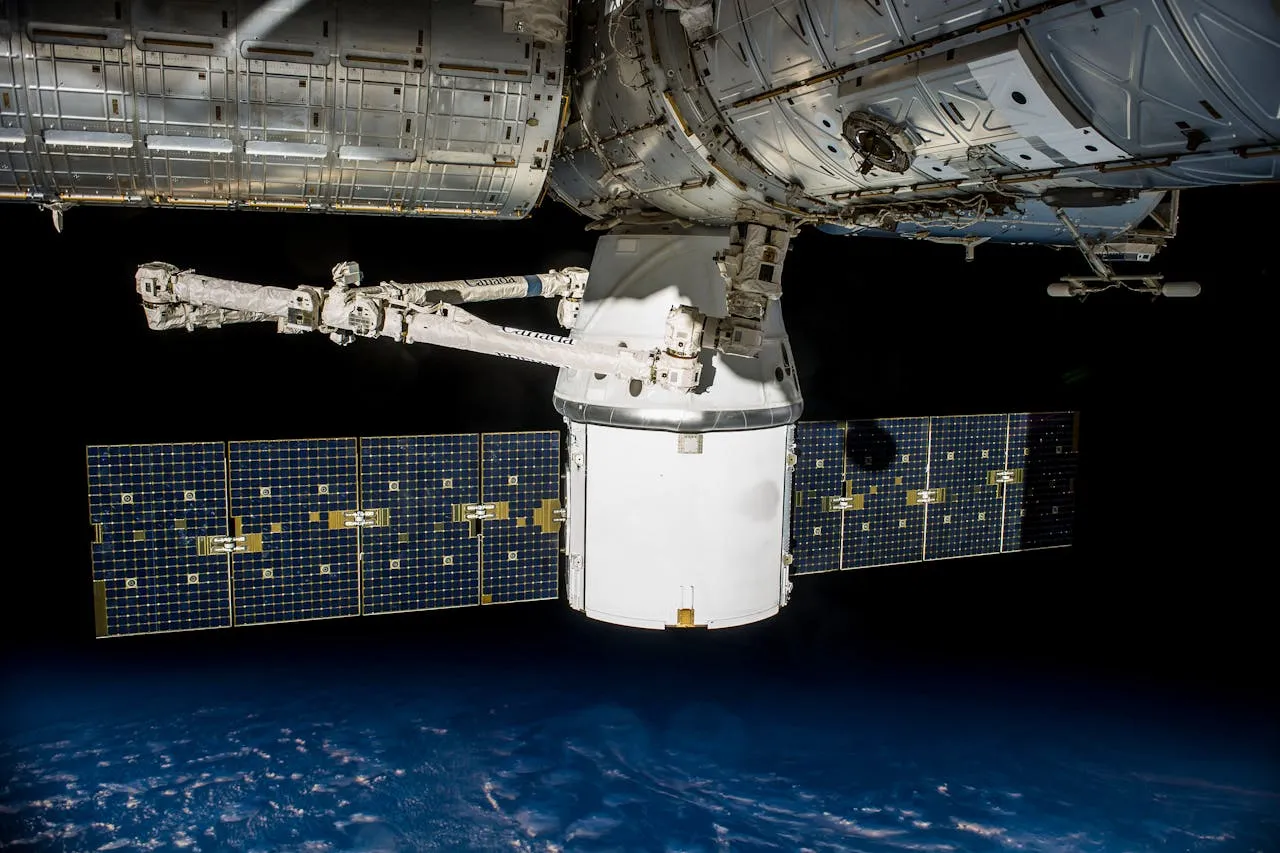
Dual-Mission Deployment Strengthens Maritime Tracking and RF Intelligence Capabilities While Showcasing Scalable Small Satellite Innovation
SFL Missions Inc. has marked a significant milestone in its ongoing expansion within the global small satellite industry, announcing the successful launch and deployment of four advanced satellites across two distinct missions. This achievement underscores the company’s growing influence as a reliable provider of cost-effective, high-performance satellite solutions for both government and commercial customers worldwide.
The satellites were launched aboard a rideshare mission facilitated by SpaceX as part of its Transporter-16 program, lifting off from Vandenberg Space Force Base. Shortly after deployment into orbit, all four spacecraft successfully established communication with ground control systems, confirming their operational readiness and validating the robustness of their design and integration processes.
At the center of this deployment is a dual-mission framework that highlights SFL Missions’ versatility in addressing diverse space-based applications. One of the satellites, AISSat-4, was developed for the Norwegian Space Agency to enhance maritime domain awareness through advanced ship tracking capabilities. The remaining three satellites form part of the Cluster 14 constellation for HawkEye 360, a leader in radio frequency (RF) signal detection and geospatial intelligence.
According to Dr. Robert E. Zee, Director of SFL Missions, the successful launch exemplifies the company’s unique capability to deliver tailored satellite solutions across a wide spectrum of mission requirements. He emphasized that SFL Missions has built a reputation as a “microspace provider,” offering end-to-end satellite development services—from design and manufacturing to integration and deployment—while maintaining competitive cost structures. This approach enables clients to access sophisticated space technologies without the traditionally high barriers to entry.
AISSat-4 represents a continuation of Norway’s long-standing investment in maritime monitoring systems. Built on SFL’s SPARTAN 6U nanosatellite platform, the spacecraft was developed in less than a year, demonstrating rapid production capabilities that are increasingly critical in today’s fast-evolving space sector. The satellite carries a miniaturized Automatic Identification System (AIS) receiver developed by Kongsberg Seatex, designed to capture signals transmitted by ships worldwide.
This capability is vital for improving maritime situational awareness, particularly in congested shipping lanes where monitoring vessel movements is essential for safety, security, and environmental protection. AISSat-4 is capable of collecting up to 1.5 million unique AIS signals per day, significantly enhancing the Norwegian Space Agency’s ability to track global maritime activity in real time.
The deployment of AISSat-4 also builds upon Norway’s established satellite programs. Since the launch of its first AIS satellite in 2010, the country has expanded its capabilities through both the AISSat nanosatellite series and the larger NorSat microsatellites. While the AISSat series focuses exclusively on AIS signal collection, the NorSat satellites incorporate additional payloads for technology demonstrations and broader scientific objectives. AISSat-4 continues this legacy, strengthening Norway’s maritime surveillance infrastructure with improved efficiency and data capacity.
Parallel to this mission, the three satellites comprising HawkEye 360’s Cluster 14 demonstrate SFL Missions’ ability to support highly specialized and technically demanding applications. These satellites were developed under the company’s Flex Production Program, which allows clients to participate directly in the integration and testing phases of satellite development.
SFL Missions provided the spacecraft bus systems and core subsystems based on its 30-kilogram DEFIANT platform, a space-proven design tailored specifically for HawkEye 360’s operational needs. These components were then delivered to HawkEye 360’s facility in Herndon, Virginia, where final assembly, integration, and testing were completed.
HawkEye 360 has established itself as a pioneer in the use of formation-flying microsatellites for RF signal detection. By operating multiple satellites in coordinated orbits, the company can precisely geolocate radio frequency emissions from sources on Earth. This capability has wide-ranging applications, including maritime tracking, emergency response coordination, national security operations, and spectrum management.
Formation flying requires highly sophisticated attitude control systems to maintain precise relative positioning between satellites. This is essential for triangulating RF signals with high accuracy. SFL Missions’ expertise in spacecraft control and system integration played a critical role in enabling these capabilities, making it a trusted partner for complex missions that demand precision and reliability.
The data generated by HawkEye 360’s satellite clusters supports multiple intelligence disciplines, including Geospatial Intelligence (GEOINT) and Electronic Intelligence (ELINT). These insights are increasingly valuable in both civilian and defense contexts, where timely and accurate information can inform decision-making and operational strategies.
Beyond the immediate success of these missions, the launch reflects SFL Missions’ broader trajectory as a key player in the evolving space economy. With a heritage spanning 27 years, the company has completed 98 successful missions and accumulated more than 435 years of on-orbit operational experience. This extensive track record provides a strong foundation for continued innovation and expansion.
SFL Missions specializes in the development of nano-, micro-, and small satellites, with mass ranges from as little as 3 kilograms to as much as 500 kilograms. Its modular, space-proven bus designs enable rapid customization for a wide array of applications, including Earth observation, communications, environmental monitoring, space science, and astronomy.
The company is also actively scaling its manufacturing capabilities to meet growing demand. With 32 satellites currently under development or awaiting launch, SFL Missions is positioning itself to support the next wave of satellite constellations and space-based services. This expansion reflects broader industry trends, as governments and private organizations increasingly rely on satellite data to drive digital transformation, enhance security, and address global challenges.
In particular, the rise of small satellites has transformed access to space, enabling more frequent launches, lower costs, and faster deployment cycles. Companies like SFL Missions are at the forefront of this shift, leveraging standardized platforms and agile production methods to deliver high-performance solutions on accelerated timelines.
The successful deployment of AISSat-4 and HawkEye 360’s Cluster 14 not only reinforces SFL Missions’ technical capabilities but also highlights the growing importance of international collaboration in the space sector. By working with partners across Europe and North America, the company is helping to build a more interconnected and data-driven global space infrastructure.
As the demand for satellite-based services continues to expand, missions like these illustrate how innovation in small satellite technology is enabling new possibilities across industries. From enhancing maritime safety to advancing intelligence capabilities, the impact of these systems extends far beyond orbit, shaping the way information is gathered, analyzed, and applied on Earth.
Ultimately, SFL Missions’ latest achievement represents more than a successful launch—it is a clear demonstration of how agile engineering, strategic partnerships, and a commitment to innovation can drive progress in one of the most dynamic sectors of the modern economy.
Source link: https://www.businesswire.com