

Un-Carrier Announces 18-19M Broadband Customer Target by 2030 While Doubling Q1 Share Repurchases to $5B
T-Mobile is rewriting its growth trajectory. During its fourth quarter 2025 earnings call and Capital Markets Day update today, the wireless carrier raised financial targets originally set in September 2024, projecting service revenues of $80.5-$81.5 billion in 2027 (up from prior guidance of $75-$76 billion) and Core Adjusted EBITDA of $40-$41 billion in 2027. CEO Srini Gopalan attributed the upward revision to what the company calls “widening and durable differentiation” across three pillars—Best Network, Best Value, and Best Customer Experiences—that are driving unparalleled growth in core wireless, broadband, and emerging businesses including advertising and financial services. The company also announced it now expects 18-19 million total broadband customers by 2030, comprising 15 million 5G broadband and 3-4 million T-Fiber subscribers, while doubling its Q1 2026 share repurchases to $5 billion.
The halftime check-in on T-Mobile’s multi-year plan revealed the carrier has delivered 6% service revenue CAGR, 8% Core Adjusted EBITDA CAGR, and 15% Adjusted Free Cash Flow CAGR from 2023 to 2025—outpacing peers and building momentum toward raised 2027 targets. Critically, the company projects nearly $3 billion in incremental Core Adjusted EBITDA contribution by end of 2027 relative to 2025, driven by investments in digitalization and AI that are already reducing operational costs and transforming customer interactions.
Network Perception Breakthrough After 35 Consecutive Quarters of Competitor Dominance
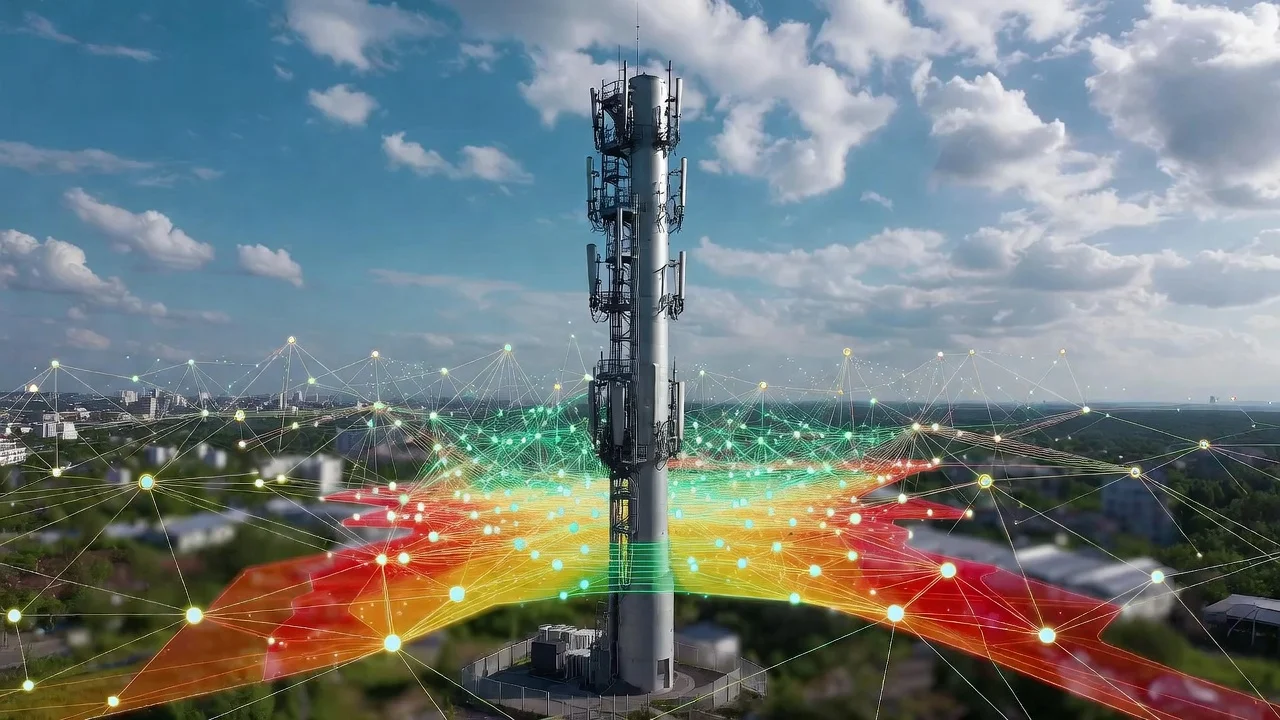
For years, T-Mobile operated under a perception gap: third-party network testing confirmed technical superiority, but consumers didn’t believe it. This disconnect constrained market share gains despite spectrum advantages and infrastructure density. That perception barrier is breaking. For the first time, J.D. Power ranked T-Mobile #1 for Network Quality in five of six regions, unseating a competitor who held the majority of regions for 35 consecutive reports—a milestone that signals consumer perception is finally aligning with technical reality.
The perception shift matters because it unlocks what T-Mobile identifies as an approximately 20+ million network-seeker account opportunity—consumers who prioritize network quality above pricing or brand loyalty. The percentage of switchers who believe T-Mobile has the best network has nearly doubled from approximately one in eight in 2020 to more than one in four today. With perception still lagging technical performance, substantial runway remains.
“T-Mobile is raising the bar on what customers, stockholders, and the industry can expect from the Un-carrier,” said Gopalan. “T-Mobile has an unmatched combination of the Best Network, Best Value, and Best Customer Experiences—hallmarks of our unique Un-carrier differentiation—paired with our industry-leading portfolio of assets.”
Third-party validation extends beyond J.D. Power. OpenSignal awarded T-Mobile #1 in Mobile Experience across 12 of 16 categories, while Ookla Speedtest named it Best Mobile Network in back-to-back tests leveraging hundreds of millions of real-world data points. This recognition arrives as T-Mobile positions itself for 6G leadership, leveraging America’s largest nationwide 5G Advanced network as the foundation for next-generation capabilities.
Key Insights at a Glance
- Raised 2027 targets: Service revenues of $80.5-$81.5B (vs. prior $75-$76B); Core Adjusted EBITDA of $40-$41B; Adjusted Free Cash Flow of $19.5-$20.5B, representing ~10% CAGR from 2023-2027
- AI and digitalization impact: Nearly $3B incremental Core Adjusted EBITDA contribution by end of 2027 vs. 2025 from operational transformation
- Broadband ambition: 15M 5G broadband + 3-4M T-Fiber = 18-19M total broadband customers by 2030 (up from prior 12M 5G broadband target by 2028)
- Network perception inflection: J.D. Power #1 Network Quality ranking in 5 of 6 regions after competitor held majority for 35 consecutive quarters; switcher perception nearly doubled since 2020
- Capital allocation: $5B Q1 2026 share repurchases (doubled from original plan); $50B+ remaining in capital envelope through 2027, including up to ~$30B for stockholder returns
Digital and AI Transformation: From Cost Reduction to Revenue Enablement
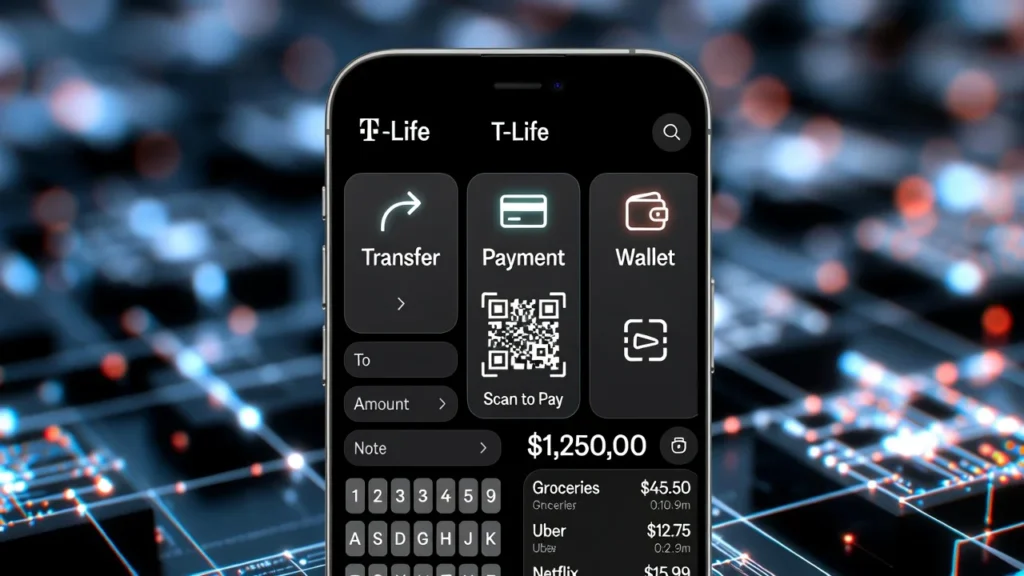
T-Mobile’s digitalization strategy has progressed from reducing customer service costs to enabling entirely new transaction patterns. The company has achieved a 50% reduction in calls to care since 2021 by systematically eliminating pain points. Now, its T-Life app—installed over 100 million times with approximately 24 million monthly active users—has become a transaction hub where customers complete upgrades, add lines, and even new activations. Starting from single-digit percentages in 2023, nearly 75% of postpaid phone upgrades are now completed digitally, with the majority unassisted.
This operational transformation directly impacts economics. Lower care call volumes reduce headcount requirements and allow customer service teams to focus on high-value interactions rather than routine transactions. Digital transactions eliminate friction, accelerate cycle times, and create data streams that inform personalization—capabilities that contribute to T-Mobile’s Net Promoter Score advantage of more than 20% over its closest competitor.
The company also announced Live Translate, a real-time AI translation service embedded directly into its network that works with any phone—a demonstration of how network-level AI can deliver capabilities impossible through device-only or cloud-only approaches. This positions T-Mobile to monetize network intelligence beyond traditional connectivity, opening revenue streams in enterprise communications, accessibility services, and international use cases.
Broadband: Fallow Capacity Model Proves Durable at Increased Scale
T-Mobile’s 5G broadband business has grown customers nearly 80% and usage nearly 30% over the past two years while average download speeds increased over 50%—metrics that validate the company’s fallow capacity model, which monetizes network capacity that would otherwise remain unutilized. As the fastest-growing ISP in America for four consecutive years, T-Mobile increased its 5G broadband customer target to 15 million by end of 2030, a 25% increase from its previous target of 12 million by end of 2028.
The upward revision reflects increased spectral efficiency, improved customer premises equipment (CPE) technology, expanded eligibility including business customers with complementary usage profiles, and broadened product offerings—all while maintaining the fallow capacity approach that avoids dedicated infrastructure buildouts. Simultaneously, T-Mobile announced expectations of 3-4 million T-Fiber customers by end of 2030, supported by approximately 20% year-one penetration and strong sales momentum in launched geographies, alongside progress toward passing 12-15 million households by end of 2030.
Combined, these targets project 18-19 million total broadband customers by 2030—a scale that establishes T-Mobile as a major broadband competitor despite entering the market only recently. This success validates the company’s smart adjacency strategy: leveraging embedded customer relationships, broad distribution, and network assets to disrupt incumbents in adjacent markets.
Emerging Growth Areas: Advertising, Financial Services, Physical AI
Beyond core wireless and broadband, T-Mobile is scaling businesses that leverage its customer base, digital platform, and network infrastructure. T-Ads, the company’s advertising business, benefits from T-Mobile being one of the largest advertisers in the country and from accretive acquisitions including Vistar and Blis. Financial services, including the recently launched T-Mobile Visa card, represents a significant long-term revenue opportunity enabled by deep customer relationships and the T-Life digital platform’s reach.
The company also highlighted physical AI and edge AI as long-term opportunities, sharing a message from Nvidia CEO Jensen Huang discussing how T-Mobile’s network positions it as critical foundation infrastructure for AI deployment at the edge. As physical AI applications—robotics, autonomous systems, real-time computer vision—require low-latency, high-reliability connectivity with local processing capabilities, carriers with advanced 5G networks and edge compute infrastructure gain strategic positioning.
Financial Outlook and Capital Allocation Flexibility
T-Mobile’s raised guidance projects 2026 service revenues of approximately $77 billion, Core Adjusted EBITDA of $37-$37.5 billion, and Adjusted Free Cash Flow of $18-$18.7 billion, translating to an industry-leading Adjusted Free Cash Flow conversion from service revenues exceeding 20% annually while maintaining a prudent 2.5x leverage target. The company expects 900,000 to 1.0 million postpaid net account additions in 2026 with focus on high lifetime value customers, plus postpaid ARPA growth of 2.5-3.0% as customers self-select premium rate plans.
Since its 2024 Capital Markets Day, T-Mobile has returned over $20 billion to stockholders and invested approximately $12 billion in accretive M&A, including UScellular, Vistar, Blis, and joint venture acquisitions of Lumos and Metronet. Over $50 billion remains in the company’s capital envelope through 2027, including up to approximately $30 billion for stockholder returns and a flexible envelope exceeding $22 billion for growth investments, deleveraging, or additional returns. The decision to double Q1 2026 share repurchases to $5 billion signals confidence in sustained cash generation and strategic positioning.
As wireless markets mature and competition intensifies, T-Mobile’s thesis is that widening differentiation—not just maintaining parity—creates durable competitive advantages that translate to superior financial performance. Whether network perception gains, digital transformation, and adjacency expansion sustain this trajectory through 2027 will determine if the raised targets represent conservative guidance or aggressive optimism. Current momentum suggests the former.
T-Mobile Social Media
Investors and others should note that we announce material financial and operational information to our investors using our investor relations website (https://investor.t-mobile.com), newsroom website (https://t-mobile.com/news), press releases, SEC filings and public conference calls and webcasts. We also intend to use certain social media accounts as a means of disclosing information about us and our services and for complying with our disclosure obligations under Regulation FD (the @TMobileIR X account (https://x.com/TMobileIR), the @SriniGopalan X account (https://x.com/SriniGopalan) and our CEO’s LinkedIn account (https://www.linkedin.com/in/srini-gopalan/), both of which Mr. Gopalan also uses as a means for personal communications and observations, and the @TMobileCFO X account (https://x.com/tmobilecfo), and our CFO’s LinkedIn account (https://www.linkedin.com/in/peter-osvaldik-3887394), both of which Mr. Osvaldik also uses as a means for personal communication and observations). The information we post through these social media channels may be deemed material. Accordingly, investors should monitor these social media channels in addition to following our press releases, SEC filings and public conference calls, and webcasts. The social media channels that we intend to use as a means of disclosing the information described above may be updated from time to time as listed on our investor relations website.
About T-Mobile US, Inc.
As the supercharged Un-carrier, T-Mobile US, Inc. (NASDAQ: TMUS) is powered by an award-winning 5G network that connects more people, in more places, than ever before. With T-Mobile’s unique value proposition of best network, best value and best experiences, the Un-carrier is redefining connectivity and fueling competition while continuing to drive the next wave of innovation in wireless and beyond. Headquartered in Bellevue, Wash., T-Mobile provides services through its subsidiaries and operates its flagship brands, T-Mobile, Metro by T-Mobile and Mint Mobile. For more information, visit https://www.t-mobile.com.