
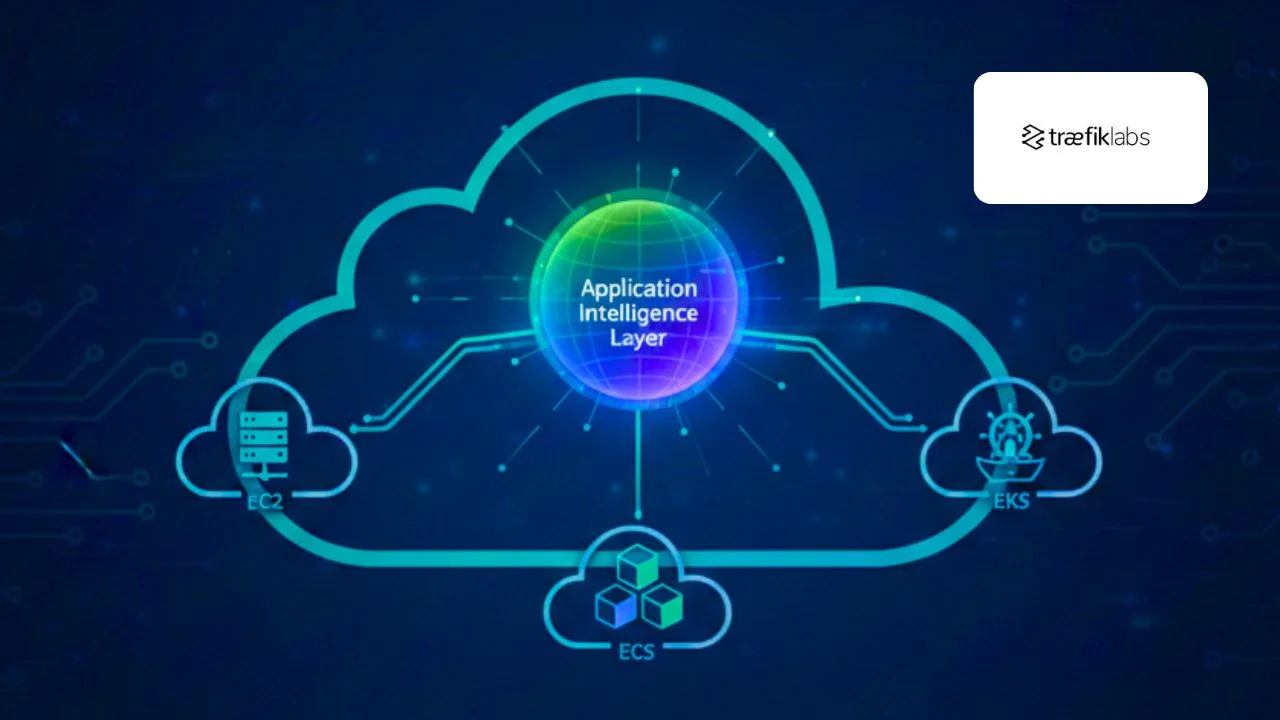
In a significant step toward simplifying cloud infrastructure management, Traefik Labs has announced the availability of unified ingress and routing for AWS compute environments. This release brings Traefik’s Application Intelligence Layer to Amazon EC2, ECS, and EKS, enabling organizations to deploy a single connectivity layer that works seamlessly across virtual machines (VMs) and containers. Unveiled during AWS re:Invent 2025, this milestone marks the second major platform where Traefik’s vision of consistent connectivity—spanning diverse compute models and infrastructure providers—has been realized.
The announcement also includes an AWS builders-style technical guide, offering architects and platform engineers actionable insights into implementation patterns, security configurations, and architectural decision frameworks. These resources empower organizations to unify ingress across heterogeneous AWS environments while maintaining operational consistency and security.
Earlier this year, Traefik demonstrated its ability to unify traffic across Nutanix AHV virtual machines and Nutanix Kubernetes Platform (NKP) containers. This capability allowed organizations to modernize their infrastructure incrementally, transitioning applications from VMs to containers without disrupting access patterns. The new AWS release proves that the same architectural approach applies to Amazon’s diverse compute platforms, from traditional EC2 instances to modern Kubernetes workloads on EKS.
The Traefik AWS Elastic Provider is the concrete implementation of this vision for AWS infrastructure. It enables organizations to deploy a single ingress layer that dynamically discovers and routes traffic across EC2 instances, ECS tasks, and EKS services—all without requiring changes to how those workloads operate. This flexibility ensures that businesses can adopt the right compute model for each workload while maintaining a consistent user experience.
Most organizations do not rely on a single compute platform. Instead, they operate a mix of technologies tailored to specific needs:
Each platform comes with its own networking model, load balancing approach, and authentication mechanisms, creating complexity for IT teams tasked with managing connectivity and security. Traefik’s Application Intelligence Layer addresses this challenge by providing a unified point of control that understands all three platforms. Organizations gain consistent routing, authentication, and observability across their entire AWS footprint without forcing every workload onto a single compute model.
The success of Traefik’s integration with Nutanix demonstrated its ability to bridge fundamentally different compute models. By unifying traffic between VMs running on AHV and containers on NKP, Traefik enabled organizations to modernize incrementally, moving applications from VMs to containers at their own pace. This same capability now extends to AWS infrastructure, ensuring that applications—whether running on EC2, ECS, or EKS—present a consistent interface to the outside world.
“AWS customers are already running heterogeneous infrastructure. EC2, ECS, and EKS coexist because each solves different problems,” said Sudeep Goswami, CEO of Traefik Labs. “The Application Intelligence Layer we demonstrated with Nutanix now works across various AWS compute platforms. Organizations can modernize incrementally without fragmenting how their applications are accessed. This is the same architectural vision, proven on two major infrastructure providers.”
Real-world infrastructure is rarely homogeneous. Applications evolve over time, migrations happen gradually, and teams have different preferences for different workloads. Compliance requirements often dictate deployment patterns, further complicating infrastructure choices. The question isn’t whether organizations will run multiple compute platforms—they already do. The real challenge is maintaining operational consistency while doing so.
Traefik’s approach acknowledges this reality. The Application Intelligence Layer doesn’t require ripping out existing infrastructure or forcing every workload into the same mold. Instead, it works with EC2, ECS, and EKS as they are, providing consistency where it matters most—at the application edge, where users and systems interact.
The Traefik AWS Elastic Provider offers several critical advantages for organizations running distributed AWS environments:
The provider operates using a hub-and-spoke architecture. A central Traefik instance handles global concerns like TLS termination and identity validation, while lightweight Traefik instances in each compute environment manage local service discovery. This design maintains strict network isolation while enabling unified routing.
To help organizations implement these capabilities effectively, Traefik has released an AWS builders-style technical guide titled Unifying Ingress Across Distributed AWS Compute Environments. Additionally, an accompanying architectural blog post details implementation patterns for multi-platform AWS deployments. These resources provide practical insights into building secure, scalable, and consistent ingress solutions that align with real-world infrastructure needs.