
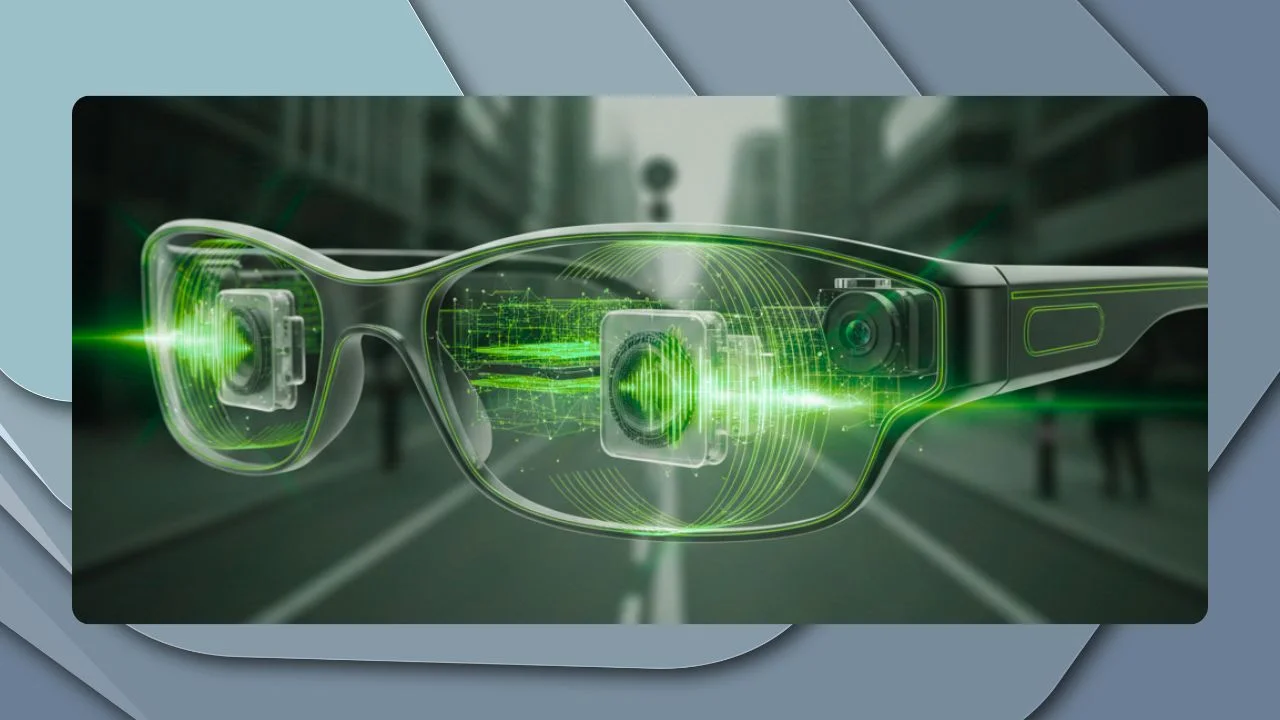
USound, a specialist in compact audio systems leveraging micro-electro-mechanical systems (MEMS) technology, has partnered with iVision Tech to integrate its advanced speakers into the iSEE smart glasses. These glasses target blind and visually impaired individuals, providing real-time navigation assistance, object detection, and environmental insights through audio feedback. In devices where sound serves as the primary sensory channel, the speakers’ performance directly influences user safety and independence.
The collaboration addresses longstanding challenges in wearable assistive tech, where audio components must balance miniaturization with superior sound quality. iSEE glasses rely on precise audio cues for tasks like directional guidance and obstacle alerts, making high-fidelity speakers essential. USound’s MEMS-based solutions deliver on these needs, enabling a more seamless user experience.
For visually impaired users, smart glasses transform auditory signals into actionable intelligence about their surroundings. Navigation prompts, such as “turn left in 10 meters” or “obstacle ahead,” demand crystal-clear delivery to avoid misinterpretation. Object recognition features, powered by onboard AI and cameras, further depend on directional audio to convey spatial relationships—describing an item’s position relative to the user.
Audio quality here extends beyond volume; it encompasses directionality, low distortion, and sustained clarity over extended wear. Poor performance can lead to user fatigue, reduced trust in the device, or safety risks in dynamic environments like busy streets. iSEE’s design prioritizes these elements, using USound’s speakers to ensure cues remain intelligible amid ambient noise, from urban traffic to indoor echoes.
This integration highlights a broader shift in accessibility tech. As AI models improve in real-time processing, the bottleneck often shifts to output mechanisms. Reliable audio bridges the gap between computational power and human perception, fostering greater adoption among users who depend on such tools daily.
Traditional micro-speakers in eyewear have historically compromised on key metrics: they occupy significant space, add unwanted weight, and suffer from narrow frequency responses. These constraints force designers into trade-offs, such as smaller batteries or bulkier frames, which undermine comfort for all-day use.
USound’s MEMS speakers disrupt this pattern through their ultra-thin profile—often under a millimeter thick—and broad bandwidth covering human hearing ranges with precision. This allows for richer sound reproduction, including subtle spatial audio effects that mimic natural directionality. In iSEE glasses, the result is detailed feedback for complex scenarios, like distinguishing between multiple nearby objects or parsing layered navigation instructions.
Efficiency gains compound these benefits. MEMS designs consume less power, minimizing heat generation that could discomfort users during prolonged sessions. They also support longer battery life, critical for individuals navigating without frequent recharges. By freeing up internal space, iVision Tech incorporates enhanced sensors and processing units, elevating the glasses’ overall capabilities without inflating the device’s form factor.
Ferruccio Bottoni, USound’s CEO, emphasized this precision: “Assistive smart glasses must deliver audio with absolute reliability and precision. When every cue matters, there is no room for distortion, delay, or fatigue. Our MEMS technology provides the performance and efficiency needed to turn iSEE into a true everyday mobility tool for people who are blind or visually impaired.”
The thinness of USound’s speakers grants iVision Tech substantial design flexibility. Engineers can allocate more room to high-capacity batteries, robust AI processors, and advanced imaging arrays—components vital for accurate environmental mapping. This optimization keeps the glasses lightweight and low-profile, resembling ordinary eyewear rather than cumbersome gadgets.
Power efficiency translates to practical gains. In testing, these speakers maintain performance without excessive drain, supporting hours of continuous operation. Thermal management improves too, as lower energy use reduces heat, preventing discomfort during extended outdoor use.
Federico Fulchir, iVision Tech’s project manager, noted: “iSEE was created to make independent mobility easier, safer, and more intuitive. USound’s audio technology allows us to present information to the user with the clarity and confidence they need to navigate the world. It strengthens every aspect of the iSEE experience.”
From a systems perspective, this matchup exemplifies MEMS’ maturation in consumer-facing applications. The technology, rooted in semiconductor fabrication, scales reliably for mass production, ensuring consistent quality across units.
This development positions USound as a key enabler in the evolving assistive devices market. As spatial AI and edge computing advance, audio remains a linchpin for immersion and trust. Future iterations could incorporate bone conduction or haptic feedback, but clear directional sound will likely stay central.
iSEE glasses exemplify how targeted integrations propel accessibility forward. Available now via iSEE’s website, they offer blind and low-vision users a tool for enhanced autonomy. USound plans private demonstrations of the audio setup at CES 2026, signaling readiness for wider deployment.
Market trends underscore the timing. Global demand for wearable aids grows with aging populations and AI accessibility initiatives. Organizations like the World Health Organization estimate over 2.2 billion people live with vision impairment, many underserved by current tech. Solutions like iSEE, bolstered by MEMS audio, could narrow this gap.
Challenges persist, including standardization of audio protocols and integration with public infrastructure like audio beacons. Yet, advancements in speaker tech lower barriers, paving the way for ecosystem-wide improvements.
MEMS speakers operate via vibrating diaphragms etched at microscopic scales, akin to how smartphone accelerometers function but optimized for acoustics. This yields advantages in transient response—quick attack and decay for sharp prompts—and low total harmonic distortion, preserving nuance in AI-generated speech.
Compared to dynamic drivers, MEMS units excel in high-frequency extension, aiding consonant clarity in languages with sibilants. Directionality emerges from stereo pairing and beamforming algorithms, simulating 3D audio in open-ear designs.
iVision Tech’s implementation leverages these for multimodal output: layered audio streams prioritize urgent alerts over ambient descriptions, reducing cognitive load.
About iVision Tech
iVision Tech S.p.A. is an Italian company that merges the worlds of eyewear and advanced electronics. Founded in 2020 and listed on the Milan Stock Exchange since August 2023, the company manages the entire value chain from design and industrialization to manufacturing. With a strong commitment to innovation and social responsibility, iVision Tech develops smart devices and assistive technologies that combine fashion-grade design with cutting-edge functionality. The iSee project represents the company’s flagship social initiative, dedicated to enhancing mobility and independence for blind and visually impaired people. Learn more at iVision Tech SpA.