
At its CadenceLIVE Silicon Valley 2026 event, Cadence Design Systems announced a major expansion of its long-standing collaboration with NVIDIA, signaling a significant shift in how engineering workflows will be designed, simulated, and executed in the era of artificial intelligence and accelerated computing. The enhanced partnership focuses on delivering integrated solutions across agentic AI, physics-based simulation, and digital twin technologies, with the goal of dramatically improving productivity and enabling faster, more intelligent design processes across semiconductor development, physical AI systems, and hyperscale AI infrastructure.
The collaboration reflects a broader transformation underway in engineering, where traditional, sequential workflows are being replaced by AI-driven, parallelized systems capable of reasoning, simulating, and optimizing designs in real time. By combining Cadence’s expertise in electronic design automation (EDA) and system design and analysis (SDA) with NVIDIA’s accelerated computing platforms and AI frameworks, the two companies aim to redefine how complex systems are conceptualized and brought to life.
A central element of the partnership is the acceleration of Cadence’s software portfolio using NVIDIA technologies such as CUDA-X libraries, AI-driven physics models, and Omniverse digital twin frameworks. These capabilities are further supported by the Cadence® Millennium™ M2000 Supercomputer, which is powered by NVIDIA’s AI infrastructure. Together, these technologies enable high-performance simulation and analysis at unprecedented scale, allowing engineers to explore design possibilities far more quickly than was previously possible.
The integration of these systems is designed to deliver step-change improvements in engineering efficiency. Cadence’s principled solvers—core computational engines used for simulation and analysis—are being enhanced with AI-physics models, enabling workflows that can achieve up to 100 times speed improvements in certain applications. This acceleration has immediate implications for industries that rely on complex simulations, including semiconductor manufacturing, automotive engineering, and large-scale infrastructure design.
Already, a range of leading organizations—including Ascendence, Argonne National Laboratory, Honda R&D, Samsung, and SK Hynix—are leveraging Cadence solutions accelerated by NVIDIA technologies to bring products to market more quickly. These early adopters demonstrate the practical impact of combining AI-driven design tools with high-performance computing infrastructure.
One of the most transformative aspects of the expanded collaboration is the introduction of agentic AI into the engineering process. Cadence has been advancing this concept through its ChipStack™ AI Super Agent, which applies AI-driven reasoning to semiconductor design and verification tasks. Early deployments of this system have shown productivity improvements of up to ten times, particularly in areas such as register-transfer level (RTL) design and validation.
Building on this foundation, Cadence introduced AgentStack™, a more comprehensive orchestration layer designed to manage the entire lifecycle of semiconductor and system design. AgentStack extends beyond chip-level design to encompass physical layout, analog and custom design, and system-level integration. It functions as a “head agent,” coordinating multiple specialized AI agents that operate across different stages of the design process.
This architecture represents a fundamental shift away from traditional engineering workflows, which are typically driven by scripts and graphical user interfaces. Instead, agent-driven workflows enable systems to reason about design hierarchies, dependencies, and constraints, allowing for more intelligent decision-making and faster iteration cycles. Tasks that once required days of manual effort can now be completed in hours, significantly accelerating time-to-market.
NVIDIA is playing an active role in shaping this new paradigm by adopting AgentStack within its own semiconductor and system design processes. As an early partner, the company is providing real-world feedback that will help refine and scale the platform for broader industry adoption. This collaborative approach ensures that the technology is not only theoretically advanced but also practical and robust in real-world applications.
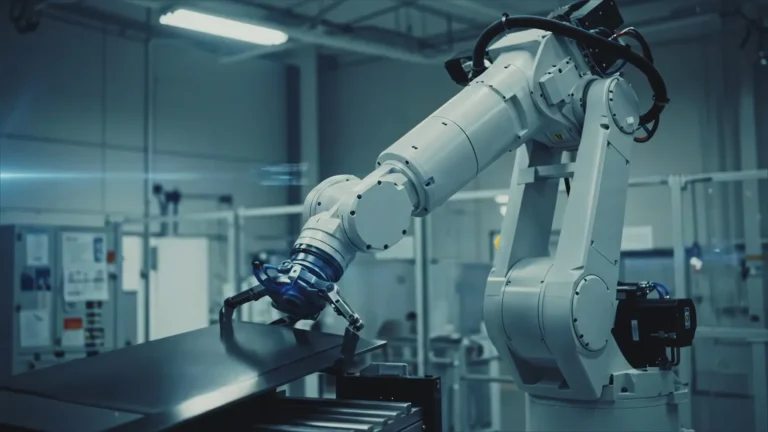
Beyond semiconductor design, the partnership extends into the rapidly growing field of physical AI—systems that interact with the physical world, such as robots and autonomous machines. Here, Cadence and NVIDIA are combining their respective strengths to address one of the most significant challenges in robotics: the “sim-to-real” gap. This gap refers to the difficulty of translating behaviors learned in simulation into reliable performance in real-world environments.
To address this challenge, the companies are integrating Cadence’s high-fidelity multiphysics simulation capabilities with NVIDIA’s robotics simulation platforms, including Isaac Sim and Isaac Lab. These tools enable the creation of detailed virtual environments in which AI models can be trained, tested, and refined before being deployed in the real world. By incorporating accurate physics models into every stage of the process, the system ensures that simulated behaviors closely match real-world outcomes.
The workflow is designed to be fully agent-driven, with AI systems coordinating tasks such as training orchestration, policy optimization, validation, and deployment feedback. This end-to-end approach allows for continuous improvement, as real-world data is fed back into the system to refine models and enhance performance over time. The final deployment is supported by NVIDIA’s Jetson edge AI platforms, which enable real-time processing and decision-making in physical environments.
Another critical area of collaboration is the development of digital twins for AI factories—large-scale data centers designed to train and run advanced AI models. As demand for AI computing continues to grow, optimizing the efficiency of these facilities has become a top priority. Cadence and NVIDIA are addressing this need by creating high-fidelity digital replicas of AI factories, enabling operators to simulate and optimize performance before deploying physical infrastructure.
These digital twins leverage Cadence’s system analysis tools and NVIDIA’s Omniverse DSX blueprint to model complex interactions between hardware, power systems, cooling infrastructure, and workload demands. A key performance metric in this context is “tokens per watt,” which measures the efficiency of AI processing in terms of output relative to energy consumption. By optimizing this metric, organizations can significantly reduce operational costs while maximizing performance.
In one joint use case involving a 10-megawatt AI factory, simulations demonstrated that operating GPUs at reduced power levels (MaxQ mode) could increase tokens per watt by up to 17 percent. At hyperscale, this improvement translates into billions of dollars in additional annual revenue per gigawatt of capacity. Further optimizations, such as adjusting cooling strategies, have shown potential gains of up to 32 percent, highlighting the value of simulation-driven design in achieving operational efficiency.
These advancements underscore the growing importance of digital twins as a foundational tool in modern engineering. By enabling organizations to explore multiple scenarios in a virtual environment, digital twins reduce risk, improve decision-making, and accelerate innovation. In the context of AI factories, they provide a powerful mechanism for balancing performance, cost, and sustainability.
The expanded partnership between Cadence and NVIDIA is being showcased at CadenceLIVE 2026, where attendees can explore the full range of integrated solutions, including AgentStack, the Physical AI Stack, and AI factory digital twin technologies. The event serves as a platform for demonstrating how these innovations can be applied across industries, from semiconductor design to robotics and data center optimization.
Ultimately, the collaboration reflects a broader convergence of AI, simulation, and high-performance computing. As these technologies continue to evolve, they are reshaping the engineering landscape, enabling faster, more intelligent, and more efficient design processes. By bringing together complementary capabilities, Cadence and NVIDIA are positioning themselves at the forefront of this transformation.
In conclusion, the expanded partnership represents a significant step toward a new era of engineering—one defined by agentic AI, real-time simulation, and digital-first design. By integrating advanced AI frameworks with scalable computing infrastructure, Cadence and NVIDIA are not only enhancing productivity but also redefining what is possible in the design and development of complex systems. As industries increasingly rely on these capabilities, the impact of this collaboration is likely to extend far beyond its initial applications, influencing the future of engineering on a global scale.
Source link: https://www.businesswire.com