
A newly released industry report from MHI and Deloitte identifies artificial intelligence as the single most disruptive force expected to reshape global supply chains over the next decade. The findings, published in the 2026 MHI Annual Industry Report titled “Rewiring the Future: A Supply Chain Playbook for Innovation,” reflect a growing consensus among industry leaders that AI is no longer an emerging technology but a foundational capability that will redefine how supply chains are designed, managed, and optimized.
The report arrives at a time when supply chain ecosystems are undergoing unprecedented transformation. Organizations are facing a convergence of challenges, including geopolitical instability, inflationary pressures, labor shortages, rapid technological change, and increasingly complex customer expectations. In this environment, traditional approaches to supply chain management—often built on fragmented systems and reactive processes—are proving insufficient. Instead, companies are being compelled to rethink their operations from end to end, integrating advanced technologies and new operating models to remain competitive.
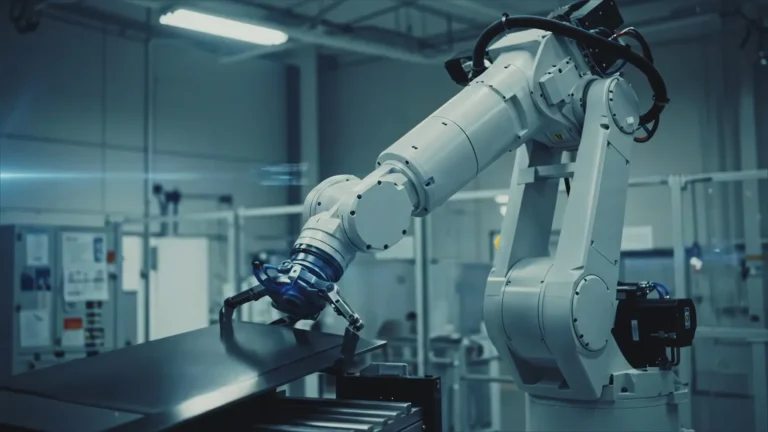
Central to this transformation is the rapid rise of artificial intelligence. According to the report’s survey of supply chain leaders, 24 percent of respondents now categorize AI as a transformational technology, while 48 percent view its disruptive impact as significant or greater. This represents a substantial increase—up 25 percentage points from the previous year—highlighting the accelerating pace at which AI is being recognized as a critical driver of change. Robotics and automation rank as the second most disruptive technology, with 39 percent of respondents identifying them as having a significant impact, also reflecting notable year-over-year growth.
The report goes beyond simply identifying technological trends, offering a comprehensive framework for how organizations can “rewire” their supply chains. This involves integrating digital technologies such as AI, robotics, and real-time analytics with operational strategy, workforce development, and data-driven decision-making. The goal is to create supply chain networks that are not only more efficient but also more resilient, adaptive, and responsive to change.
One of the most significant findings relates to investment priorities. A majority of organizations—56 percent—plan to increase their spending on supply chain innovation, with more than half of those expecting to invest over $1 million. Notably, 17 percent anticipate spending more than $10 million, indicating a strong commitment to large-scale transformation initiatives. However, the report emphasizes that this investment is becoming more disciplined and strategic. Companies are increasingly focused on clearly defining the problems they aim to solve, aligning technology investments with business objectives, and implementing robust governance frameworks to manage and scale innovation effectively.
This shift toward more deliberate investment reflects the growing complexity of the supply chain landscape. Today’s supply chains operate in an environment characterized by constant disruption and uncertainty. Geopolitical tensions can alter trade flows overnight, while economic volatility affects demand patterns and cost structures. At the same time, labor shortages and evolving workforce expectations are creating additional operational challenges. Against this backdrop, organizations must prioritize capabilities such as risk management, end-to-end visibility, rapid fulfillment, and sustainability.
John Paxton, CEO of MHI, underscores the urgency of this transformation, emphasizing that the greatest risk is not disruption itself but the failure to innovate. He argues that relying on outdated systems and processes in a rapidly changing environment can leave organizations vulnerable, unable to respond effectively to new challenges. Instead, supply chains must be redesigned as interconnected, intelligent networks capable of operating in real time.
Artificial intelligence plays a central role in enabling this vision. Already, AI is being applied across a wide range of supply chain functions, including demand forecasting, inventory optimization, transportation planning, and warehouse operations. These applications are delivering measurable benefits, such as improved accuracy, reduced costs, and enhanced operational efficiency. However, the report suggests that the true potential of AI lies in its ability to orchestrate entire supply chain ecosystems.
In particular, the emergence of agentic AI—systems capable of autonomous decision-making and execution—represents a significant advancement. These systems can automate high-volume, repetitive tasks, proactively identify and respond to disruptions, and continuously optimize operations based on real-time data. By embedding intelligence directly into workflows, agentic AI enables supply chains to move from reactive to proactive and ultimately to predictive and autonomous models of operation.
Despite the clear potential of AI, the report highlights several barriers that organizations must overcome to fully realize its benefits. Many companies struggle with identifying the most effective use cases, particularly in the early stages of adoption. Uncertainty around return on investment, coupled with the high cost of implementation, can make it difficult to build a compelling business case. Additionally, there is often a lack of internal expertise, as organizations face talent shortages in areas such as data science, AI engineering, and digital transformation.
Budget constraints further complicate the situation, especially for organizations attempting to balance short-term operational needs with long-term strategic investments. As a result, many companies find themselves in a state of inertia, recognizing the importance of AI but unsure of how to proceed. The report suggests that overcoming these challenges requires a holistic approach that combines technology adoption with workforce development and organizational change.
Wanda Johnson, Supply Chain Technology Fellow at Deloitte Consulting LLP, emphasizes the importance of integrating operational excellence, AI-driven orchestration, and workforce readiness into a unified strategy. According to her, organizations that successfully align these elements will be better positioned not only to withstand disruption but also to convert it into a source of competitive advantage and sustained growth.
The report also explores the broader technological landscape shaping the future of supply chains. In addition to AI, advancements in generative AI, physical AI, and edge computing are contributing to a new paradigm in which supply chain operations become increasingly software-defined. In this model, processes are continuously optimized through intelligent orchestration engines that integrate data from across the network, enabling real-time decision-making and adaptive responses to changing conditions.
This transformation has far-reaching implications. It fundamentally changes how problems are solved, shifting from manual, experience-based approaches to data-driven, algorithmic decision-making. It also influences how capital is allocated, as organizations invest in digital infrastructure and advanced analytics capabilities. Furthermore, it reshapes workforce dynamics, requiring new skill sets and creating opportunities for employees to focus on higher-value activities.
In addition to technological trends, the report identifies the key external factors that are expected to impact supply chains in 2026. Economic uncertainty, inflation, and geopolitical risks top the list, reflecting the ongoing volatility in global markets. Workforce challenges, including talent shortages and evolving skill requirements, are also a major concern. The pace of technology adoption and the need for real-time data continue to drive transformation efforts, while issues such as supply chain visibility, resilience, and cybersecurity remain critical priorities.
Other notable trends include rising costs of capital, inventory management challenges, the continued growth of e-commerce, increasing emphasis on customer-centricity, and the reshoring of manufacturing operations. Each of these factors contributes to the complexity of the supply chain environment, reinforcing the need for integrated, technology-enabled solutions.
The report concludes by providing practical guidance for supply chain leaders seeking to navigate this evolving landscape. It includes real-world case studies demonstrating the successful implementation of digital technologies, as well as strategic recommendations for building resilient and adaptive supply chain networks. These insights are intended to help organizations move from experimentation to execution, scaling their innovation efforts in a structured and sustainable manner.
Ultimately, the findings from MHI and Deloitte highlight a clear and urgent message: the future of supply chains will be defined by the ability to harness artificial intelligence and related technologies. Organizations that embrace this transformation, investing in both technology and talent, will be well-positioned to thrive in an increasingly complex and dynamic environment. Those that fail to adapt risk being left behind, constrained by outdated systems and unable to meet the demands of a rapidly changing world.
As supply chains continue to evolve, the concept of “rewiring” becomes more than a metaphor—it represents a fundamental rethinking of how value is created and delivered. In this new paradigm, intelligence, connectivity, and adaptability are the defining characteristics of successful supply chain networks, with AI serving as the central engine driving this transformation.
Source link: https://www.businesswire.com